

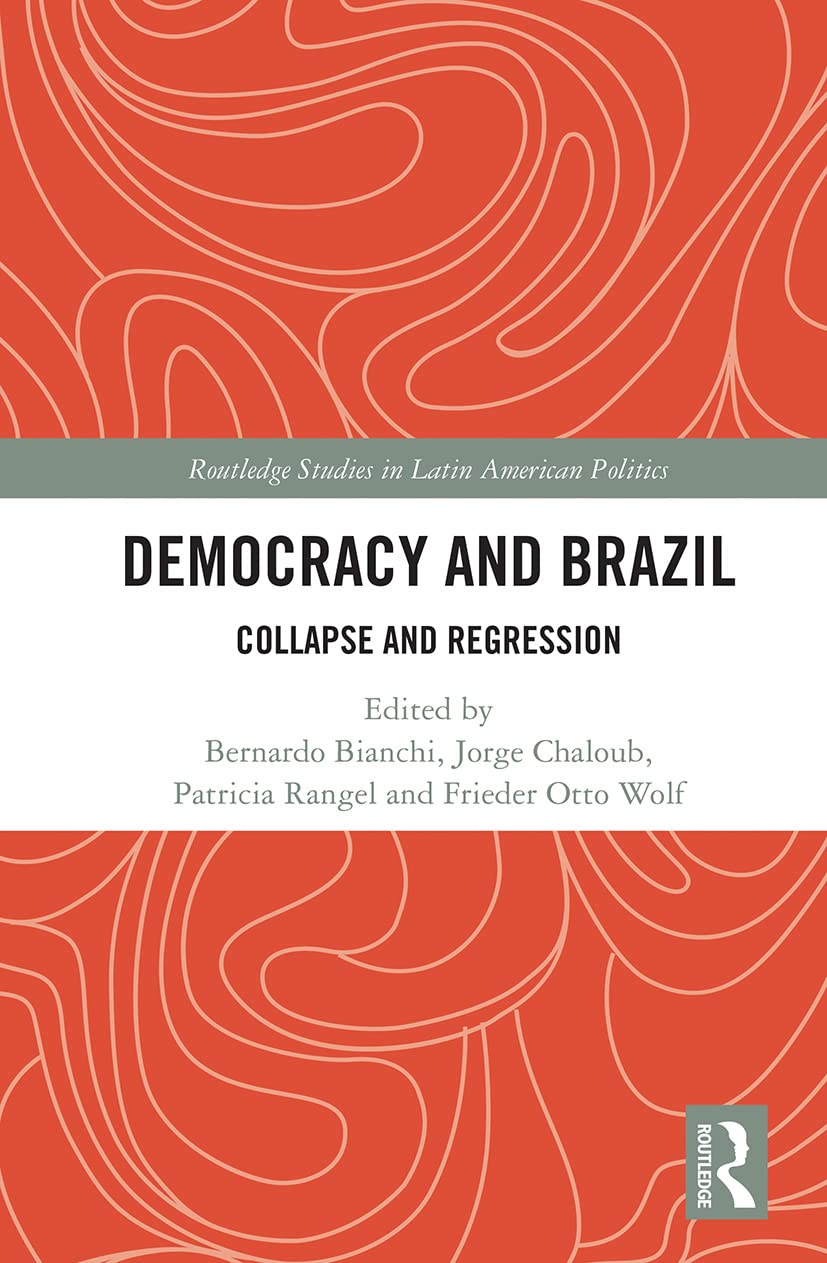
Democracy and Brazil: Collapse and Regression - Book
Democracy and Brazil: Collapse and Regression - Book
Price subject to change. Tap below for current.
Couldn't load pickup availability
In this review of Democracy and Brazil: Collapse and Regression the reviewer positions the book as essential reading for students, scholars and engaged readers trying to understand recent shifts in Brazilian politics. The book examines the de-democratization process from the 2013 protests through the impeachment of Dilma Rousseff and the 2018 election of Jair Bolsonaro, arguing that institutional changes and the rise of right-wing discourse have widened the gap between citizens and representatives. Its single biggest reason to buy is the clear, scholarly framing of how conservative and neoliberal forces intersected to reshape Brazil's political trajectory.
Key Features
- Historical framing: Places the 2013 protests and the 2016 impeachment in a continuous timeline that clarifies causal links for readers studying recent Brazilian history.
- Political analysis: Explores the growth of right-wing and ultra-right discourse and how it influenced institutional reforms and democratic erosion.
- Institutional focus: Highlights specific reforms that deepened the distance between citizens and representatives, useful for comparative politics work.
- Thematic scope: Connects neoliberal ideology among elites with shifts in policy and political culture, offering a cross-disciplinary perspective for social scientists.
- Concise synthesis: Provides a focused account of collapse and regression without unnecessary asides, making it suitable for course reading or seminar discussion.
Who It's For
This book is aimed at undergraduate and graduate students of Latin American politics, scholars researching democratic change, and activists or journalists seeking a compact scholarly account of Brazil's political reversal since 2013. The authors compile institutional and discursive explanations in a way that supports classroom use and informed commentary.
Readers expecting a handbook of policy prescriptions or a populist narrative-friendly account should look elsewhere; this is an analytical, academic treatment that emphasizes structural and ideological factors rather than step-by-step solutions for restoring democratic norms.
Pros & Cons
Pros
- Clear linkage of events from 2013 protests to the 2018 election gives a coherent narrative for students and researchers.
- Strong focus on institutional reforms helps explain measurable changes in representative politics.
- Interrogation of neoliberal ideology among elites provides useful context for policy and class analysis.
Cons
- The book is analytic and academic in tone, so casual readers seeking a lighter narrative may find it demanding.
Specifications
| Title | Democracy and Brazil: Collapse and Regression |
| Series | Routledge Studies in Latin American Politics |
| Authors / Editors | Frieder Otto Wolf, Bernardo Bianchi, Patricia Rangel, Jorge Chaloub |
| Subject focus | De-democratization, institutional reform, right-wing discourse |
| Geographic focus | Brazil |
| Intended audience | Students, scholars, journalists |
Our Verdict
Democracy and Brazil offers a compact, scholarly account of recent political regression that is particularly valuable for academics and students seeking explanatory frameworks linking protests, impeachment and the rise of the right. It is good value for those who need a focused analysis of institutional and ideological causes rather than a populist narrative or policy manual.
Frequently Asked Questions
Does this book cover the 2016 impeachment?
Yes, it places the impeachment of Dilma Rousseff in a broader narrative about de-democratization and institutional change.
Is this suitable for undergraduate courses?
Yes, the book is appropriate for upper-level undergraduate and graduate courses in Latin American politics or comparative democratization.
Does it offer policy recommendations?
The book emphasizes analysis of causes and processes rather than detailed policy prescriptions for democratic recovery.
Editor's Take
Democracy and Brazil presents a focused, scholarly explanation of Brazil's de-democratization since 2013, valuable for students and researchers who need an institutional and ideological analysis rather than a popular narrative.

Recently viewed
Recently viewed products will appear here as customers browse the store.