

Demographic Dimensions of the New Republic - Historical Migration
Demographic Dimensions of the New Republic - Historical Migration
Price subject to change. Tap below for current.
Couldn't load pickup availability
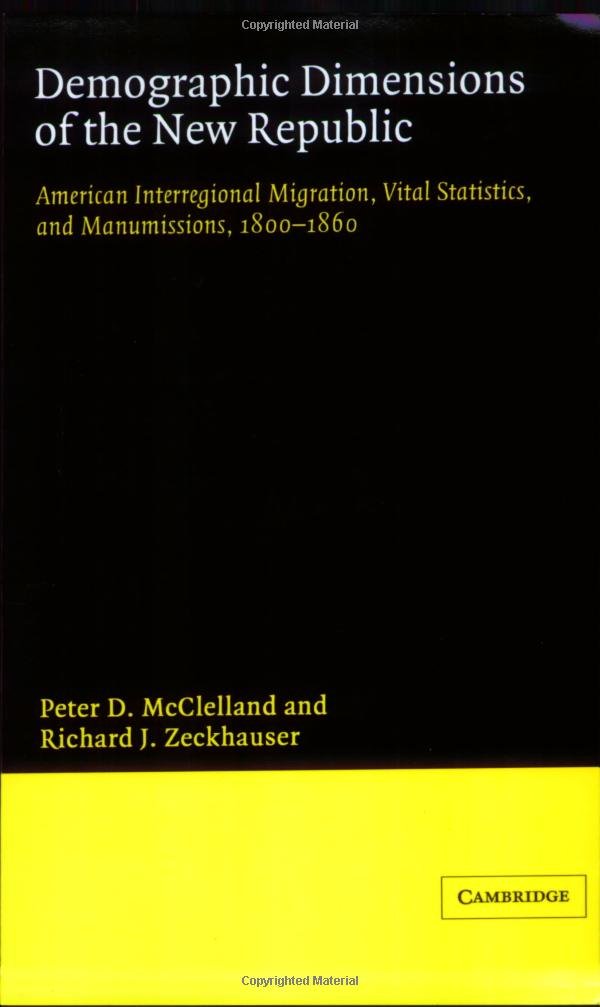
In this review of Demographic Dimensions of the New Republic the reviewer finds a rigorous, data-driven work aimed at historians, demographers and serious students of early American society; the single biggest reason to buy is its comprehensive, consistent reconstruction of birth, death, migration and manumission patterns for 1800-1860 using decennial census estimates and supporting historical evidence. The tone is scholarly rather than popular, and readers seeking a careful synthesis of quantitative and qualitative sources will appreciate the attention to methodology and the focus on both black and white populations.
Key Features
- Nationwide census synthesis: Presents a consistent set of estimates anchored to the decennial censuses to support nationwide comparisons over six decades.
- Population components: Reconstructs birth and death rates and rates of natural increase to clarify demographic momentum in the antebellum United States.
- Migration analysis: Provides estimates of net international and interregional flows to illuminate patterns of movement between regions and across borders.
- Black population focus: Includes specially tailored estimates for the black population and documents trends in manumissions in the antebellum decades.
- Contextual evidence: Conditions census-based estimates with a broad range of historical evidence, from slave smuggling records to wartime ship traffic.
Who It's For
This book is best for academic historians, graduate students in demography or historical sociology, and policy researchers who need a reliable, census-based reconstruction of early American demographic trends. It is particularly useful for those studying slavery, manumission, and the demographic contrasts between black and white populations in the first half of the 19th century.
Readers looking for a general-interest narrative or a brief overview of early U.S. history should look elsewhere; the text assumes familiarity with demographic concepts and primary-source interpretation and is focused on quantitative synthesis rather than popular storytelling.
Pros & Cons
Pros
- Thorough use of decennial census data provides a consistent framework for nationwide estimates.
- Separate treatment of black and white populations yields clearer insights into differing demographic processes.
- Integration of non-quantitative historical evidence strengthens and tests the census-based reconstructions.
Cons
- The book is dense and technical in places, which may limit accessibility for casual readers.
Specifications
| Title | Demographic Dimensions of the New Republic |
| Coverage years | 1800-1860 |
| Primary data source | Decennial censuses |
| Population groups analyzed | Black and white populations |
| Key topics | Birth rates, death rates, migration, manumissions |
| Evidence types | Quantitative census estimates and historical qualitative evidence |
Our Verdict
For specialists who need a careful, census-anchored reconstruction of early American demographic dynamics, this book delivers strong value through its methodological consistency and focused treatment of migration and manumission. It is a worthwhile investment for researchers who require detailed estimates and historical conditioning of those estimates, though casual readers may find the presentation technical.
Frequently Asked Questions
Does this book cover both black and white population estimates?
Yes. The authors provide separate, consistent estimates for black and white populations, including birth and death rates and rates of natural increase.
What sources are the estimates based on?
The estimates are anchored in the decennial censuses and are conditioned by a range of historical evidence such as ship traffic and records related to slave smuggling.
Does the book discuss manumissions?
Yes. It includes an analysis of the changing pace of manumissions in the antebellum decades for the black population.
Editor's Take
A rigorous, census-anchored study valuable for historians and demographers seeking consistent estimates of birth, death, migration and manumission patterns in the United States from 1800 to 1860; detailed and technical but excellent value for specialists.

Recently viewed
Recently viewed products will appear here as customers browse the store.