Price subject to change. Tap below for current.
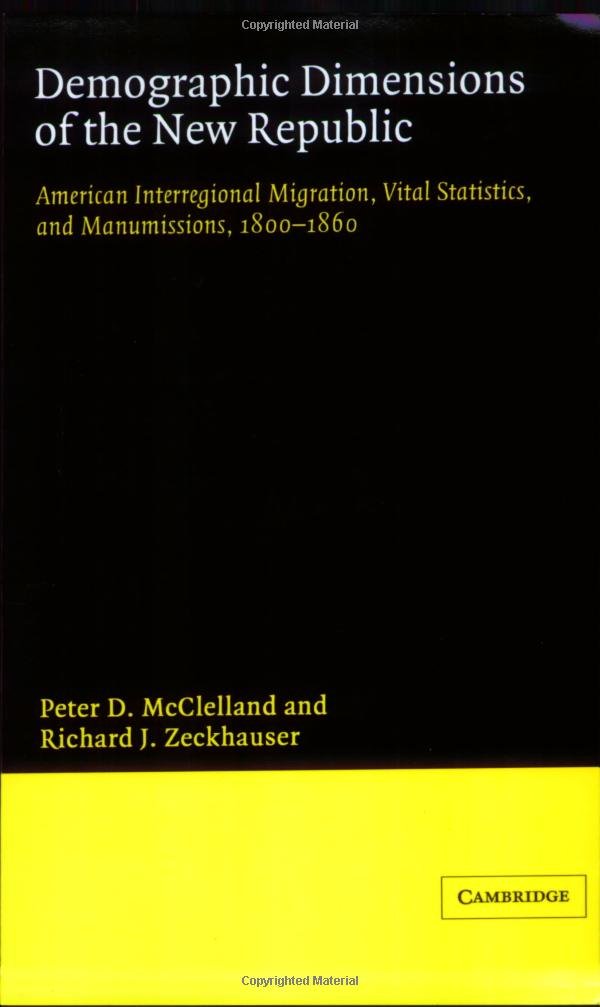
The book Demographic Dimensions of the New Republic offers a comprehensive analysis of American interregional migration from 1800 to 1860. Authored by Peter D. McClelland and Richard J. Zeckhauser, this work delves into the vital statistics and manumissions that shaped the demographic landscape of the early United States.
One of the key features of this book is its detailed examination of interregional migration. The authors meticulously document the patterns and trends of migration during this transformative period, providing readers with a clear understanding of how and why populations shifted across regions.
In addition to migration, the book also addresses vital statistics that are crucial for understanding the demographic changes of the time. By analyzing birth and death rates, the authors paint a vivid picture of the population dynamics that influenced social and economic conditions in the New Republic.
Another significant aspect of this work is its focus on manumissions, which refers to the act of freeing enslaved individuals. The authors explore how manumission practices varied across different regions and how they impacted the lives of both freed individuals and the communities they belonged to.
The book is not only rich in data but also offers insightful interpretations of the implications of these demographic shifts. The authors argue that understanding these demographic changes is essential for grasping the broader historical context of the United States during this era.
Readers will appreciate the thorough research and the way the authors present complex data in an accessible manner. The inclusion of maps and charts enhances the reading experience, making it easier to visualize the trends discussed. Overall, Demographic Dimensions of the New Republic is an invaluable resource for historians, students, and anyone interested in the demographic evolution of America.