

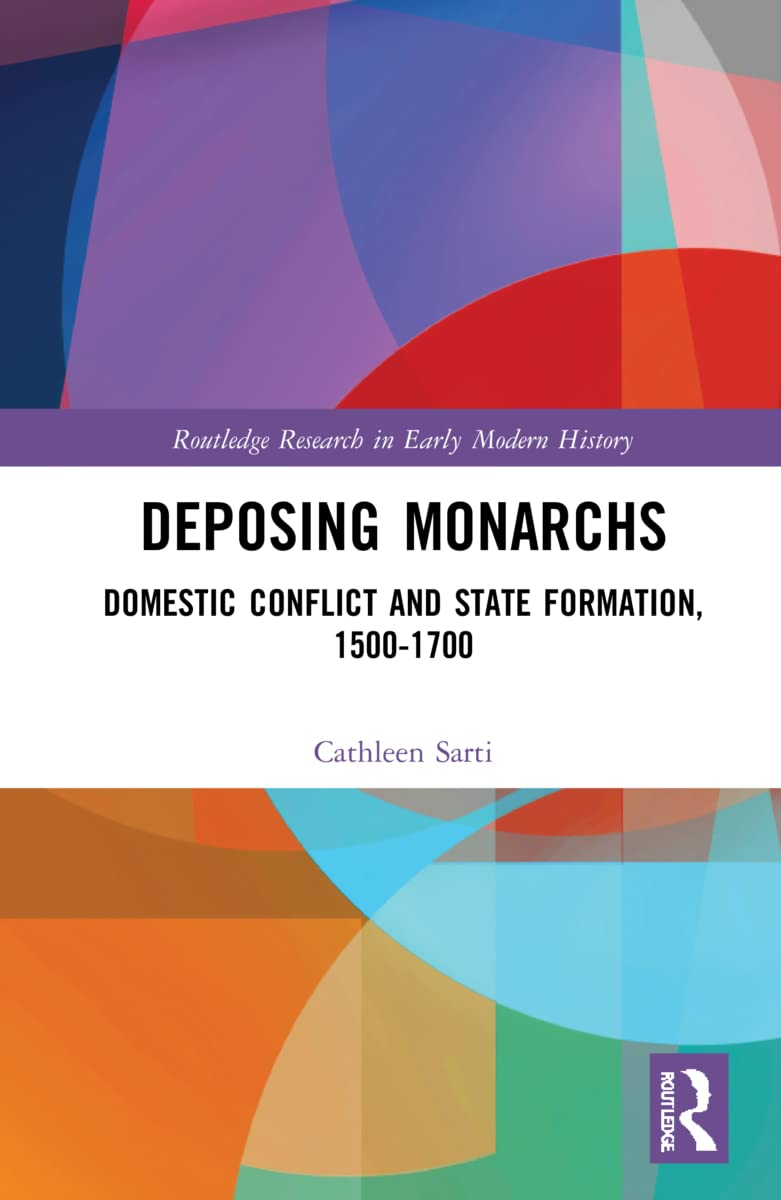
Deposing Monarchs: Domestic Conflict and State Formation
Deposing Monarchs: Domestic Conflict and State Formation
Price subject to change. Tap below for current.
Couldn't load pickup availability
In this review of Deposing Monarchs: Domestic Conflict and State Formation, 1500-1700, the reviewer finds a focused, academic study best suited to historians and graduate students exploring early modern governance. Cathleen Sarti presents a sustained argument that depositions were recurring political instruments across Northern Europe, and the single biggest reason to read this book is its revisionary framing of succession and legitimacy as shaped more by tradition and political consensus than by claims of divine right. The prose is scholarly but readable, and the analysis supplies comparative depth lacking in national narratives.
Key Features
- Comparative scope: Traces depositions across Northern Europe to reveal cross-border patterns and shared political practices that illuminate state formation.
- Time depth: Covers 1500 to 1700 to show diachronic change in how monarchies were contested and legitimized over two centuries.
- Focus on legitimations: Examines official justifications for deposings, demonstrating the influence of rule of law and consensus in crisis moments.
- Revisionist argument: Challenges earlier accounts that treated depositions as isolated national anomalies, offering a transnational reinterpretation.
- Monarchical succession insight: Argues for a more non-linear model of succession, useful for rethinking political continuity and rupture.
Who It's For
The book is aimed primarily at scholars, advanced undergraduates, and graduate students in early modern history, political history, and constitutional studies who want a comparative lens on monarchy and state building. It will also interest regional specialists in Scandinavia and Northern Europe seeking broader theoretical framing.
Readers looking for a popular narrative, a broad survey of European history, or a richly illustrated coffee-table history should look elsewhere; this is an interpretive academic monograph that presumes familiarity with historiographical debates and primary-source analysis.
Pros & Cons
Pros
- Provides a clear comparative framework that helps recontextualize depositions across different polities.
- Strong emphasis on legal and conventional justifications offers fresh insights into how rulers were contested.
- Long time span allows readers to follow evolving practices of legitimacy and succession.
Cons
- The academic tone and focus on historiography may be dense for casual readers or those new to early modern studies.
Specifications
| Title | Deposing Monarchs: Domestic Conflict and State Formation, 1500-1700 |
| Series | Routledge Research in Early Modern History |
| Author | Cathleen Sarti |
| Geographic focus | Northern Europe (comparative, transnational) |
| Period covered | 1500-1700 |
| Main themes | Depositions, monarchy, state formation, legitimacy |
Our Verdict
Deposing Monarchs is a valuable, revisionist study for anyone researching early modern monarchy and state formation; its comparative approach and focus on legitimations make it especially useful for scholars rethinking succession and authority. While its academic style limits its appeal to general readers, it represents good value for students and specialists seeking a nuanced, evidence-driven reinterpretation of depositions in Northern Europe.
Frequently Asked Questions
Does the book compare multiple countries?
Yes; it traces depositions transnationally across Northern Europe to show commonalities and differences.
Is this suitable for undergraduate courses?
It works best for advanced undergraduates or graduate seminars that engage with historiography and primary-source interpretation.
Does it argue for a single cause of depositions?
No; the author emphasizes legal, traditional, and consensus-based legitimations rather than a single explanatory factor.
Editor's Take
Deposing Monarchs is a valuable, revisionist study for scholars and graduate students interested in early modern monarchy and state formation; its comparative focus and analysis of legitimations make it a useful, evidence-driven reinterpretation despite an academic tone.

Recently viewed
Recently viewed products will appear here as customers browse the store.