

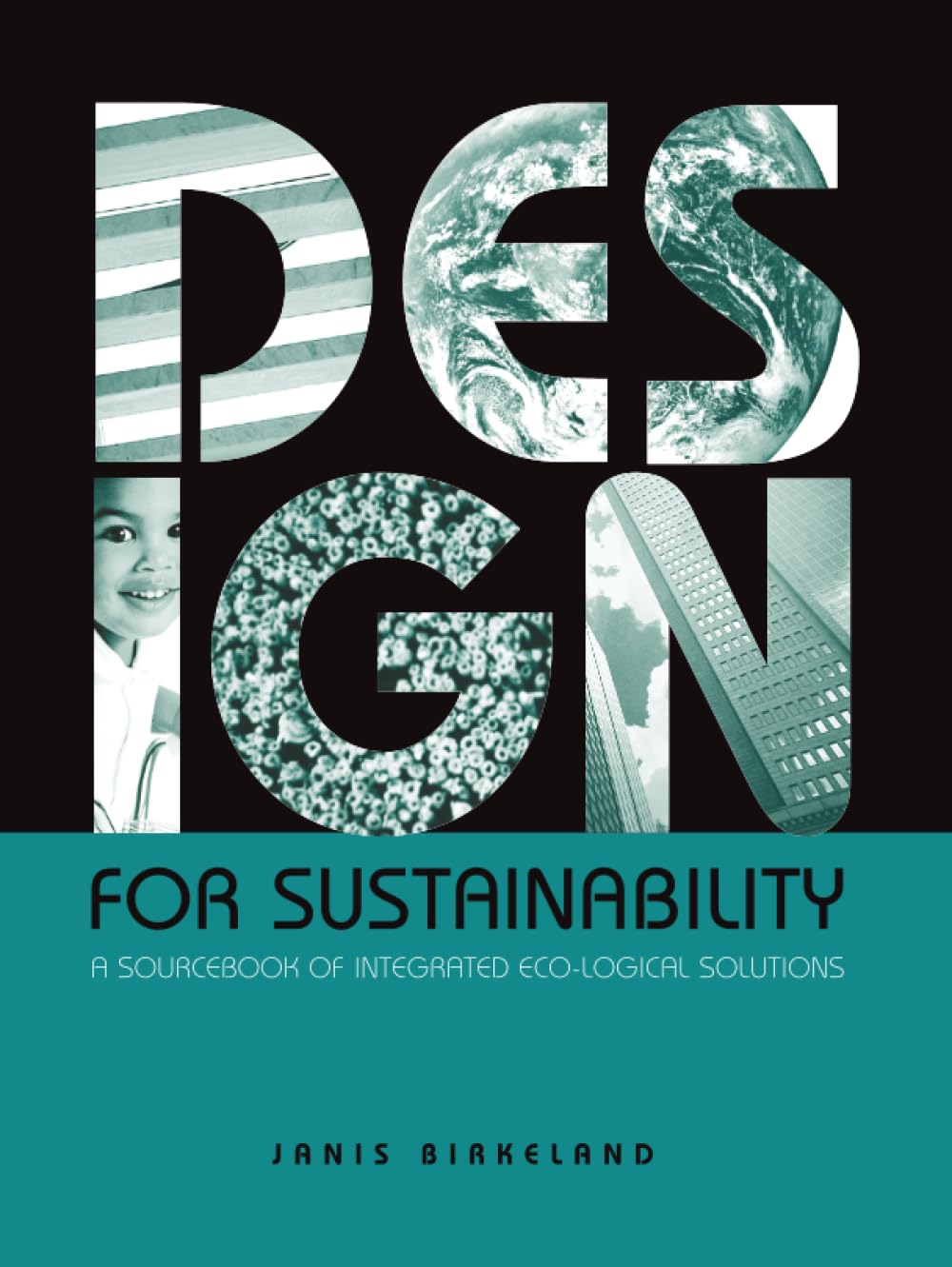
Design for Sustainability: A Sourcebook of Integrated Eco-logical
Design for Sustainability: A Sourcebook of Integrated Eco-logical
Price subject to change. Tap below for current.
Couldn't load pickup availability
In this review of Design for Sustainability: A Sourcebook of Integrated, Eco-logical Solutions, the reviewer finds a thoughtful, systems-based resource ideal for instructors, students and practitioners who want practical frameworks for combining ecology and design. Janis Birkeland's text argues that buildings and settlements can function more like gardens than containers, and the single biggest reason to buy this book is its consistent focus on integrated, cross-disciplinary systems design that links social and physical sciences for real environmental outcomes.
Key Features
- Integrated systems design: Presents examples and frameworks that connect ecological principles to built environments so designers can plan for air and water purification alongside energy and food production.
- Transdisciplinary approach: Cuts across academic and professional boundaries, helping teams combine social and physical science perspectives for more resilient solutions.
- Teaching-ready structure: Pairs short readings on each topic to provide contrasting viewpoints, which makes classroom discussion and comparative analysis straightforward.
- Practical ecological examples: Illustrates how settlements might generate energy, treat sewage and produce food while often lowering overall cost, giving concrete inspiration for project-level design.
- Problem-solving focus: Emphasizes systems thinking that helps readers move from isolated fixes to integrated solutions that address multiple environmental goals at once.
Who It's For
This book is best for educators in environmental management, students studying sustainability or design, and practicing planners and engineers who want to broaden technical work with social and ecological systems thinking. Its paired readings and sourcebook format make it particularly useful for course syllabi and seminar discussion.
Readers seeking a hands-on construction manual, detailed engineering calculations or step-by-step building instructions should look elsewhere; this book favors conceptual systems design and examples over exhaustive technical specification.
Pros & Cons
Pros
- Clear emphasis on integrated ecological design that helps bridge disciplines in a classroom or project team.
- Teaching-friendly layout with paired readings that stimulate debate and comparative analysis.
- Realistic examples showing how settlements can generate energy and treat sewage while producing additional benefits like food and purified water.
- Encourages systems thinking that can reduce long-term costs by combining functions rather than layering separate solutions.
Cons
- Not a substitute for detailed engineering specs or construction blueprints, so technical designers will need supplementary sources.
Specifications
| Title | Design for Sustainability: A Sourcebook of Integrated, Eco-logical Solutions |
| Author | Janis Birkeland |
| Focus | Integrated systems design and ecological principles |
| Use cases | Teaching, planning, transdisciplinary problem-solving |
| Topics included | Air and water purification, energy generation, sewage treatment, food production |
| Approach | Pairs of short readings for comparison and debate |
Our Verdict
Design for Sustainability is a strong value for educators and sustainability professionals who need a compact, concept-driven sourcebook that brings ecological principles into design thinking. Its transdisciplinary focus and teaching-ready format make it especially useful where comparative perspectives and systems-level planning are priorities.
Frequently Asked Questions
Is this book suitable for classroom use?
Yes. The paired short readings and comparative format are designed to support teaching and seminar discussions.
Does it include technical construction details?
No. The book emphasizes systems design and examples rather than step-by-step engineering or construction specifications.
What topics does it cover?
It covers integrated approaches to air and water purification, energy generation, sewage treatment and food production within built environments.
Editor's Take
Design for Sustainability is a concept-rich sourcebook ideal for educators and sustainability professionals who need integrated, transdisciplinary frameworks that apply ecological principles to built environments.

Recently viewed
Recently viewed products will appear here as customers browse the store.