

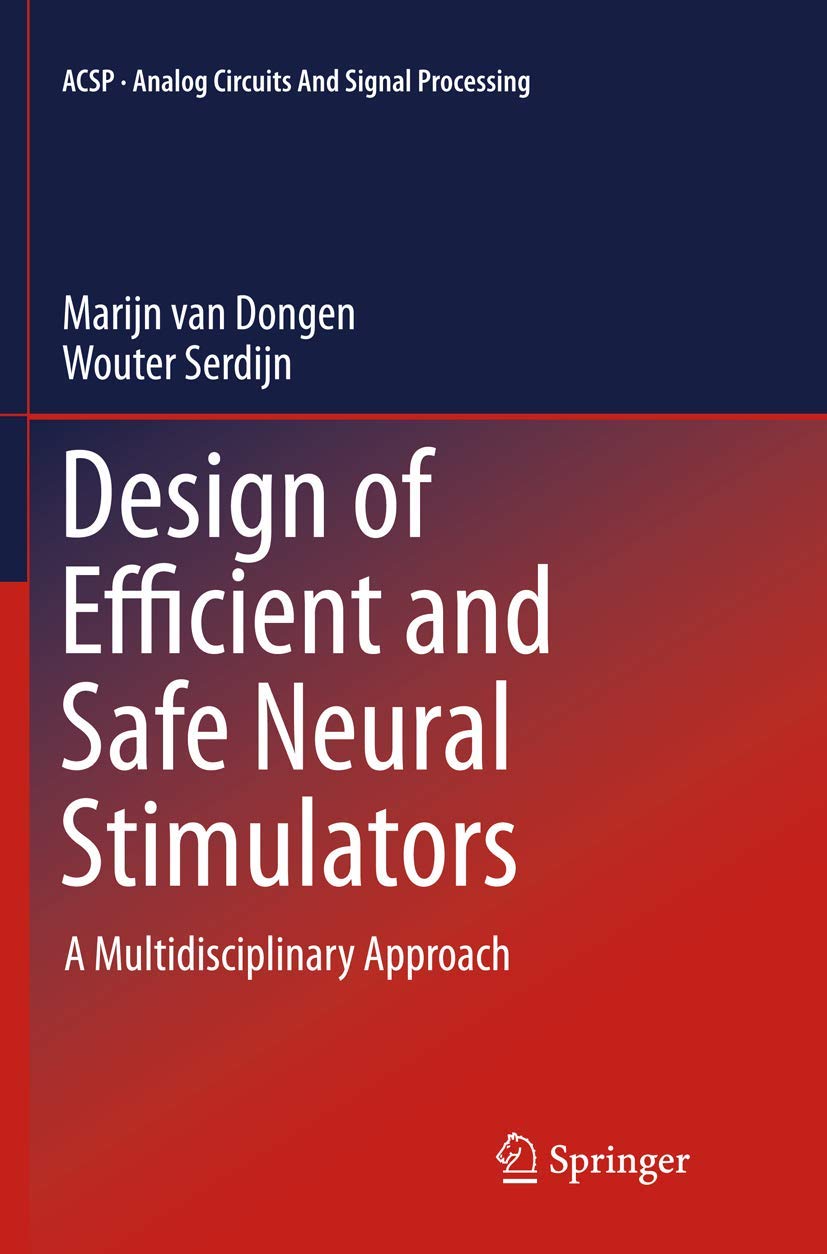
Design of Efficient and Safe Neural Stimulators - Multidisciplinary
Design of Efficient and Safe Neural Stimulators - Multidisciplinary
Price subject to change. Tap below for current.
Couldn't load pickup availability
In this review of Design of Efficient and Safe Neural Stimulators: A Multidisciplinary Approach, the book is recommended for engineers, researchers and advanced students who need a complete view of neural stimulator systems rather than a narrow electrical perspective. The single biggest reason to buy is its integrated treatment of neuroscience, electrophysiology and circuit design, which helps readers connect stimulation IC choices to effects at the neural cell level. This review focuses on usefulness for design work and how the examples provide context for real system decisions.
Key Features
- Multidisciplinary focus: Combines neuroscience, electrophysiology and electrical engineering so readers can trace the entire stimulation chain from IC to neural cell.
- System-level insight: Presents the complete neural stimulation chain, enabling designers to see how component choices affect biological response.
- Contextual design examples: Offers innovative design examples that clarify abstract concepts and demonstrate practical tradeoffs in stimulator design.
- Treatment relevance: Discusses applications to disorders like Parkinsons, depression and tinnitus, linking design goals to clinical needs.
- Engineering emphasis: Focuses on design of stimulator systems, making it directly useful for electrical engineers working on biomedical devices.
Who It's For
Design of Efficient and Safe Neural Stimulators is best suited to graduate students, biomedical engineers and researchers who already have foundational knowledge in circuits or neuroscience and want to integrate those domains. The book is practical for engineers designing stimulation ICs who need to understand physiological implications and for researchers developing new stimulation therapies.
Those looking for a basic primer on neuroscience or a purely clinical overview should look elsewhere; the book assumes technical background and concentrates on engineering and system design rather than introductory biology or patient-level clinical protocols.
Pros & Cons
Pros
- Provides a rare integrated perspective that connects circuit-level design to neural cell behavior, valuable for system designers.
- Includes design examples that make complex tradeoffs tangible and applicable to real projects.
- Addresses practical treatment domains such as Parkinsons, depression and tinnitus, grounding techniques in real-world needs.
Cons
- Not intended as an introductory text; readers without prior engineering or neuroscience background may find it dense.
Specifications
| Title | Design of Efficient and Safe Neural Stimulators: A Multidisciplinary Approach |
| Subject | Neural stimulator system design |
| Approach | Multidisciplinary (neuroscience, electrophysiology, electrical engineering) |
| Applications discussed | Parkinsons, depression, tinnitus |
| Includes | Innovative design examples and system-level discussion |
| Audience | Engineers, researchers, advanced students |
Our Verdict
Design of Efficient and Safe Neural Stimulators is a strong choice for engineers and researchers who need a cohesive, system-level understanding of stimulator design. Its multidisciplinary approach and practical examples make it good value for professionals who will apply circuit and physiological insight to device development, though it is not a substitute for basic textbooks for beginners.
Frequently Asked Questions
Does this book cover clinical protocols?
No. The book links design decisions to treatment domains but focuses on engineering and system design rather than clinical protocols.
Is prior knowledge required?
Yes. The text assumes background in electrical engineering or neuroscience and is best for advanced students and professionals.
Will it help with stimulator IC design?
Yes. The book specifically connects circuit-level choices to physiological effects and provides design examples useful for IC and system designers.
Editor's Take
A strong, multidisciplinary resource that connects circuit-level design to neural physiology, ideal for engineers and researchers developing stimulator systems though not for beginners.

Recently viewed
Recently viewed products will appear here as customers browse the store.