

Design Thinking for Education: Conceptions and Applications in
Design Thinking for Education: Conceptions and Applications in
Price subject to change. Tap below for current.
Couldn't load pickup availability
In this review of Design Thinking for Education, the bottom line is clear: this compact, research-driven book is best for teachers and teacher educators who want a grounded introduction to applying design thinking vocabulary and methods in classrooms. The authors synthesize literature and present empirical examples across children, pre-service teachers and in-service teachers, making it useful where practice must be linked to theory. The single biggest reason to buy is the combination of a focused literature review with classroom and coursework evidence that shows how ideas translate into teaching and assessment.
Key Features
- Theoretical foundations: A focused literature review clarifies core concepts of design thinking and how they relate to education, helping readers ground practice in theory.
- Empirical chapters: Research data from design-driven coursework illustrates how children and teachers demonstrate and develop design thinking in real settings.
- Multiple audiences: Examples span children, pre-service and in-service teachers so readers can compare application across age and experience levels.
- Assessment focus: The book examines methods for fostering and assessing design thinking, offering practical ideas for measuring learning outcomes.
- Forward-looking discussion: The final chapter outlines future directions for integrating design thinking into educational settings, useful for program planning.
Who It's For
This book is aimed primarily at classroom teachers, teacher educators and university instructors who want a research-informed guide to introduce or deepen design thinking in education within coursework, projects and lesson design. It suits readers who value a balance of literature review and empirical examples rather than a step-by-step activity manual.
Readers seeking a full curriculum of ready-to-teach lesson plans or a handbook of quick classroom activities should look elsewhere; this volume is stronger on conceptual framing, research findings and assessment discussion than on exhaustive activity templates.
Pros & Cons
Pros
- Clear connection between theory and classroom practice, making it easier to adapt ideas to local contexts.
- Empirical chapters provide concrete examples of how design thinking appears among different learner groups.
- Discussion of assessment methods helps educators evaluate and document student development.
- Final chapter offers thoughtful future directions for program-level integration.
Cons
- Not a plug-and-play activity book; readers seeking extensive ready-made lesson plans may find it limited.
Specifications
| Title | Design Thinking for Education: Conceptions and Applications in Teaching and Learning |
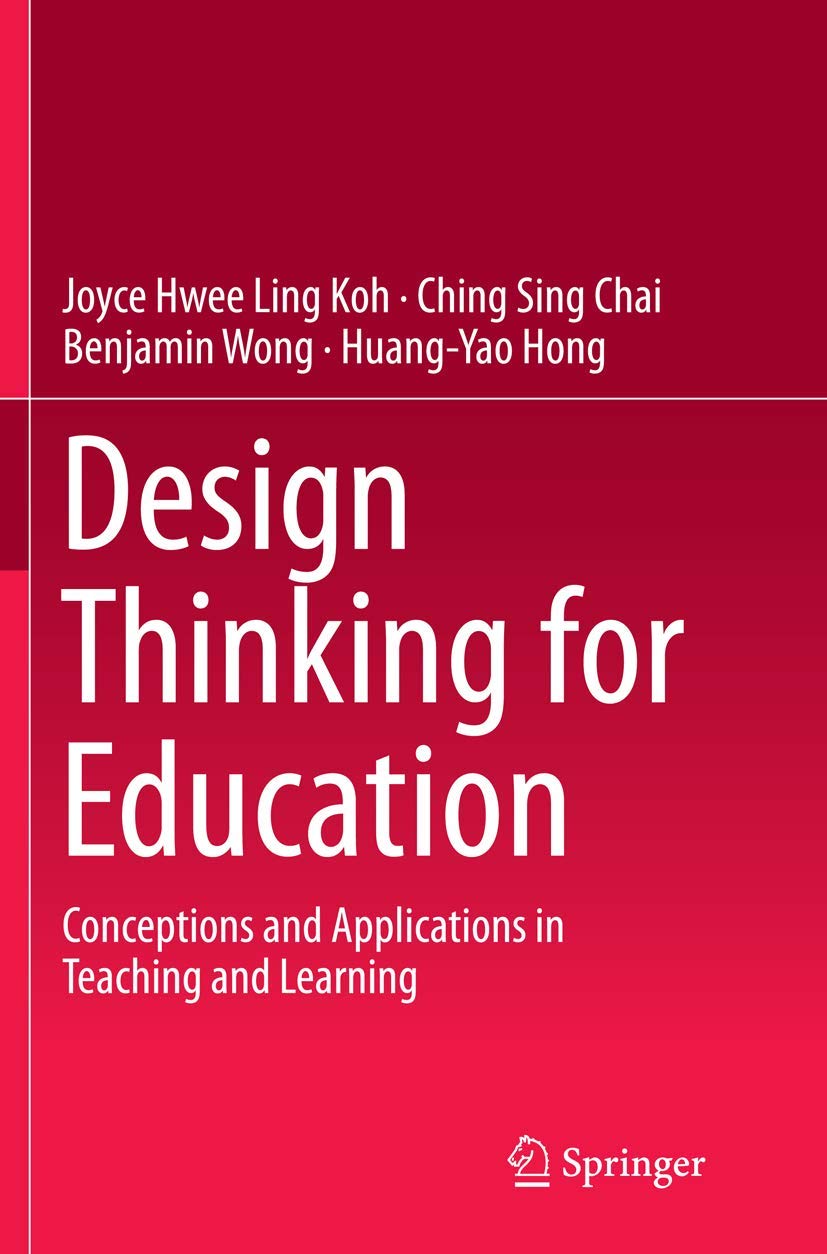
| Authors | Joyce Hwee Ling Koh, Ching Sing Chai, Benjamin Wong, Huang-Yao Hong |
| Content focus | Theory, empirical studies, assessment, and future directions for design thinking in education |
| Chapters | Eight chapters covering literature review, empirical characterizations, assessment, and future directions |
| Intended audience | Teachers, teacher educators, university instructors |
| Use cases | Coursework design, teacher training, research-informed classroom application |
Our Verdict
Design Thinking for Education is a thoughtful, research-based resource for educators who need a conceptually strong introduction to applying design thinking in teaching and assessment. It is good value for those who want evidence and frameworks to inform coursework and program design, though practitioners wanting exhaustive lesson packs should pair it with activity-centered resources.
Frequently Asked Questions
Does this book include classroom examples?
Yes. It presents research data from design-driven coursework and projects showing how children and teachers engage in design thinking.
Is it suitable for K-12 teachers?
Yes. The empirical material covers children as well as pre-service and in-service teachers, so K-12 educators will find relevant examples and assessment discussion.
Will it provide ready-to-use lesson plans?
No. The book emphasizes theory, research and assessment; readers seeking ready-made lesson plans should supplement with practical activity resources.
Editor's Take
A research-informed, conceptually strong guide to applying design thinking in teaching and assessment, ideal for teachers and teacher educators who need evidence and frameworks rather than ready-made lesson packs.

Recently viewed
Recently viewed products will appear here as customers browse the store.