

Desire and Motivation in Indian Philosophy - Critical of Desireless
Desire and Motivation in Indian Philosophy - Critical of Desireless
Price subject to change. Tap below for current.
Couldn't load pickup availability
In this review of Desire and Motivation in Indian Philosophy, the reviewer finds a focused, scholarly examination of the doctrine of desireless action that will interest students and scholars of Indian thought. Christopher G. Framarin challenges the common contemporary interpretation that desireless action means acting without certain desires, arguing instead for a literal reading: action without any desire at all. The book's careful translations and close readings of classical Sanskrit passages make it a valuable resource for readers seeking rigorous textual engagement rather than a broad survey.
Key Features
- Scholarly reassessment: Re-evaluates contemporary literature on desireless action to argue for a literal interpretation, offering a fresh perspective for specialists.
- Textual translations: Provides translations of seminal classical Sanskrit passages that let readers judge the original arguments directly.
- Interpretive analysis: Interprets and evaluates key passages to show why standard arguments for the permissive reading may be unconvincing.
- Thematic focus: Concentrates specifically on theories of motivation and liberation, making the book a tight, coherent study rather than a general introduction.
- Engaged argumentation: Weighs contemporary positions against classical sources, helping readers see where modern interpretations diverge from textual evidence.
Who It's For
This book is best for graduate students, researchers, and informed readers of Hindu and Indian philosophy who want a targeted critique of prevailing readings about moral motivation and liberation. It suits those who can follow close textual argumentation and who appreciate direct engagement with Sanskrit sources and scholarly debate.
Readers seeking a broad introductory textbook, a general history of Indian philosophy, or a survey of multiple topics outside theories of desire should look elsewhere, since the book is narrowly focused on the specific question of what desireless action means in classical texts.
Pros & Cons
Pros
- Thorough textual translations allow readers to assess primary passages rather than rely solely on secondary summaries.
- Clear, focused argumentation presents a coherent case for taking the doctrine of desireless action literally.
- Engages contemporary scholarship directly, making it useful for academic debate and further research.
Cons
- Its narrow focus on a single doctrinal question may limit appeal to general readers seeking broader context.
Specifications
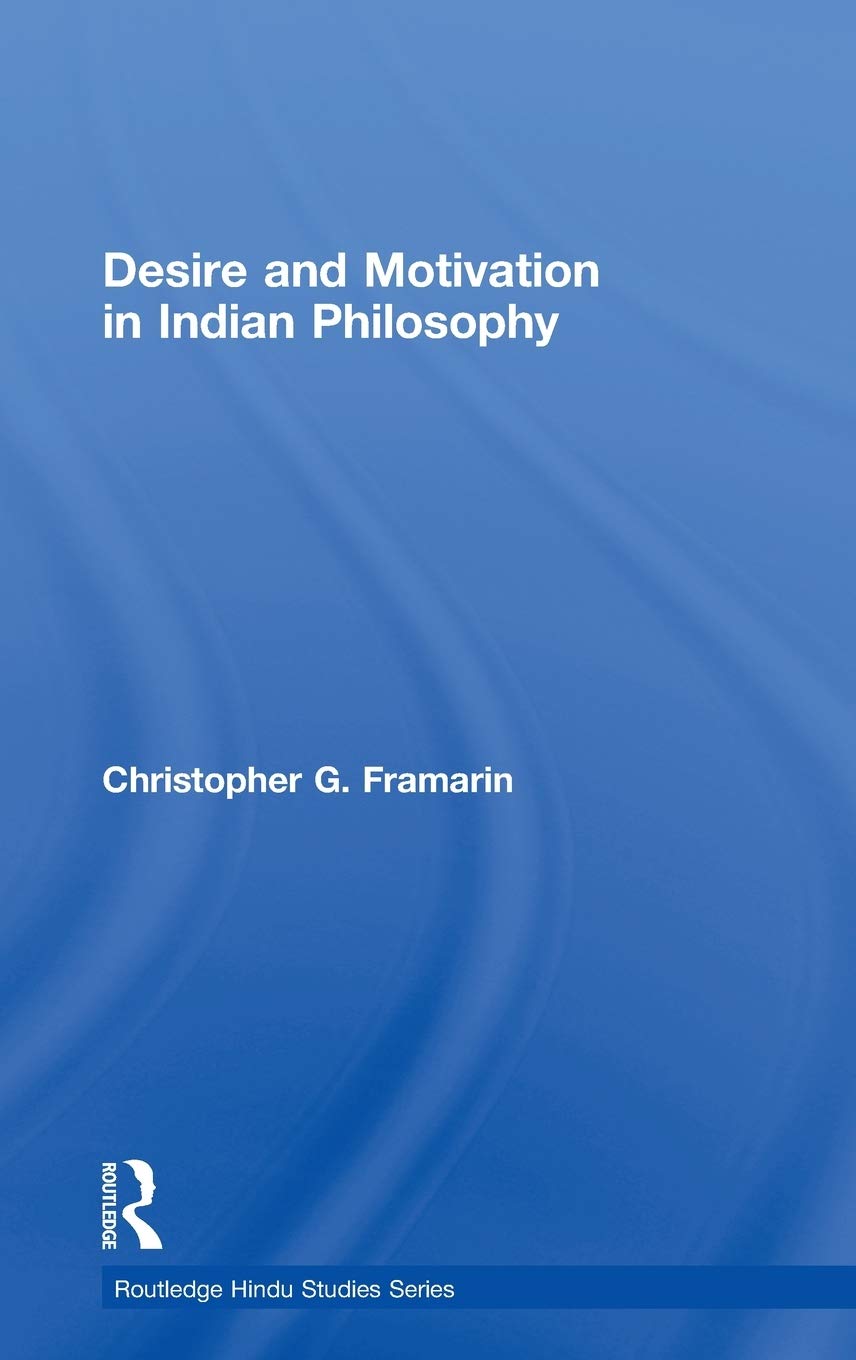
| Title | Desire and Motivation in Indian Philosophy |
| Series | Routledge Hindu Studies Series |
| Author | Christopher G. Framarin |
| Main subject | The doctrine of desireless action and theories of motivation |
| Approach | Translation, interpretation, and critical evaluation of classical Sanskrit texts |
| Audience | Scholars, graduate students, and specialists in Indian philosophy |
Our Verdict
Desire and Motivation in Indian Philosophy is a compact, well-argued study that rewards readers who want a rigorous reassessment of desireless action. It is good value for scholars and advanced students because it combines translation with clear critique, though its narrow scope means it is not a substitute for broader introductions to Indian philosophical traditions.
Frequently Asked Questions
Does the book include translations of primary Sanskrit texts?
Yes, the author provides translations of several seminal classical Sanskrit passages to support his argument for a literal reading of desireless action.
Is this suitable for beginners in Indian philosophy?
Not primarily; the book assumes familiarity with scholarly debate and close textual methods, so beginners may prefer a general introduction first.
What central claim does the author defend?
Framarin defends the claim that desireless action should be taken literally as action without any desire at all, against contemporary claims that permit certain desires.
Editor's Take
A focused, scholarly reassessment arguing that desireless action should be taken literally; valuable for graduate students and scholars for its translations and close textual critique.

Recently viewed
Recently viewed products will appear here as customers browse the store.