

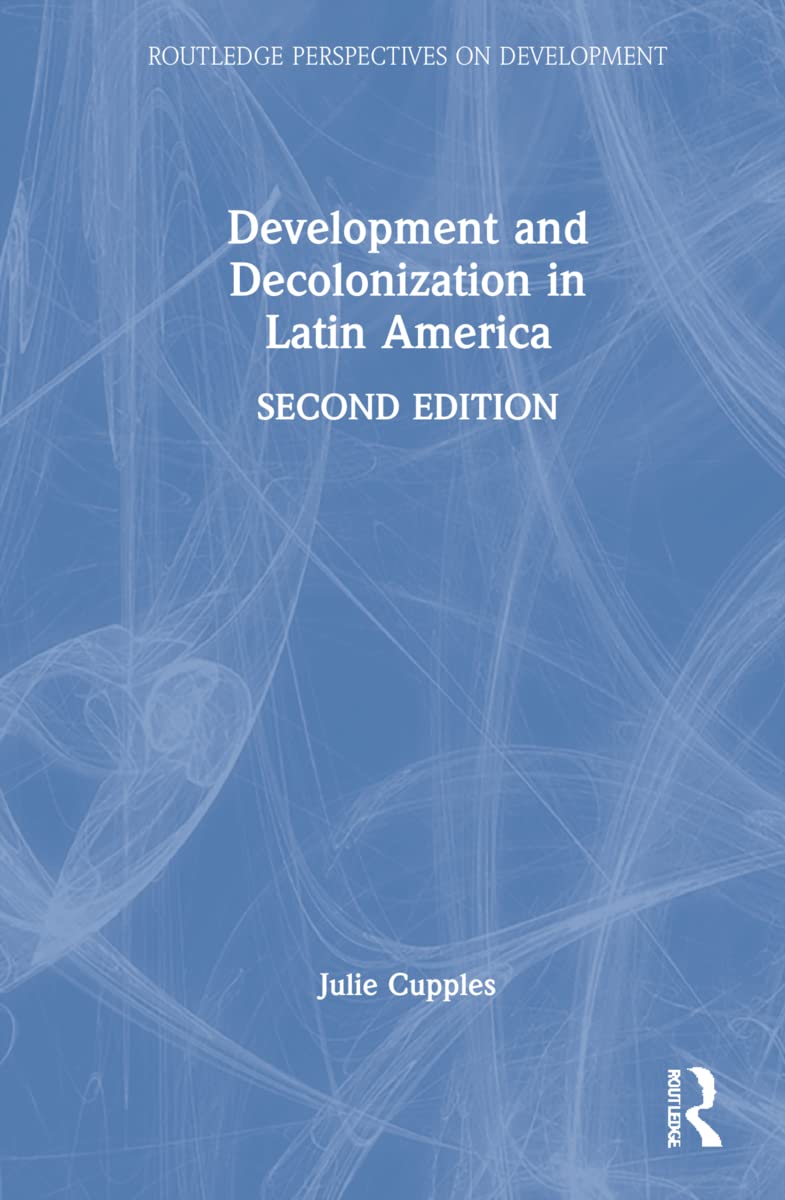
Development and Decolonization in Latin America - Accessible Guide
Development and Decolonization in Latin America - Accessible Guide
Price subject to change. Tap below for current.
Couldn't load pickup availability
Our review of Development and Decolonization in Latin America finds it an accessible, academically grounded introduction for readers who want a contemporary, critical view of the region. The single biggest reason to buy is its clear synthesis of decolonial theory and real political developments, making it useful for students and practitioners seeking context for current events rather than a narrowly theoretical treatise. The tone is readable and the new edition's updates on the Pink Tide, Colombian peace accords, and rising extractivism mean it feels timely for courses and informed general readers.
Key Features
- Updated coverage: The book integrates recent political shifts, including the retreat of the Pink Tide and new leadership patterns, which helps readers situate contemporary developments.
- Decolonial framing: A new chapter on decolonial theory anchors discussion in critical perspectives that challenge conventional development narratives.
- Contemporary case studies: Chapters on extractivism and murders of environmental defenders provide concrete examples that link policy to on-the-ground consequences.
- Expanded themes: New material on Afrodescendant struggles and feminist movements gives broader cultural and social context to political change.
- Accessible language: Written in plain, approachable prose so undergraduates and non-specialists can follow complex arguments without heavy jargon.
- Global context: A new chapter situates Latin America in world politics, helping readers connect regional trends to international dynamics.
Who It's For
This edition is well suited to undergraduate and graduate students in development studies, Latin American politics, and international relations who need a concise yet critical textbook that brings decolonial perspectives into mainstream syllabi. It also fits journalists and policy analysts seeking a single-volume refresher on recent political shifts and social movements.
Scholars looking for a dense theoretical monograph or primary empirical fieldwork reports may want a more specialized volume; this book prioritizes synthesis and accessibility over exhaustive data or narrowly focused ethnographic detail.
Pros & Cons
Pros
- Clear, approachable writing makes complex theories like decolonial theory easier to grasp for non-specialists.
- Timely updates on political changes, including the Colombian peace accords and the dynamics after the Pink Tide, keep the book current.
- Broader social coverage, such as chapters on Afrodescendant struggles and feminist movements, enriches political analysis with cultural perspectives.
- Concrete discussions of extractivism and environmental harms connect theory to pressing real-world issues.
Cons
- As a synthesis text, it may not satisfy readers seeking deep empirical datasets or detailed case ethnographies.
- Those needing a step-by-step policy manual for activism or implementation might find the emphasis more analytical than prescriptive.
Specifications
| Title | Development and Decolonization in Latin America |
| Series | Routledge Perspectives on Development |
| Author | Julie Cupples |
| Edition | Fully updated and revised edition |
| New chapters | Decolonial theory; Latin America in the world; disastrous development; Afrodescendant struggles |
| Focus areas | Political leadership changes, extractivism, peace accords, feminist and anti-patriarchal struggles |
Our Verdict
Development and Decolonization in Latin America is a strong, cost-effective choice for students and general readers who need a contemporary, critical overview rooted in decolonial perspectives. Its readable style and updated material make it good value for course use and for anyone seeking a succinct synthesis of recent political and social trends across the region.
Frequently Asked Questions
Does this edition include updates on recent political events?
Yes. The revised edition explicitly addresses recent leadership changes, the retreat of the Pink Tide, and the Colombian peace accords.
Is prior knowledge of theory required?
No. The author uses accessible language and adds a new chapter on decolonial theory to introduce key concepts for newcomers.
Will this book serve as an empirical handbook?
Not primarily; it synthesizes critical perspectives and contemporary developments rather than providing exhaustive datasets or in-depth ethnography.
Editor's Take
A concise, accessible synthesis rooted in decolonial theory, this updated edition is ideal for students and readers who want a timely, critical overview of Latin American political and social change.

Recently viewed
Recently viewed products will appear here as customers browse the store.