

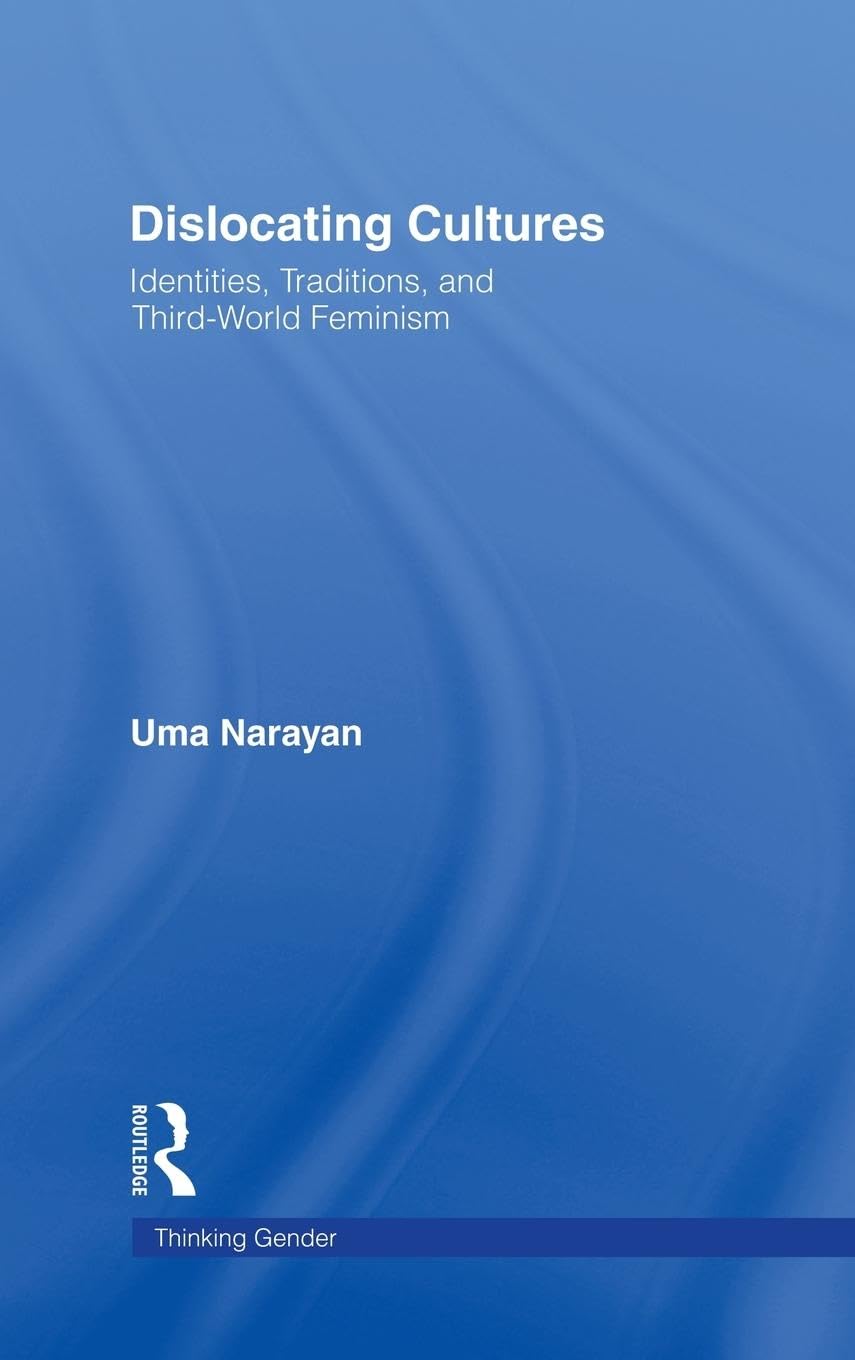
Dislocating Cultures (Thinking Gender) - of a Provocative Study
Dislocating Cultures (Thinking Gender) - of a Provocative Study
Price subject to change. Tap below for current.
Couldn't load pickup availability
In this review of Dislocating Cultures (Thinking Gender) the reviewer finds it a thoughtful, challenging read for anyone examining nationalism, post-colonial studies, and feminist theory. Uma Narayan approaches questions of nation, identity, and tradition with a clear intent to unsettle common assumptions, and the single biggest reason to buy is the book's sustained philosophical interrogation of how Western and Third World scholars misrepresent cultures and feminist agendas.
Key Features
- Critical perspective: Narayan offers a philosophical critique that clarifies how political forces have shaped misrepresentations of Third World cultures since colonial times.
- Focus on culture and difference: The book examines the concept of culture as a central obstacle to cross-cultural understanding and respect for difference.
- Interdisciplinary relevance: Essays speak to readers in nationalism studies, post-colonial theory, and feminist scholarship by linking these fields to common misreadings.
- Attention to information flow: The text analyzes how the movement of ideas across national contexts affects interpretations of feminist agendas.
- Scholarly tone: The work uses rigorous argumentation suitable for graduate study and classroom discussion in women's studies and political theory.
Who It's For
Dislocating Cultures is best for graduate students, academics, and informed readers interested in post-colonial studies, feminist theory, and the politics of identity who want a nuanced critique of how culture is used in scholarly and political discourses. It is particularly useful as a companion text in courses that interrogate multiculturalism or the legacy of colonial knowledge production.
Readers seeking a light, introductory overview of feminism or a practical handbook on activism should look elsewhere; the book assumes familiarity with theoretical language and aims more at rethinking frameworks than providing step-by-step guidance for organizing or policy design.
Pros & Cons
Pros
- Clear philosophical critique that helps readers reframe assumptions about nation and tradition.
- Bridges multiple disciplines, making it valuable for seminars in women's studies and political theory.
- Addresses historical roots of misrepresentation, giving depth to contemporary debates on multiculturalism.
Cons
- The scholarly tone and emphasis on conceptual analysis may limit accessibility for casual readers.
Specifications
| Title | Dislocating Cultures (Thinking Gender) |
| Author | Uma Narayan |
| Subjects | Post-colonial studies, feminist theory, nationalism |
| Intended audience | Graduate students, academics, feminist scholars |
| Perspective | Philosophical critique of culture and representation |
| Use cases | Course reading, scholarly research, critical discussion |
Our Verdict
Dislocating Cultures is a valuable, thought-provoking contribution for readers committed to unpacking how culture has been mobilized in both Western and Third World scholarship. Its philosophical depth and interdisciplinary reach make it good value for students and scholars who want rigorous critique rather than a primer on feminist activism.
Frequently Asked Questions
Is this book suitable for undergraduate courses?
It can be used in advanced undergraduate seminars, but instructors should prepare to guide students through its theoretical language.
Does the book offer practical policy recommendations?
No; the focus is critical and conceptual rather than prescriptive policymaking.
Which fields will find the book most relevant?
Post-colonial studies, feminist theory, women's studies, and political philosophy audiences will find it most directly relevant.
Editor's Take
Dislocating Cultures is a rigorous, interdisciplinary critique of how culture has been used to misrepresent Third World subjects; it is ideal for graduate students and scholars seeking a philosophical rethinking of nationalism and feminist theory.

Recently viewed
Recently viewed products will appear here as customers browse the store.