

DNA-Protein Interactions: Principles and Protocols - Practical Methods
DNA-Protein Interactions: Principles and Protocols - Practical Methods
Price subject to change. Tap below for current.
Couldn't load pickup availability
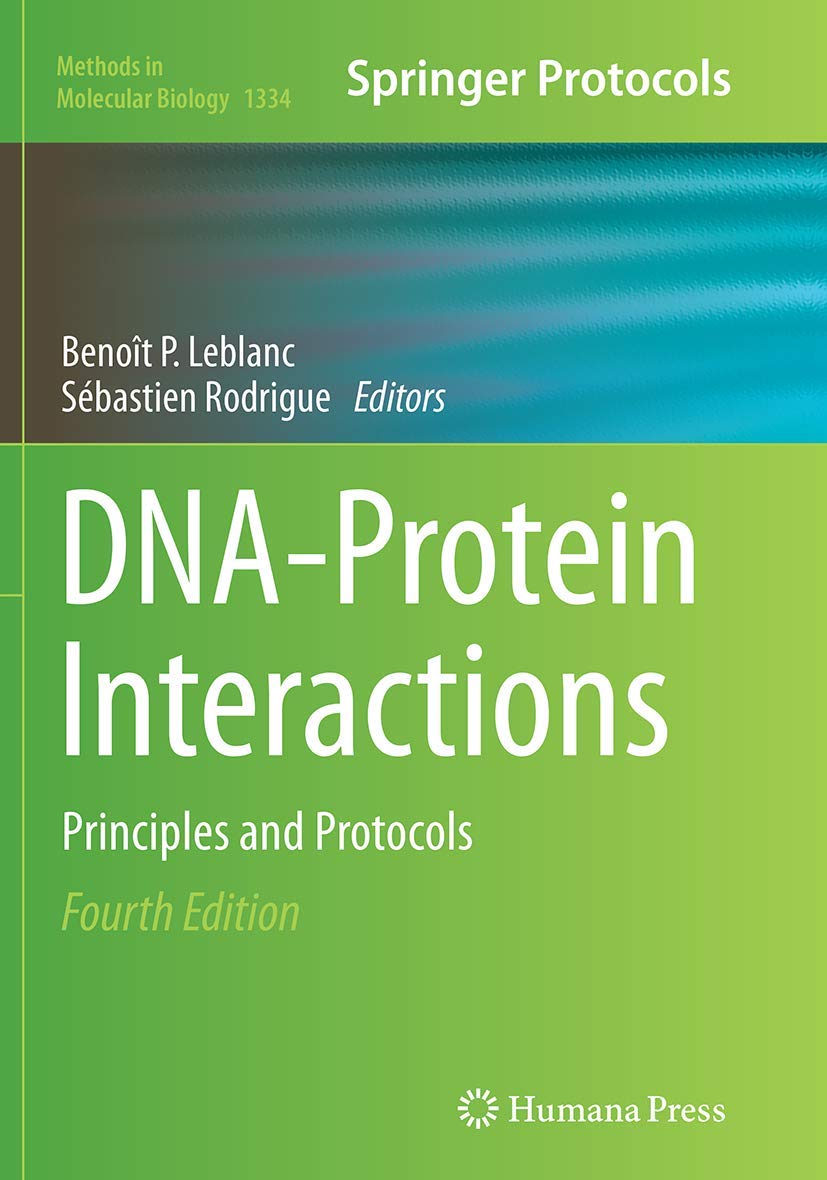
In this review of DNA-Protein Interactions: Principles and Protocols (Methods in Molecular Biology, 1334) the bottom line is clear: this fourth edition is aimed at researchers and advanced students who need a practical, up-to-date compendium of laboratory protocols and conceptual guidance for studying protein-DNA contacts. The review finds the volume most valuable for labs moving into larger-scale or single-molecule approaches because it combines tried-and-true techniques with new chapters covering modern, high-throughput workflows; readers will appreciate the balance of stepwise methods and contextual introductions that make complex experiments reproducible.
Key Features
- Updated edition: The fourth edition consolidates recent technical advances so readers can rely on methods that reflect current practice in the field.
- Range of scales: Protocols span from single-molecule techniques like FRET to complex approaches such as circular chromatin conformation capture (4C), allowing diverse experimental designs.
- Practical structure: Each chapter includes an introduction, materials and reagents lists, and stepwise protocols that make bench implementation straightforward.
- New large-scale content: Several new chapters focus on larger-scale experiments and "big biology" workflows useful for genomics-oriented labs.
- Methods in context: The book pairs hands-on procedures with conceptual discussion so users understand why particular steps matter for DNA-protein interaction studies.
Who It's For
This volume is best for molecular biologists, postdoctoral researchers, and advanced graduate students who perform or plan to implement experiments probing protein-DNA interactions, especially groups expanding into high-throughput or single-molecule methods. Bench scientists benefit from the clear materials lists and procedure-focused layout.
Those who should look elsewhere include beginners seeking a general textbook in molecular biology fundamentals and readers wanting only a brief overview; this book is protocol-heavy and assumes familiarity with core laboratory techniques and experimental design.
Pros & Cons
Pros
- Comprehensively updated chapters provide current, field-tested protocols useful for ongoing research.
- Coverage across scales-from single-molecule FRET to 4C-supports both detailed and large-scale experimental planning.
- Consistent chapter format with materials and stepwise methods eases reproducibility at the bench.
Cons
- The focus on protocols and technical detail means it is not intended as an introductory textbook for novices.
- Because it emphasizes methods, readers seeking extensive theory or background derivations may find coverage limited.
Specifications
| Title | DNA-Protein Interactions: Principles and Protocols |
| Series | Methods in Molecular Biology, 1334 |
| Edition | Fourth edition (fully updated chapters) |
| Editors | Benoit P. Leblanc, Sebastien Rodrigue |
| Focus | Protocols and techniques for studying protein-DNA interactions |
| Scope | From single-molecule FRET to circular chromatin conformation capture (4C) |
Our Verdict
For active researchers and labs implementing or scaling DNA-protein interaction studies, this fourth edition is a practical, good-value resource that combines updated, reliable protocols with contextual introductions. It is especially useful for teams working with single-molecule methods or chromatin conformation techniques, though it is not a primer for absolute beginners.
Frequently Asked Questions
Does this edition include new large-scale methods?
Yes. The fourth edition adds several chapters focused on larger-scale, "big biology" experiments such as chromatin conformation capture approaches.
Are protocols presented with materials and step-by-step instructions?
Yes. Each chapter includes introductions, lists of necessary materials and reagents, and stepwise protocols to aid bench implementation.
Is this suitable for beginners?
Not ideally; the book assumes familiarity with core laboratory techniques and is best for advanced students and experienced researchers.
Editor's Take
This fourth edition is a practical, updated compendium of protocols for researchers studying protein-DNA interactions, valuable for labs using single-molecule and large-scale methods though not ideal for beginners.

Recently viewed
Recently viewed products will appear here as customers browse the store.