

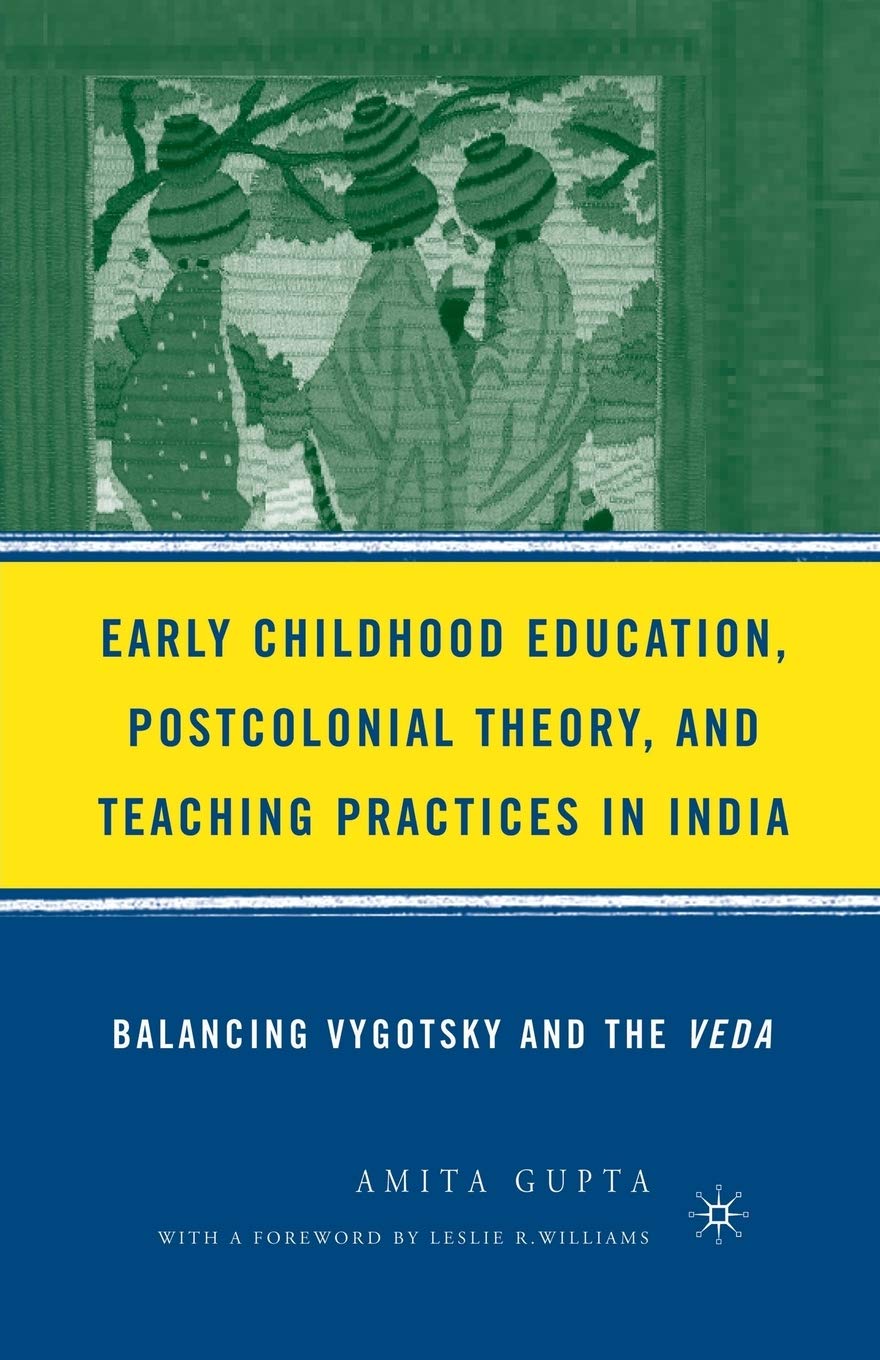
Early Childhood Education, Postcolonial Theory, and Teaching Practices
Early Childhood Education, Postcolonial Theory, and Teaching Practices
Price subject to change. Tap below for current.
Couldn't load pickup availability
In this review of Early Childhood Education, Postcolonial Theory, and Teaching Practices in India, the reviewer finds a thoughtful, research-led book that will matter most to readers interested in the intersection of educational practice and cultural history. The book's single biggest reason to buy is its careful tracing of how urban early childhood practitioners in India carry prior beliefs and practical knowledge shaped by wider religio-philosophical contexts, making it a valuable resource for educators and scholars seeking grounded links between theory and classroom practice.
Key Features
- Original linkage: The book maps previously unexamined connections between classroom practices and specific philosophical ideas, helping readers see practice in a new historical frame.
- Contextual focus: It locates practitioners' prior beliefs within the broader social and historical religio-philosophical context, which clarifies why certain routines persist.
- Urban perspective: Concentrating on urban India gives a concrete setting for the analysis, making examples and implications easier to apply for city-based educators.
- Theoretical balance: By weighing ideas associated with Vygotsky against indigenous strands such as the Veda, the book offers a comparative approach that encourages reflective teaching.
- Practical relevance: The work foregrounds early childhood practitioners' own practical knowledge, providing usable insight for improving classroom dialogue and pedagogy.
Who It's For
The book is well suited to education researchers, graduate students, and policy analysts who want a nuanced study linking educational theory with lived practice in India. Teachers and teacher educators interested in reflective practice will find the contextualized examples and philosophical framing especially useful for curriculum discussion and professional development.
Readers looking for a step-by-step classroom manual or a broad international survey should look elsewhere; this is a focused academic study centered on urban Indian early childhood settings and assumes familiarity with basic educational theory.
Pros & Cons
Pros
- Offers a distinctive connection between philosophy and day-to-day teaching, illuminating the roots of common practices.
- Highlights practitioners' prior beliefs and practical knowledge, making the research operationally relevant.
- Provides a balanced comparative lens between Vygotsky and indigenous thought, useful for reflective curriculum debates.
Cons
- Focused on urban India, so rural practices and broader national variation receive less attention.
- Not a practical how-to guide, so readers seeking immediate classroom activities may find it too conceptual.
Specifications
| Title | Early Childhood Education, Postcolonial Theory, and Teaching Practices in India |
| Author | A. Gupta |
| Subject | Early childhood education, postcolonial theory, pedagogical practice |
| Geographic focus | Urban India |
| Main themes | Vygotsky, the Veda, religio-philosophical context |
| Intended audience | Researchers, educators, policy analysts |
Our Verdict
This is a substantial, targeted study that merits purchase by scholars and reflective practitioners who want to understand how historical and philosophical ideas shape early childhood teaching in urban India. Its value lies in connecting theory to practitioners' prior beliefs, offering well grounded insight rather than quick fixes, and making it a useful resource for informed curriculum discussion.
Frequently Asked Questions
Does this book include classroom examples?
The book uses examples from urban Indian early childhood settings to illustrate links between practice and philosophy.
Is it practical for in-service teachers?
It is practical in a reflective sense, helping teachers reconsider routines, but it is not a lesson-plan manual.
Who is the author?
A. Gupta, who frames the study within postcolonial theory and education practice.
Editor's Take
A focused, well-argued study that links educational theory to the prior beliefs of urban Indian early childhood practitioners; best for researchers and reflective teachers who want contextual insight rather than a how-to guide.

Recently viewed
Recently viewed products will appear here as customers browse the store.