

ECGs Made Easy - Practical Guide to Rhythm Interpretation
ECGs Made Easy - Practical Guide to Rhythm Interpretation
Price subject to change. Tap below for current.
Couldn't load pickup availability
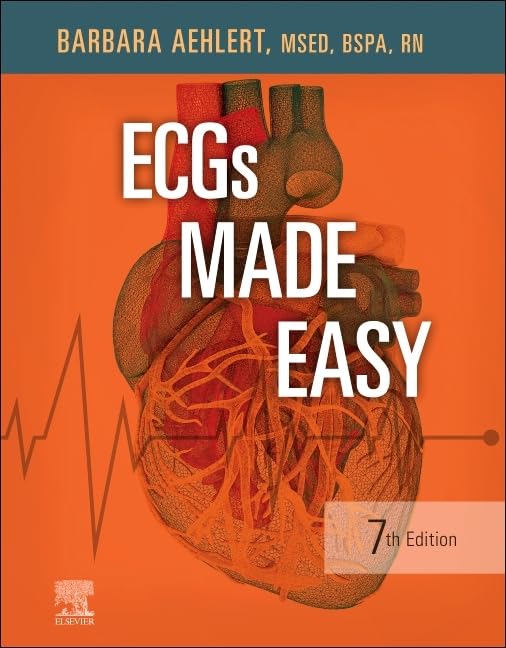
In this review of ECGs Made Easy, the 7th edition, the bottom line is straightforward: this book is for learners who need a clear, visual, and practical approach to rhythm recognition. Barbara Aehlert's conversational teaching style makes complex ECG concepts approachable, and the edition's sample strips, concise dysrhythmia descriptions, and end-of-chapter practice work together to build confidence. If you need a reference that emphasizes pattern recognition and treatment basics rather than dense physiology, this guide delivers useful, hands-on instruction.
Key Features
- Visual rhythm examples: Each dysrhythmia is accompanied by a sample ECG rhythm strip to help the reader identify waveform patterns quickly and reliably.
- Clear descriptions: Brief, easy-to-read explanations summarize rhythm characteristics so learners can recall distinguishing features when reading real tracings.
- Clinical context: Possible signs and symptoms are listed with each rhythm to link ECG findings to patient presentation and urgency.
- Treatment recommendations: Recommended treatment for each rhythm provides practical next steps for clinicians and students who need action-oriented guidance.
- End-of-chapter practice: Additional rhythm strips and review exercises reinforce interpretation skills through repeated exposure and self-testing.
Who It's For
ECGs Made Easy is aimed at EMS providers, nursing students, allied health learners, and clinicians who need a straightforward, pattern-based introduction to ECG interpretation. The conversational tone and visual focus make it a good study aid for classroom learning, clinical skills labs, or quick reference during rotation preparation.
Those who require an advanced electrophysiology reference, detailed explanation of underlying cardiac conduction physiology, or a highly technical text with extensive differential diagnoses may want a supplemental resource alongside this guide, as the book prioritizes recognition and basic treatment guidance over deep pathophysiologic detail.
Pros & Cons
Pros
- Readable, conversational writing promotes retention and reduces intimidation when learning ECGs.
- Sample rhythm strips with summaries make it easier to translate visual patterns into diagnoses.
- Chapter review exercises provide practical reinforcement and additional practice rhythms.
- Concise treatment recommendations help link interpretation to bedside actions.
Cons
- Not a deep electrophysiology textbook; readers seeking advanced pathophysiology will need additional material.
- The focus on basic dysrhythmias means rare or highly complex arrhythmias receive limited coverage.
Specifications
| Title | ECGs Made Easy, 7th Edition |
| Author | Barbara J Aehlert MSEd BSPA RN |
| Focus | Heart rhythm recognition and ECG interpretation |
| Content style | Visual examples, conversational explanations, and practice exercises |
| Included material | Sample ECG rhythm strips, signs and symptoms, recommended treatment |
| Audience | EMS, nursing, allied health, clinicians needing practical ECG skills |
Our Verdict
ECGs Made Easy is a practical, value-driven choice for learners who want to master rhythm recognition without wading through dense theory. Its visual approach, clear descriptions, and end-of-chapter practice make it especially useful for EMS and nursing students. For readers seeking advanced electrophysiology detail, this should be paired with a specialist text, but as a hands-on interpretation guide it is an efficient, reliable resource.
Frequently Asked Questions
Does this edition include practice strips?
Yes, each chapter ends with additional rhythm strips and review exercises to reinforce interpretation skills.
Is the book suitable for beginners?
Yes, the conversational tone and visual examples make it well suited to beginners learning basic dysrhythmia recognition.
Will it replace a detailed electrophysiology text?
No, it focuses on recognition and treatment basics and is best paired with a more technical reference for in-depth physiology.
Editor's Take
ECGs Made Easy is a practical, visual guide for learners who need to master rhythm recognition; its sample strips, clear descriptions, and chapter exercises make it excellent value for EMS and nursing students.

Recently viewed
Recently viewed products will appear here as customers browse the store.