

Economic Inequality and Income Distribution - Practical Analysis
Economic Inequality and Income Distribution - Practical Analysis
Price subject to change. Tap below for current.
Couldn't load pickup availability
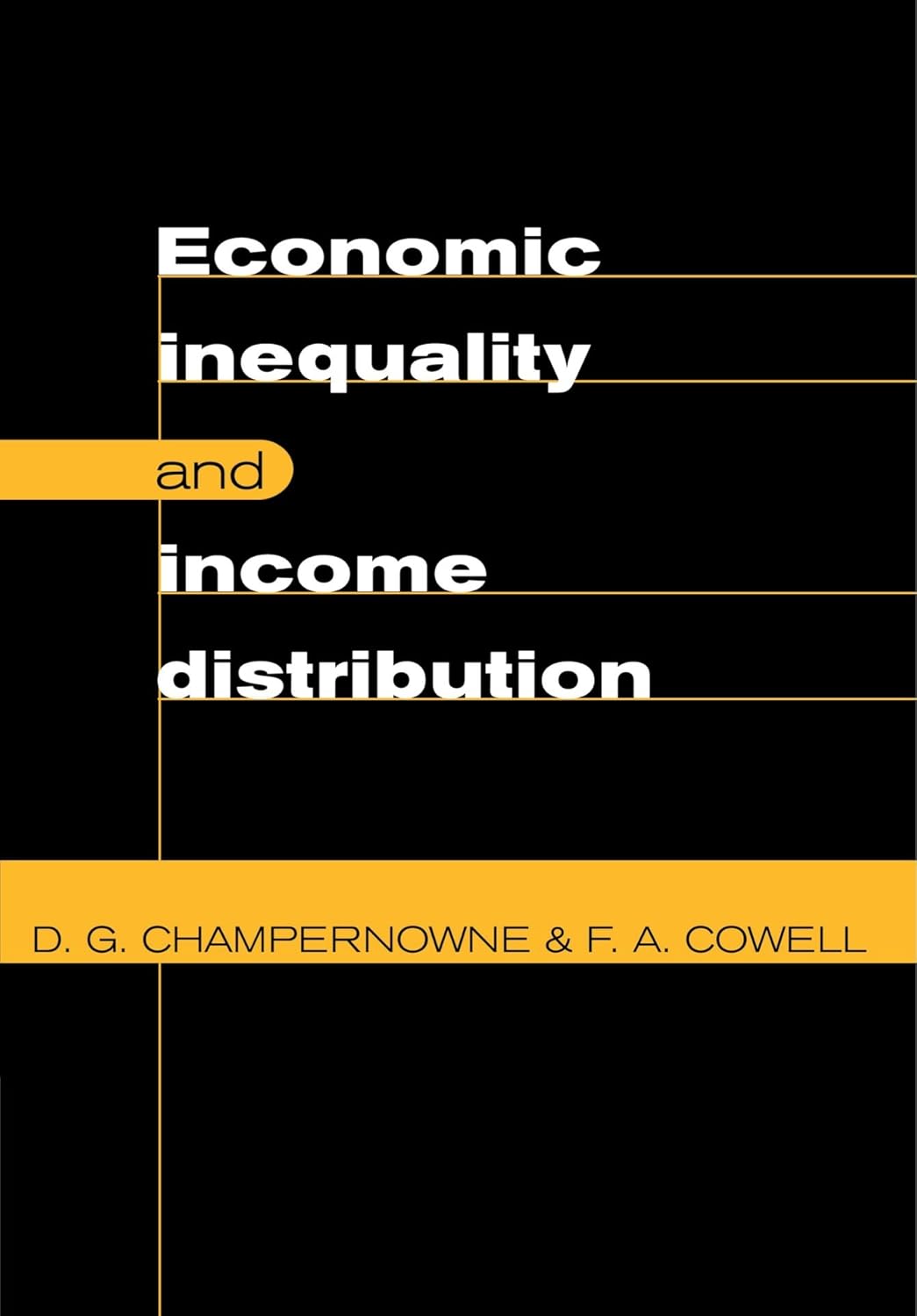
In this review of Economic Inequality and Income Distribution the reviewer finds a thoughtful, applications-focused text for readers who need a rigorous but practical treatment of how incomes are distributed and why it matters. The book's single biggest strength is its integrated approach: it combines the practical and theoretical bases for inequality analysis while illustrating mechanisms with real data and examples, making it a useful reference for analysts and policymakers who want a grounded, methodical discussion rather than a purely abstract treatment.
Key Features
- Integrated approach: Brings together theory and practice so readers can see how models of distribution connect to empirical outcomes.
- Focus on policy relevance: Provides discussion useful to policy makers assessing the merits and weaknesses of standard economic models.
- Real-data examples: Uses illustrative examples and real world data to demonstrate the implications of distributional mechanisms.
- Critical assessment: Offers balanced evaluation of standard models, highlighting where they succeed and where they fall short.
- Practical guidance: Equips analysts with conceptual tools to apply inequality analysis to real problems.
Who It's For
The book is best suited to economists, graduate students, policy analysts, and researchers who need a comprehensive text on income distribution that links analytical foundations to empirical work. Its emphasis on merits and weaknesses of models means it serves well as a course text or a reference when designing or evaluating policy interventions.
Readers seeking a short introductory primer or a casual overview should look elsewhere, since the treatment assumes some familiarity with economic concepts and values detailed discussion rather than popular summaries.
Pros & Cons
Pros
- Clear integration of theory and practice supports applied research and policy analysis.
- Real-data examples make abstract mechanisms concrete and easier to evaluate.
- Balanced critique of models helps readers understand limitations as well as strengths.
Cons
- Not aimed at casual readers; the material is more demanding than a popular introduction.
Specifications
| Title | Economic Inequality and Income Distribution |
| Authors | D. G. Champernowne, F. A. Cowell |
| Subject focus | Inequality analysis and personal income distribution |
| Approach | Integrated theoretical and practical treatment |
| Uses | Policy assessment, empirical applications, academic study |
| Special emphasis | Assessment of standard economic models with real data |
Our Verdict
Economic Inequality and Income Distribution is a solid, well-structured resource for professionals and students who need a rigorous, application-oriented treatment of income distribution. It is good value for those wanting an integrated view of theory, empirical examples, and policy critique, but less suitable for readers seeking an accessible popular account.
Frequently Asked Questions
Is this book suitable for policy makers?
Yes. The text specifically addresses policy relevance and the merits and weaknesses of standard models, making it practical for policy assessment.
Does it include empirical examples?
Yes. The authors use real data and illustrative examples to show how distributional mechanisms operate in practice.
Is prior economic training required?
Some familiarity with economic concepts is helpful, as the book is more detailed and analytical than a general-interest primer.
Editor's Take
A rigorous, application-focused resource that links theory and empirical examples for analysts and policy makers; recommended for those needing a methodical treatment of income distribution.

Recently viewed
Recently viewed products will appear here as customers browse the store.