

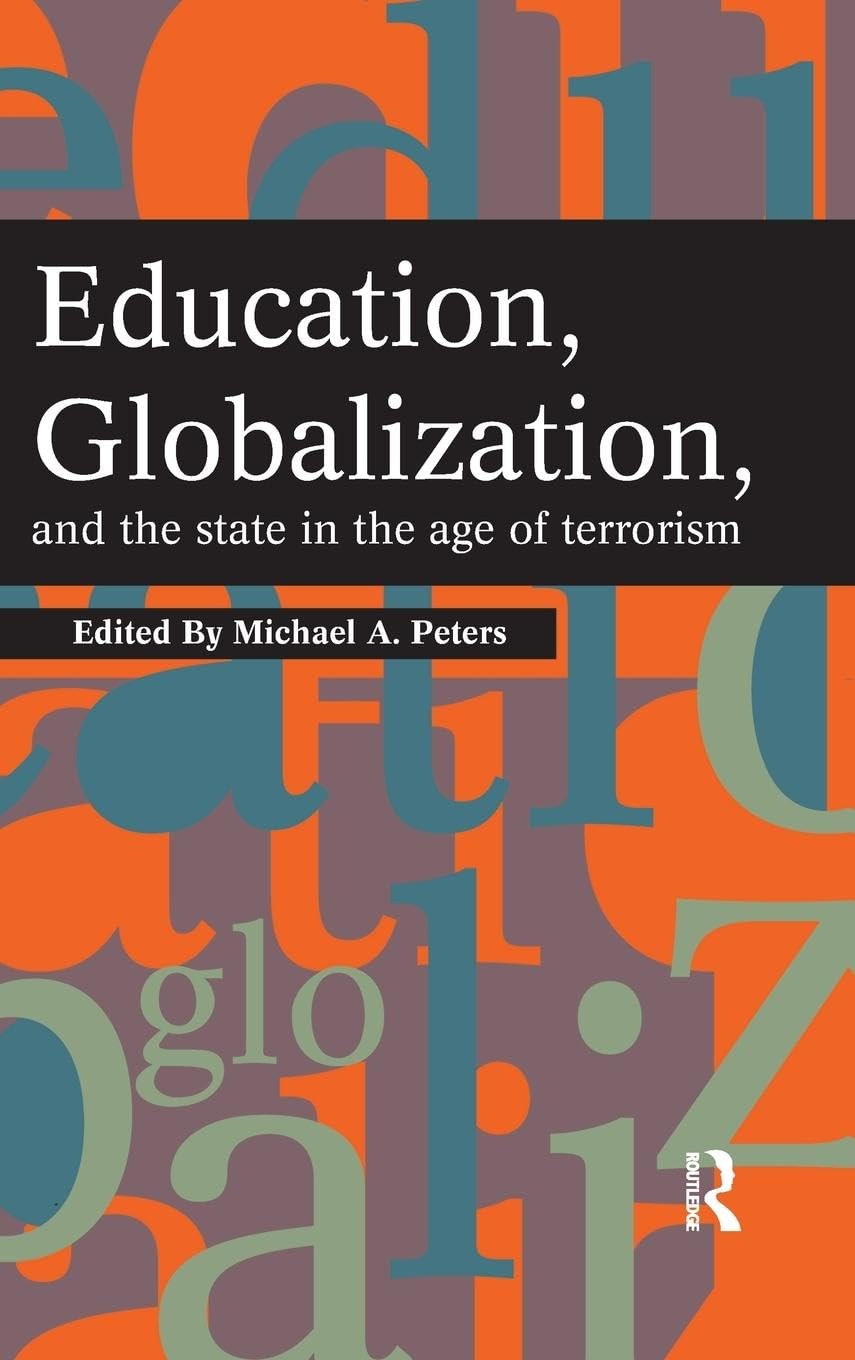
Education, Globalization and the State in the Age of Terrorism
Education, Globalization and the State in the Age of Terrorism
Price subject to change. Tap below for current.
Couldn't load pickup availability
In this review of Education, Globalization and the State in the Age of Terrorism the reviewer outlines who will get the most from Michael A. Peters' collection and why it matters now. The book is best suited for academics, policy students and educators seeking a critical, theory-driven examination of how education intersects with terrorism and state policy. Peters frames education as both a site of resistance and a mechanism of empire, offering a focused exploration of citizenship, feminism after 9/11, youth identity and the educational dimensions of the war against Iraq.
Key Features
- Thematic focus: Concentrates on the relationship between education and terrorism to help readers understand how schooling functions in contexts of conflict and emergent statehood.
- Global perspective: Discusses globalization and empire to situate educational policy within broader transnational forces.
- Cultural analysis: Explores youth identities and feminism post-9/11 to offer nuanced cultural readings relevant to educators and researchers.
- Policy relevance: Examines citizenship, democracy and counter-terrorism to inform debates about education policy in a culture of permanent war.
- Case focus: Includes attention to the war against Iraq as a concrete example linking education, war and state interests.
Who It's For
Scholars and graduate students in education, political theory and cultural studies will find this book particularly useful; the essays are framed for readers comfortable with critical theory and a political lens. Teachers interested in human rights education or counter-terrorism pedagogy will appreciate the discussion of citizenship and youth identity.
Readers seeking a practical classroom manual or a step-by-step policy handbook should look elsewhere, as the book is analytical and theoretical rather than a how-to guide. Those wanting broad introductory overviews of terrorism without a focus on education may also find the scope narrower than expected.
Pros & Cons
Pros
- Clear linkage of education to global political processes, which helps readers see schooling as part of empire and resistance.
- Strong attention to contemporary topics such as feminism post-9/11 and youth identities that make the analysis relevant to current debates.
- Case-oriented discussion of the war against Iraq supplies a concrete historical anchor for theoretical arguments.
Cons
- The book is theoretical and dense in places, so it may be challenging for readers seeking practical policy prescriptions or light reading.
Specifications
| Title | Education, Globalization and the State in the Age of Terrorism |
| Series | Interventions: Education, Philosophy, and Culture |
| Author / Editor | Michael A. Peters |
| Main themes | Education, terrorism, globalization, state, citizenship |
| Focus areas | Feminism post-9/11, youth identities, war against Iraq |
Our Verdict
Education, Globalization and the State in the Age of Terrorism is a rigorous, theory-rich collection that rewards readers seeking to understand how education operates within contemporary conflicts and global power structures. Academics and advanced students will find good value in its focused analyses and case material, while those wanting practical classroom tools should consider supplementing it with applied resources.
Frequently Asked Questions
Does this book address practical classroom strategies?
Answer. The book is primarily analytical and theoretical; it does not provide step-by-step classroom methods but offers conceptual frameworks educators can adapt.
Is the war against Iraq discussed in detail?
Answer. Yes; the book uses the war against Iraq as a focal case to connect education, war and state interests.
Who is the author and what perspective is offered?
Answer. Michael A. Peters edits the collection and the perspective is critical, combining education, philosophy and cultural analysis to examine terrorism and globalization.
Editor's Take
A rigorous, theory-rich collection valuable for academics and advanced students interested in how education connects with terrorism, globalization and state power; best for readers seeking conceptual analysis rather than practical classroom guides.

Recently viewed
Recently viewed products will appear here as customers browse the store.