

Electrophilic Halogenation: Reaction Pathways Involving Attack
Electrophilic Halogenation: Reaction Pathways Involving Attack
Price subject to change. Tap below for current.
Couldn't load pickup availability
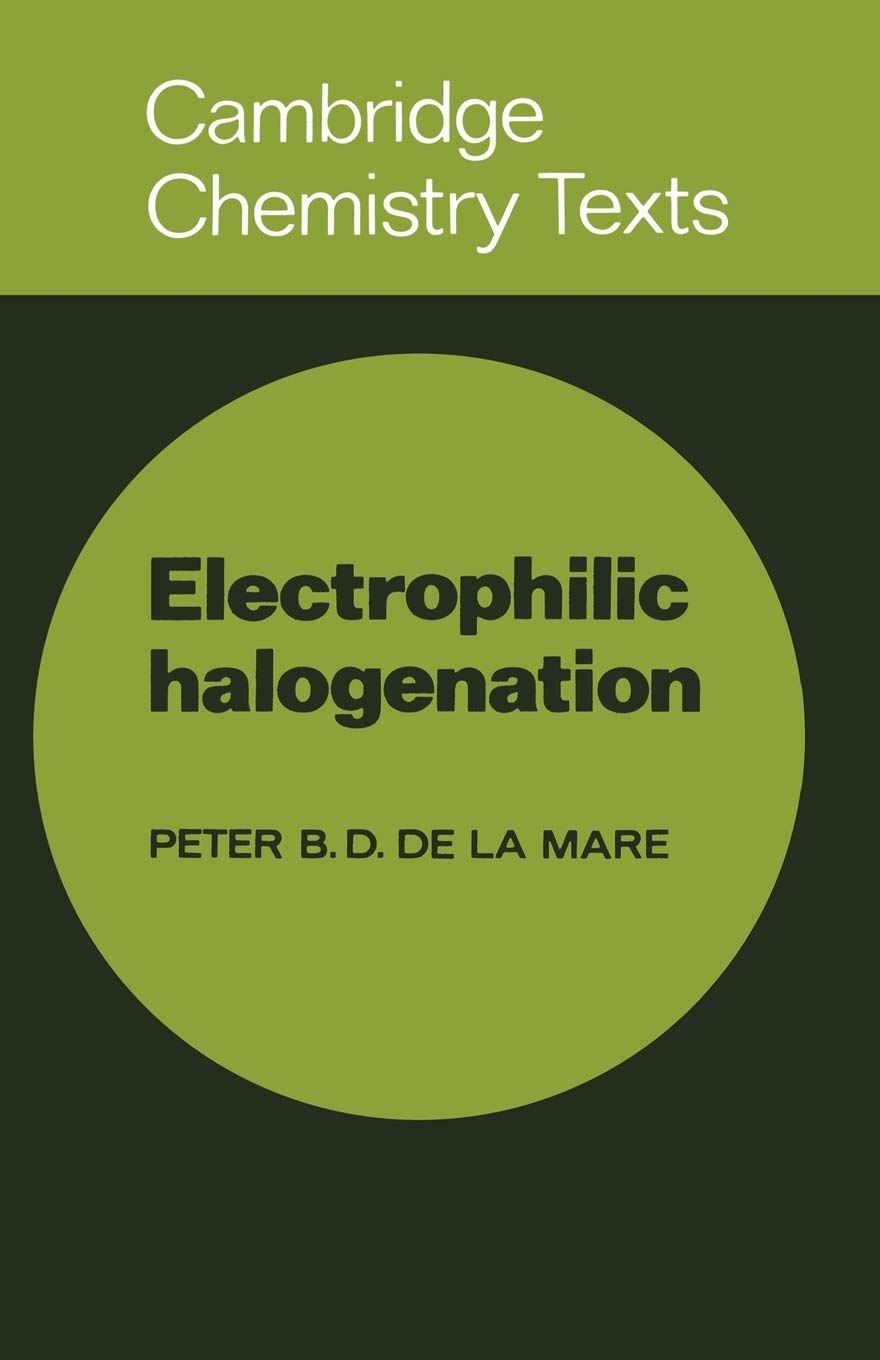
In this review of Electrophilic Halogenation, Peter B. D. de la Mare presents a focused, scholarly treatment aimed at chemists who need a mechanistic bridge between inorganic halogen behaviour and organic reactivity. The book's single biggest reason to buy is its consistent mechanistic viewpoint: treating diverse halogenation reactions as sequences that develop carbocationic centres via electrophilic attack by halogen, which then determine the course of the reaction. This review assesses clarity, scope and suitability for researchers and advanced students.
Key Features
- Mechanistic focus: The book links a wide range of halogenation reactions through a single conceptual framework, helping readers see patterns across different substrates.
- Covers halogen properties: Introductory chapters describe the properties of various halogens and simple derivatives, providing useful context before detailed mechanisms.
- Scope across unsaturated compounds: It surveys the whole gamut of unsaturated organic molecules, making the text relevant for many classes of organic substrates.
- Emphasis on intermediates: The discussion of fleeting, unstable intermediates clarifies why products form as they do and aids interpretation of experimental results.
- Theoretical and practical balance: The book connects practical reaction outcomes to underlying theory, useful for both bench chemists and theoreticians.
Who It's For
This book is best suited to advanced undergraduates, graduate students and practising organic chemists who want a rigorous, mechanism-centred account of halogenation reactions and how carbocationic centres influence product formation. It is particularly useful as a reference for researchers analysing reaction pathways or teaching specialized courses in reaction mechanisms.
Readers seeking an introductory textbook for beginners or a modern lab manual with experimental procedures should look elsewhere; the work is analytical and conceptual rather than a step-by-step experimental guide, and its original 1976 perspective is strongest for mechanistic insight rather than the latest synthetic methods.
Pros & Cons
Pros
- Clear mechanistic framework that unifies many halogenation reactions under the idea of carbocationic centre development.
- Useful introductory chapters on halogen properties that ground the subsequent reaction discussions.
- Insightful treatment of transient intermediates that helps interpret reaction outcomes.
Cons
- Published in 1976, the book does not cover more recent experimental techniques or contemporary literature.
Specifications
| Title | Electrophilic Halogenation: Reaction Pathways Involving Attack by Electrophilic Halogens on Unsaturated Compounds |
| Author | Peter B. D. de la Mare |
| Series | Cambridge Texts in Chemistry and Biochemistry |
| Focus | Mechanistic pathways and carbocationic intermediates from electrophilic halogen attack |
| Coverage | Properties of halogens, simple derivatives, and reactions of unsaturated organic molecules |
| Approach | Theoretical and mechanistic rather than procedural |
Our Verdict
Electrophilic Halogenation is a valuable, mechanism-focused reference for advanced students and practising organic chemists who need a coherent explanation of halogenation pathways. While it lacks modern experimental updates, its principled treatment of electrophilic attack by halogen and resulting carbocationic behaviour makes it good value for those studying reaction mechanisms.
Frequently Asked Questions
Is this book suitable for undergraduate courses?
It is most suitable for advanced undergraduate or graduate courses that emphasize reaction mechanisms rather than introductory surveys.
Does the book include experimental procedures?
No, the emphasis is on mechanistic explanation and theoretical linkage rather than step-by-step laboratory methods.
Is the material still relevant despite its 1976 publication?
Yes, the mechanistic perspectives and discussion of intermediates remain valuable for understanding halogenation pathways, though readers may supplement with current literature for recent developments.
Editor's Take
A mechanism-focused, valuable reference for advanced students and organic chemists; it links halogenation reactions through electrophilic attack and carbocationic intermediates, offering strong conceptual value despite its 1976 publication.

Recently viewed
Recently viewed products will appear here as customers browse the store.