

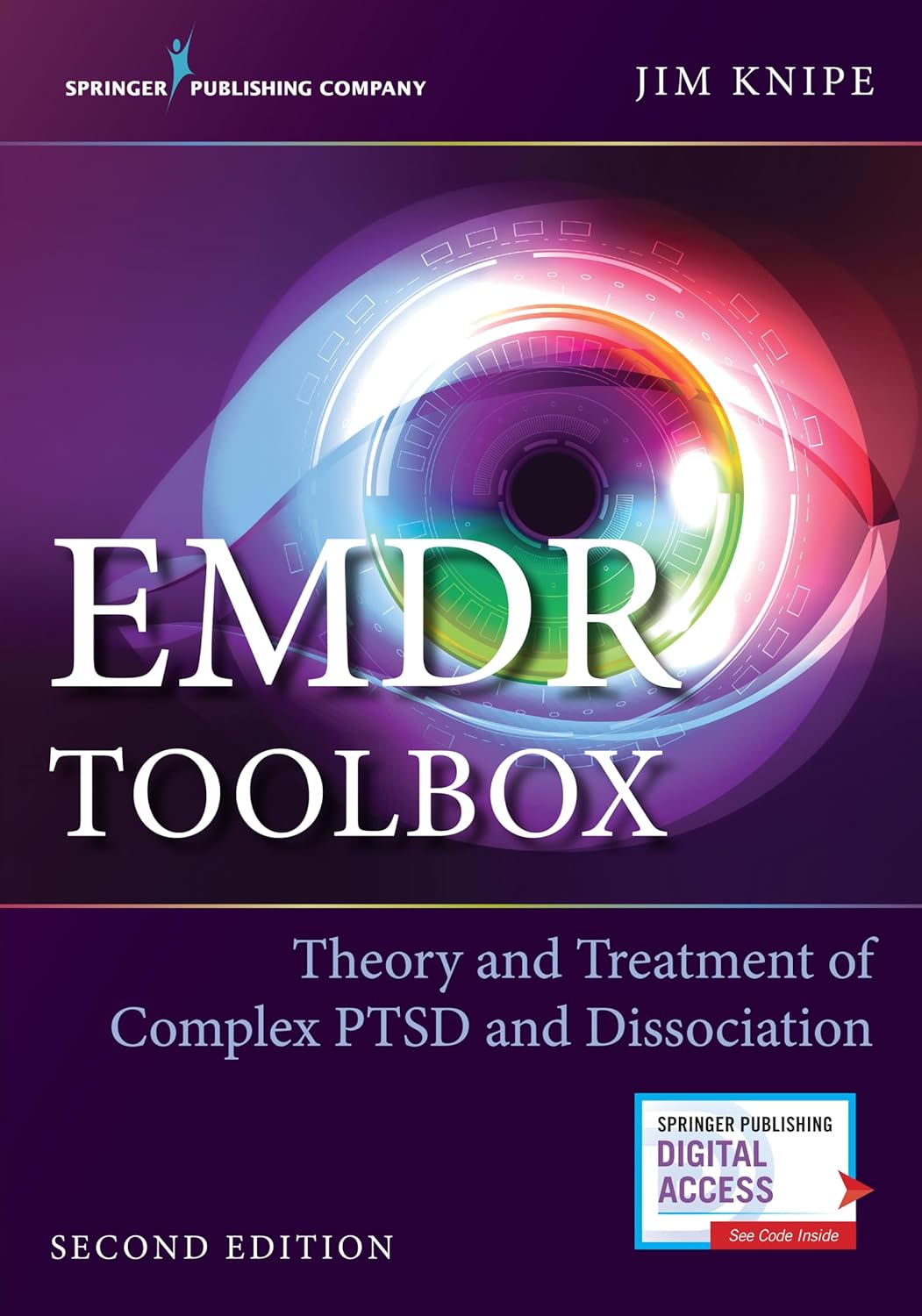
EMDR Toolbox Theory and Treatment of Complex PTSD and Dissociation
EMDR Toolbox Theory and Treatment of Complex PTSD and Dissociation
Price subject to change. Tap below for current.
Couldn't load pickup availability
In this review of EMDR Toolbox: Theory and Treatment of Complex PTSD and Dissociation (Second Edition), the bottom line is simple: therapists trained in Standard EMDR who treat complex trauma will find a focused, practical companion that expands technique and session structure. The author revisits core ideas from an Adaptive Information Processing model and presents refinements and new discoveries that aim to accelerate progress safely. This book is best for clinicians seeking concrete, EMDR-based tools for difficult-to-treat clients rather than a beginner textbook on basic EMDR procedure.
Key Features
- Practical EMDR tools: Presents a set of EMDR-based strategies that clinicians can apply directly to complex emotional presentations.
- Session structuring guidance: Describes ways to organize therapy sessions to promote safety and pace that support clients with dissociation.
- Refined procedures: Updates original techniques with refinements aimed at facilitating and safely accelerating therapeutic progress.
- Focus on complex PTSD: Provides an overview of principal issues specific to complex emotional problems that originate in developmental trauma.
- Second edition updates: Reflects ongoing clinical discoveries and demonstrates how to extend the therapeutic power of AIP-based methods.
Who It's For
The book is aimed at licensed therapists and clinicians who already have training in Standard EMDR and need a resource for treating clients with complex PTSD, dissociative symptoms, or persistent emotional dysregulation. It is especially useful for practitioners who want concrete session-level tactics and refinements they can integrate into ongoing cases.
It is not designed as an introductory manual for clinicians without EMDR training or for lay readers seeking a general self-help guide; those audiences should look for foundational EMDR texts or basic trauma workbooks instead.
Pros & Cons
Pros
- Provides actionable EMDR-based interventions that clinicians can implement with complex cases.
- Includes thoughtful advice on structuring sessions to enhance safety for dissociative clients.
- Refinements in the second edition reflect practical clinical experience and recent discoveries.
Cons
- Not suitable as a standalone EMDR training text; prior Standard EMDR training is assumed.
Specifications
| Title | EMDR Toolbox: Theory and Treatment of Complex PTSD and Dissociation (Second Edition) |
| Format | Paperback |
| Author / Brand | Jim Knipe |
| Edition | Second Edition |
| Intended audience | Therapists trained in Standard EMDR |
| Focus | Complex PTSD and dissociation |
Our Verdict
EMDR Toolbox (Second Edition) is a concise, practice-oriented resource that delivers meaningful extensions to Standard EMDR for clinicians working with complex trauma and dissociation. For trained EMDR practitioners it offers good value by translating clinical discoveries into usable strategies that can help clients progress more safely and efficiently in therapy.
Frequently Asked Questions
Is this book appropriate for beginners in EMDR?
The book assumes prior Standard EMDR training and is best used by clinicians already familiar with core EMDR procedures.
Does the second edition add new material?
Yes, the second edition includes refinements and new discoveries intended to extend therapeutic methods based on the AIP model.
Will this help with dissociative clients?
The text focuses on strategies and session structure specifically aimed at safely treating clients with dissociation and complex PTSD.
Editor's Take
A practice-focused second edition that offers trained EMDR clinicians refined tools and session-structuring guidance to treat complex PTSD and dissociation more safely and effectively.

Recently viewed
Recently viewed products will appear here as customers browse the store.