

Employment Law - Student Guide to Principles and Context
Employment Law - Student Guide to Principles and Context
Price subject to change. Tap below for current.
Couldn't load pickup availability
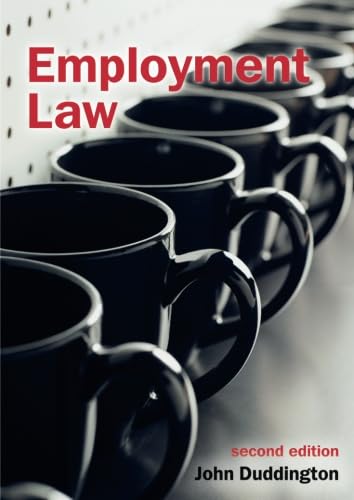
In this review of Employment Law by John Duddington, the book is recommended primarily for students and early-stage learners who need a clear, contextual introduction to employment law. Presented in a user-friendly style, the text excels at linking legal principles to their political, social and economic settings, which is the single biggest reason to buy: it frames doctrine within real-world forces so readers can see why rules exist, not just what they are. This review focuses on usefulness for coursework, clarity of explanation, and how well examples and statistics help understanding.
Key Features
- User-friendly presentation: The writing is accessible and paced for students approaching the subject for the first time, making complex topics easier to follow.
- Contextual analysis: Legal principles are introduced within political, social and economic contexts so readers grasp the background that shapes employment law.
- Illustrative examples: Statistics and real-world examples relate abstract rules to everyday employment situations, which helps retention and application.
- Thought-provoking approach: The text encourages critical thinking about how law operates in practice rather than only teaching rote rules.
- Academic suitability: The tone and substance are appropriate for undergraduate courses and independent study in employment law.
Who It's For
Employment Law is primarily aimed at students of employment law, particularly those encountering the subject for the first time, as well as lecturers seeking a clear introductory text to recommend. The explanatory style and contextual framing make it suitable for coursework, seminar preparation, and early-stage revision.
Readers who need a practitioner-focused handbook, exhaustive case law compendium, or specialist commentary on niche employment issues should look elsewhere; this book is best used as an educational foundation rather than a detailed practitioner reference.
Pros & Cons
Pros
- Clear, student-friendly exposition that makes introductory material accessible.
- Strong contextual framing that links legal principles to broader political and social forces.
- Useful use of statistics and examples to connect doctrine with real workplace situations.
Cons
- Not a substitute for detailed practitioner texts or exhaustive case law compilations.
Specifications
| Title | Employment Law |
| Author | John Duddington |
| Intended audience | Students of employment law |
| Style | User-friendly, contextual |
| Content focus | Legal principles in political, social and economic context |
| Includes | Statistics and real-world examples |
Our Verdict
Employment Law by John Duddington is a solid introductory textbook for students who want more than a catalogue of rules; it explains why employment law works as it does and uses examples to aid understanding. For classroom study and early independent learning it offers good value, though those requiring exhaustive practitioner detail should supplement it with specialist materials.
Frequently Asked Questions
Is this book suitable for first-year law students?
Yes; the presentation and explanations are aimed at readers approaching employment law for the first time.
Does it include case law and statutes in full?
The book discusses principles and uses examples and statistics but is not a comprehensive case law compendium or statutory reference.
Will this help with exam preparation?
Yes; its clear framing of principles and contextual examples make it useful for coursework and revision.
Editor's Take
Employment Law is a strong introductory text that links legal principles to political, social and economic context, making it ideal for students and early-stage learners who need a clear, contextual foundation.

Recently viewed
Recently viewed products will appear here as customers browse the store.