

Empress Marie Therese and Music at the Viennese Court - Scholarly
Empress Marie Therese and Music at the Viennese Court - Scholarly
Price subject to change. Tap below for current.
Couldn't load pickup availability
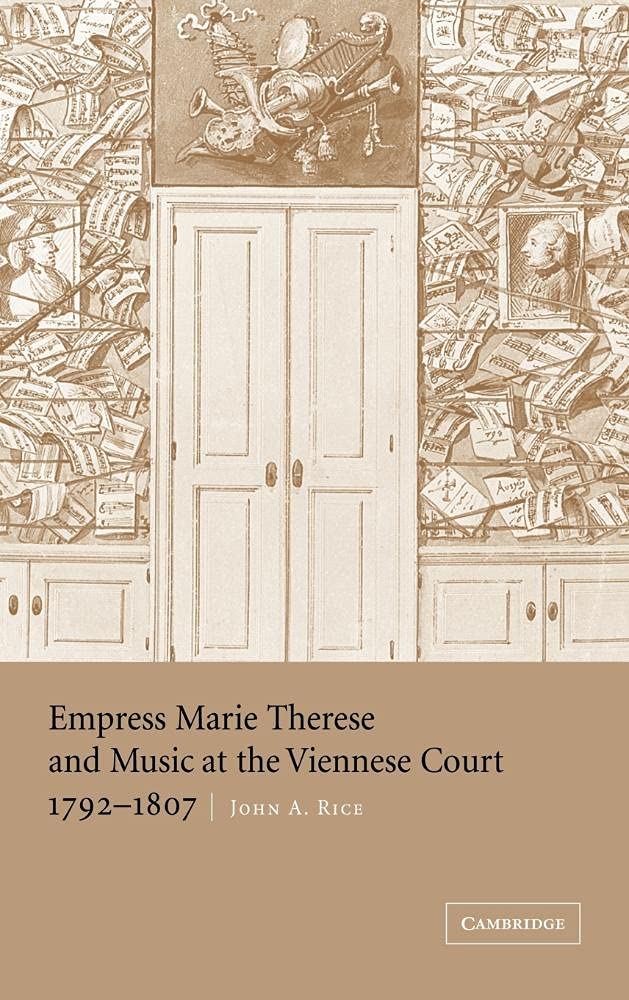
Our review of Empress Marie Therese and Music at the Viennese Court finds it essential for readers interested in late 18th-century Viennese musical life and court culture. John A. Rice presents a focused, document-driven portrait of an often overlooked patron whose private musical activities shaped tastes and supported professionals; this book is worth buying chiefly for its fresh use of unpublished material from the Empress's collection that illuminates the social and musical networks around Emperor Franz II.
Key Features
- Original source material: The book is grounded in extensive unpublished documents from the Empress's private collection, giving readers new primary evidence about court music practices.
- Biographical focus: Detailed treatment of Empress Marie Therese's musical life explains how her piano playing and singing shaped her role as a patron.
- Cultural context: Rice situates the Empress within the broader musical and cultural worlds of the Viennese court at the end of the eighteenth century for historical perspective.
- Support for musicians: The narrative shows how the Empress compiled a large music library and financially and socially supported professional musicians and composers.
- Accessible scholarship: The survey balances archival discovery and readable analysis, making it suitable for both specialists and informed general readers.
Who It's For
This book will appeal to music historians, scholars of court culture, and engaged readers curious about patronage and performance practice in late 18th-century Vienna. Graduate students researching the Habsburg court or the social history of music will find the unpublished material especially valuable.
Readers looking for a general, illustrated coffee-table book or a brief popular biography should look elsewhere, as this work is a comprehensive scholarly survey that emphasizes archival discovery and analysis rather than lightweight narrative or extensive pictorial content.
Pros & Cons
Pros
- Provides new insights based on extensive unpublished primary sources that enhance understanding of court musical life.
- Careful analysis of the Empress as musician and patron clarifies her practical influence on composers and performers.
- Connects individual biography to broader cultural and musical developments in Vienna at the close of the 1700s.
Cons
- Scholarly tone and depth may be dense for casual readers seeking a light narrative or many illustrations.
Specifications
| Title | Empress Marie Therese and Music at the Viennese Court, 1792-1807 |
| Author | John A. Rice |
| Subject focus | Empress Marie Therese as musician and patron |
| Primary sources | Extensive unpublished material from the Empress's private collection |
| Historical period | Late 18th century, Viennese court around Emperor Franz II |
| Approach | Comprehensive archival survey and cultural analysis |
Our Verdict
Rice's study is a rigorous, source-rich portrait that merits purchase by anyone researching Habsburg patronage, court music, or late 18th-century Viennese culture. While the tone is scholarly rather than popular, the fresh archival discoveries and the clear linking of the Empress's musical activities to broader cultural trends make the book excellent value for specialists and serious readers who want a deeper, document-based understanding of the period.
Frequently Asked Questions
Does this book rely on new archival material?
Yes. Rice's survey is based on extensive unpublished documents from the Empress's private music collection.
Is the book suitable for casual readers?
It is primarily scholarly in tone, so casual readers seeking light biography may find it dense.
What aspects of the Empress's musical life are covered?
The book covers her piano playing, singing, compilation of a large music library, and her patronage of professional musicians and composers.
Editor's Take
A rigorous, source-rich study ideal for scholars and serious readers interested in Habsburg patronage and Viennese musical life; excellent value for its archival discoveries and cultural analysis.

Recently viewed
Recently viewed products will appear here as customers browse the store.