

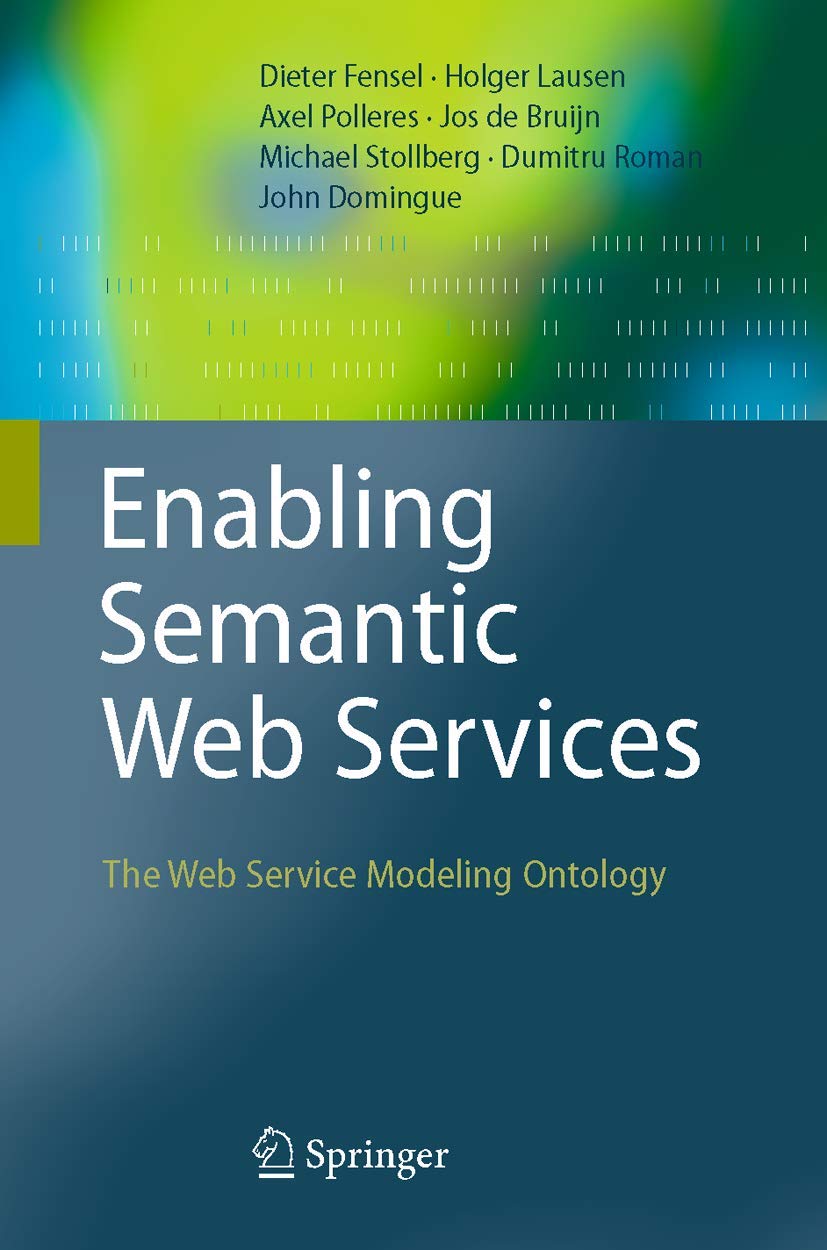
Enabling Semantic Web Services: The Web Service Modeling Ontology
Enabling Semantic Web Services: The Web Service Modeling Ontology
Price subject to change. Tap below for current.
Couldn't load pickup availability
In this review of Enabling Semantic Web Services: The Web Service Modeling Ontology, the reviewer finds a rigorous, academic introduction ideal for researchers and engineers working at the intersection of Web Services and the Semantic Web. The book explains the Web Service Modeling Ontology (WSMO) in context, grounding the approach in the related standards and technologies that make semantic, machine-processable service descriptions practical. For readers seeking a deep conceptual foundation rather than a quick how-to, this volume delivers the clearest single-source overview available.
Key Features
- Comprehensive introduction: Presents the background technologies of the World Wide Web, the Semantic Web, and Web Services so readers can understand WSMO in context.
- Focused on WSMO: Explains the Web Service Modeling Ontology approach step by step, helping developers and researchers apply semantic descriptions to services.
- Theoretical and practical balance: Combines conceptual material with the standards and research efforts that enable industrial-strength semantic services.
- Authored by domain experts: Written by established researchers, providing authoritative perspectives on ongoing W3C and EU projects related to semantic services.
- Research-oriented scope: Surveys relevant projects and initiatives, which helps readers trace the evolution of ideas into practical frameworks.
Who It's For
This book is best suited for computer science graduate students, researchers, and software architects who need a thorough, academic-level explanation of how semantic technologies can be applied to Web Services. It excels as a reference for those involved in W3C or EU research projects and for practitioners designing interoperable, machine-processable service descriptions.
Readers seeking quick tutorials, hands-on code samples, or light introductions for nontechnical managers should look elsewhere; this volume assumes some prior familiarity with Web and Semantic Web concepts and emphasizes conceptual frameworks over step-by-step implementation guides.
Pros & Cons
Pros
- Clear, authoritative exposition of the Web Service Modeling Ontology and its relationship to Web standards.
- Good survey of underlying technologies, making the book a reliable reference for the Semantic Web and Web Services overlap.
- Written by multiple experts, which enriches the perspective on standards and research projects.
Cons
- Not a practical programming guide; readers looking for hands-on examples may find it too theoretical.
Specifications
| Title | Enabling Semantic Web Services: The Web Service Modeling Ontology |
| Authors | Dieter Fensel, Holger Lausen, Axel Polleres, Jos de Bruijn, Michael Stollberg, Dumitru Roman, John Domingue |
| Focus | Web Service Modeling Ontology (WSMO) and related standards |
| Scope | Introduction to technologies of the Web, Semantic Web, and Web Services |
| Audience | Researchers, graduate students, and architects in Web and Semantic Web fields |
| Use case | Reference and conceptual guide for semantic, machine-processable service descriptions |
Our Verdict
Enabling Semantic Web Services is a strong, research-oriented guide for anyone serious about applying semantic concepts to Web Services; it is best for technical readers who need an authoritative conceptual foundation and a survey of standards and projects that make WSMO applicable to industrial scenarios.
Frequently Asked Questions
Does this book teach programming for semantic services?
No. It focuses on conceptual foundations and standards for the Web Service Modeling Ontology rather than step-by-step coding tutorials.
Is prior knowledge required?
Yes. Familiarity with basic Web, Web Services, and Semantic Web concepts helps readers get the most from the material.
Who contributed to the work?
The book is authored by a team of researchers including Dieter Fensel and colleagues, providing expert perspectives on WSMO and related projects.
Editor's Take
Enabling Semantic Web Services is a research-oriented, authoritative guide to WSMO and related standards, ideal for graduate students, researchers, and architects who need a conceptual foundation rather than hands-on tutorials.

Recently viewed
Recently viewed products will appear here as customers browse the store.