

English Peasant Farming (Economic History) - Classic agrarian study
English Peasant Farming (Economic History) - Classic agrarian study
Price subject to change. Tap below for current.
Couldn't load pickup availability
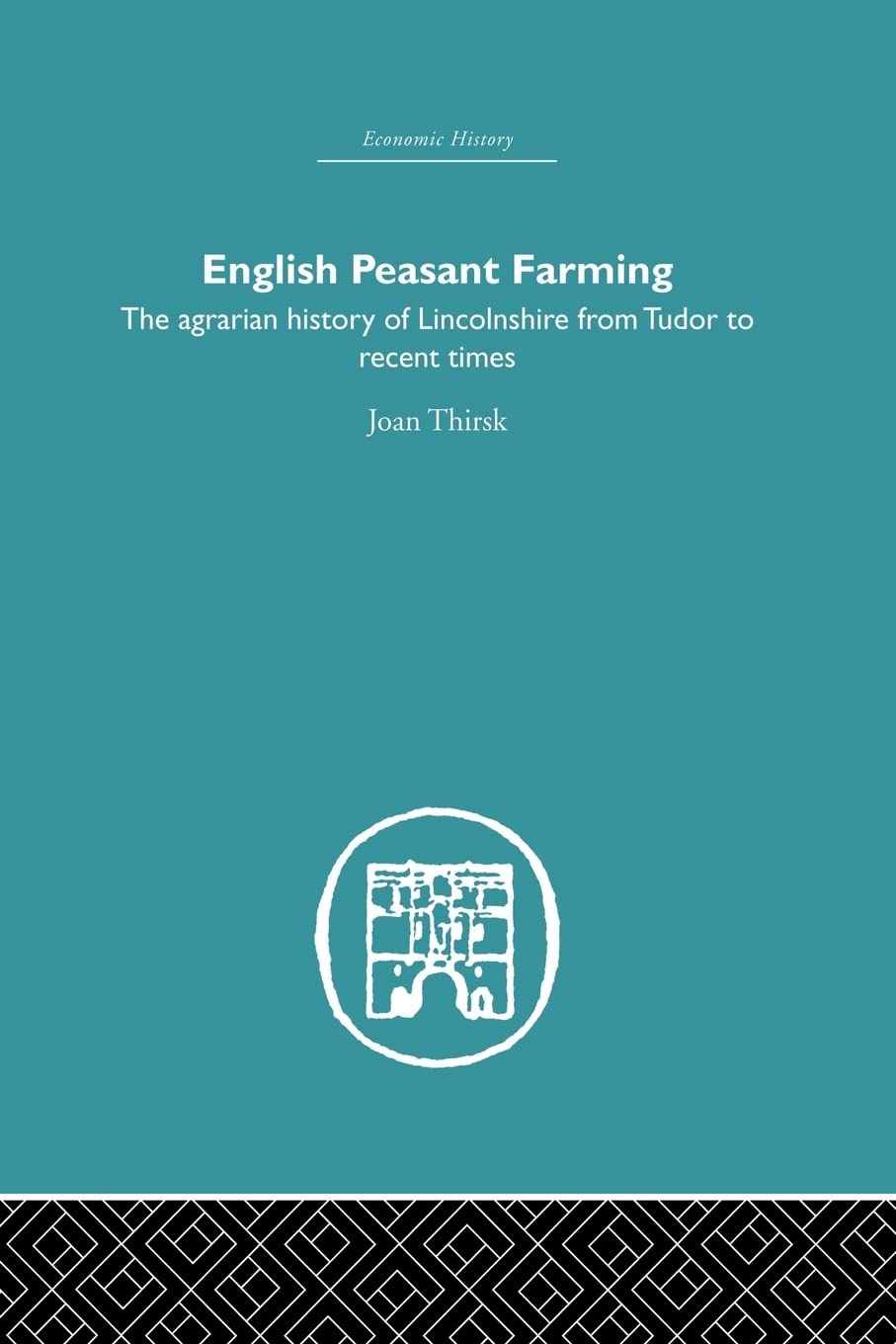
In this review of English Peasant Farming (Economic History) the bottom line is simple: this is a focused historical study best suited to readers who want a grounded, regional account of rural life in England rather than a broad social narrative. Joan Thirsk's volume, first published in 1957, concentrates on Lincolnshire's agrarian development from Tudor times to the mid-eighteenth century and offers a detailed, documentary-driven perspective that is valuable to students and researchers of economic history.
Key Features
- Regional focus: A concentrated history of Lincolnshire farming that reveals how local conditions shaped peasant life and agricultural practice.
- Long historical span: Traces developments from Tudor to mid-eighteenth-century England to show continuity and change in rural economies.
- Documentary evidence: Relies on primary records and close reading of sources to provide a tightly argued agrarian narrative.
- Peasant perspective: Centers the experience of rural peasants and smallholders rather than elite landowners, useful for social historians.
- Scholarly tone: Written with academic rigor that supports teaching and citation in studies of peasant society and agriculture.
Who It's For
This book is ideal for readers studying economic history, agrarian change, or regional English history who want a clear, source-based account of how Lincolnshire's countryside evolved. Graduate students, university instructors, and local historians will find the detail especially useful for course reading or comparative research.
It is less suitable for casual readers seeking a sweeping social history of all England or a richly illustrated cultural narrative. Those looking for a general introduction with broad synthesis or popular storytelling should look for a wider-ranging survey instead.
Pros & Cons
Pros
- Concentrated regional study provides depth on Lincolnshire that many general histories lack.
- Use of primary sources gives the book scholarly credibility and makes it useful for citation.
- Attention to peasant life foregrounds everyday economic practices often omitted in landlord-centered accounts.
Cons
- The narrow focus and academic tone may feel dense to readers who prefer a broader or more narrative-driven history.
Specifications
| Title | English Peasant Farming (Economic History) |
| Author | Joan Thirsk |
| Subject | Agrarian history of Lincolnshire |
| Period covered | Tudor era to mid-eighteenth century |
| Original publication | 1957 |
| Primary focus | Peasant society and rural economy |
Our Verdict
English Peasant Farming is a valuable, well-documented study for readers who need a rigorous regional account of rural England. It offers good value for students and scholars of economic history seeking primary-source grounded analysis, though its specialist focus means general readers should consider a broader survey alongside it.
Frequently Asked Questions
Does this book cover all of England?
No. The study concentrates on Lincolnshire and uses that county as a lens for agrarian change rather than attempting a national synthesis.
Is it suitable for undergraduate courses?
Yes. Its documented approach and clear period framing make it appropriate for upper-level undergraduate or graduate seminars in economic or rural history.
Will it contain modern interpretations or updated data?
The book presents the research and interpretations from its original 1957 publication; readers seeking the latest historiography should supplement it with recent scholarship.
Editor's Take
English Peasant Farming is a rigorous, regionally focused study ideal for students and scholars of economic history; its primary-source approach gives strong value, though general readers may prefer a broader survey.

Recently viewed
Recently viewed products will appear here as customers browse the store.