

Environmental and Economic Sustainability - Practical Assessment Guide
Environmental and Economic Sustainability - Practical Assessment Guide
Price subject to change. Tap below for current.
Couldn't load pickup availability
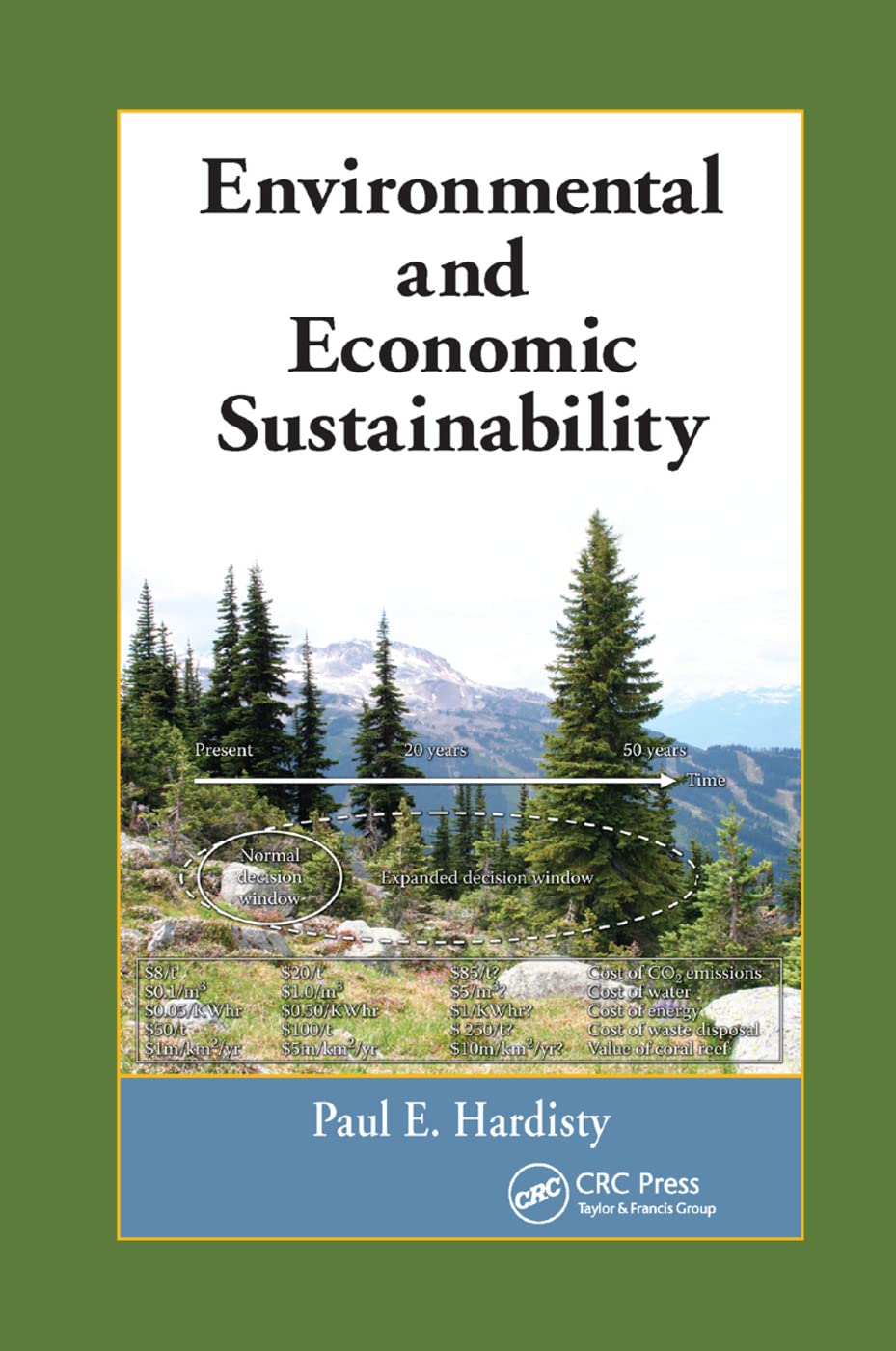
In this review of Environmental and Economic Sustainability, the bottom line is simple: this book is for practitioners, policy makers, and students who want a practical framework to align environmental goals with economic decisions. Based on more than fifteen years of research and practice, the author introduces the environmental and economic sustainability assessment (EESA) as a method to move beyond rhetoric to measurable choices. Readers will find a thoughtful, pragmatic approach rather than abstract theory, which makes it a useful reference for anyone seeking workable tools to address climate, biodiversity, and resource challenges.
Key Features
- Evidence-based framework: Presents the environmental and economic sustainability assessment (EESA) built from over fifteen years of research, giving readers a tested method to evaluate trade-offs.
- Decision-focused guidance: Emphasizes how to use assessments to inform policy and business choices rather than only describing problems.
- Practical orientation: Targets real-world application so engineers, planners, and managers can adapt the approach to projects and programs.
- Interdisciplinary perspective: Bridges environmental science and economics to help readers consider biodiversity, emissions, and resource use together.
- Contemporary relevance: Addresses pressing 21st century challenges such as continued fossil energy dependence and rising greenhouse gas emissions.
Who It's For
This book is aimed at environmental professionals, civil and environmental engineers, planners, academics, and public-sector decision makers who need a structured way to compare environmental and economic outcomes. It works well as a reference for projects where trade-offs between ecosystem impacts and economic benefits must be made explicit.
Readers seeking a broad textbook on ecology or an introductory primer for general audiences may find the focus here too applied and technical; likewise, those expecting prescriptive policy templates for every context should look for supplementary case studies or implementation guides to accompany the EESA method.
Pros & Cons
Pros
- Provides a clear, research-backed assessment method that helps translate sustainability principles into decisions.
- Useful for practitioners who need to balance environmental and economic objectives in projects and policy.
- Addresses modern sustainability challenges directly, including greenhouse gas emissions and biodiversity loss.
Cons
- The text is focused and applied, so readers looking for introductory or highly accessible overviews may find it dense.
Specifications
| Title | Environmental and Economic Sustainability |
| Author | Paul E. Hardisty |
| Main contribution | Environmental and economic sustainability assessment (EESA) |
| Research basis | More than fifteen years of research and practice |
| Focus areas | Fossil energy dependence, greenhouse gas emissions, biodiversity |
| Intended audience | Practitioners, policy makers, engineers, planners |
Our Verdict
Environmental and Economic Sustainability is a practical and well-grounded resource for professionals who must make trade-offs between environmental outcomes and economic drivers. Its EESA approach is valuable because it moves beyond idealized goals to provide a usable assessment method, making it good value for teams seeking structured decision support on sustainability issues.
Frequently Asked Questions
What is the core method presented?
The book introduces the environmental and economic sustainability assessment (EESA) as a decision-oriented framework drawn from long-term research and practice.
Who benefits most from reading this book?
Practitioners, engineers, planners, and policy makers who need applied tools to evaluate environmental and economic trade-offs.
Does the book offer case studies or implementation steps?
The description emphasizes more than fifteen years of research and practice informing the EESA approach, so readers can expect practical guidance though specific case details may need to be supplemented.
Editor's Take
A practical, research-backed resource for practitioners and policy makers, offering the EESA method to translate sustainability principles into usable decisions where environmental and economic trade-offs matter.

Recently viewed
Recently viewed products will appear here as customers browse the store.