

Environmental Pollution and Control - Accessible Guide
Environmental Pollution and Control - Accessible Guide
Price subject to change. Tap below for current.
Couldn't load pickup availability
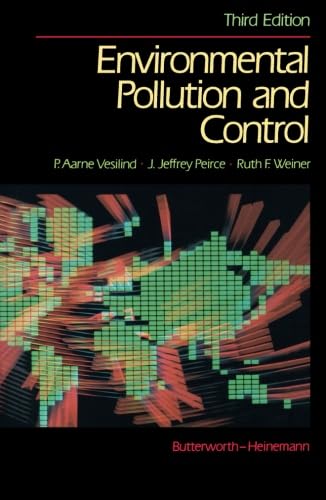
In this review of Environmental Pollution and Control, the reviewer finds a thoughtful, approachable introduction to complex environmental engineering topics aimed at nontechnical readers. The single biggest reason to buy this edition is its clear framing of major environmental events and updated chapters on risk assessment and ethics, which make the subject relevant for modern readers. This review highlights how the author converts technical ideas into readable discussions and why the fourth edition is useful for students, policy thinkers, and general readers seeking context rather than exhaustive technical detail.
Key Features
- Accessible explanation: The text translates technical environmental engineering ideas into plain language so nontechnical readers can understand core concepts without specialist training.
- Updated content: The fourth edition revises material on radioactive waste and incorporates new theories of radiation damage to reflect developments since prior editions.
- Risk and ethics focus: A complete rewrite of chapters on risk assessment and ethics provides a modern perspective on decision making in environmental management.
- Case study inclusion: Inclusion of major environmental disasters such as Chernobyl and Bhopal grounds abstract concepts in real-world events.
- Longstanding perspective: First published in 1972 and revised across generations, the book offers historical continuity and shows how public awareness has evolved.
Who It's For
The book is best for curious nontechnical readers, undergraduate students in introductory environmental courses, and professionals in adjacent fields who need a readable overview of environmental engineering issues. It is particularly useful for readers who want context, historical examples, and ethical framing rather than deep mathematical or laboratory detail.
Readers seeking a comprehensive, technical textbook with exhaustive scientific formulas, design tables, or step-by-step engineering procedures should look elsewhere; this edition intentionally keeps the material accessible and discursive rather than highly technical.
Pros & Cons
Pros
- Readable presentation makes complex topics approachable for nonengineers.
- Rewritten chapters on risk assessment and ethics add contemporary relevance.
- Case studies like Chernobyl and Bhopal provide concrete context for abstract issues.
Cons
- Not a substitute for a comprehensive technical textbook when detailed engineering methods are needed.
Specifications
| Title | Environmental Pollution and Control |
| Author | P. Aarne Vesilind |
| Edition | Fourth edition (revised chapters) |
| Scope | Accessible overview of environmental engineering topics |
| Notable updates | Risk assessment, ethics, radiation damage, radioactive waste |
| Historical context | First published in 1972; updated across generations |
Our Verdict
Environmental Pollution and Control is a solid value for readers who need a clear, historically informed introduction to environmental engineering and the ethical issues that surround it. Buy this book if you want readable explanations, updated discussion of risk and radiation, and real-world case studies; seek a technical reference instead if you need detailed engineering calculations.
Frequently Asked Questions
Is this book technical?
Answer. It is written for nontechnical readers and focuses on explanation and context rather than exhaustive technical detail.
Does the edition cover modern environmental disasters?
Answer. Yes, the fourth edition includes discussion of events such as Chernobyl and Bhopal to illustrate key points.
Are chapters on ethics and risk assessment updated?
Answer. Yes, those chapters were completely rewritten for this edition to reflect newer thinking and approaches.
Editor's Take
Environmental Pollution and Control is a clear, historically informed introduction for nontechnical readers, offering updated chapters on risk and ethics and useful case studies; it is not a replacement for a technical engineering textbook.

Recently viewed
Recently viewed products will appear here as customers browse the store.