

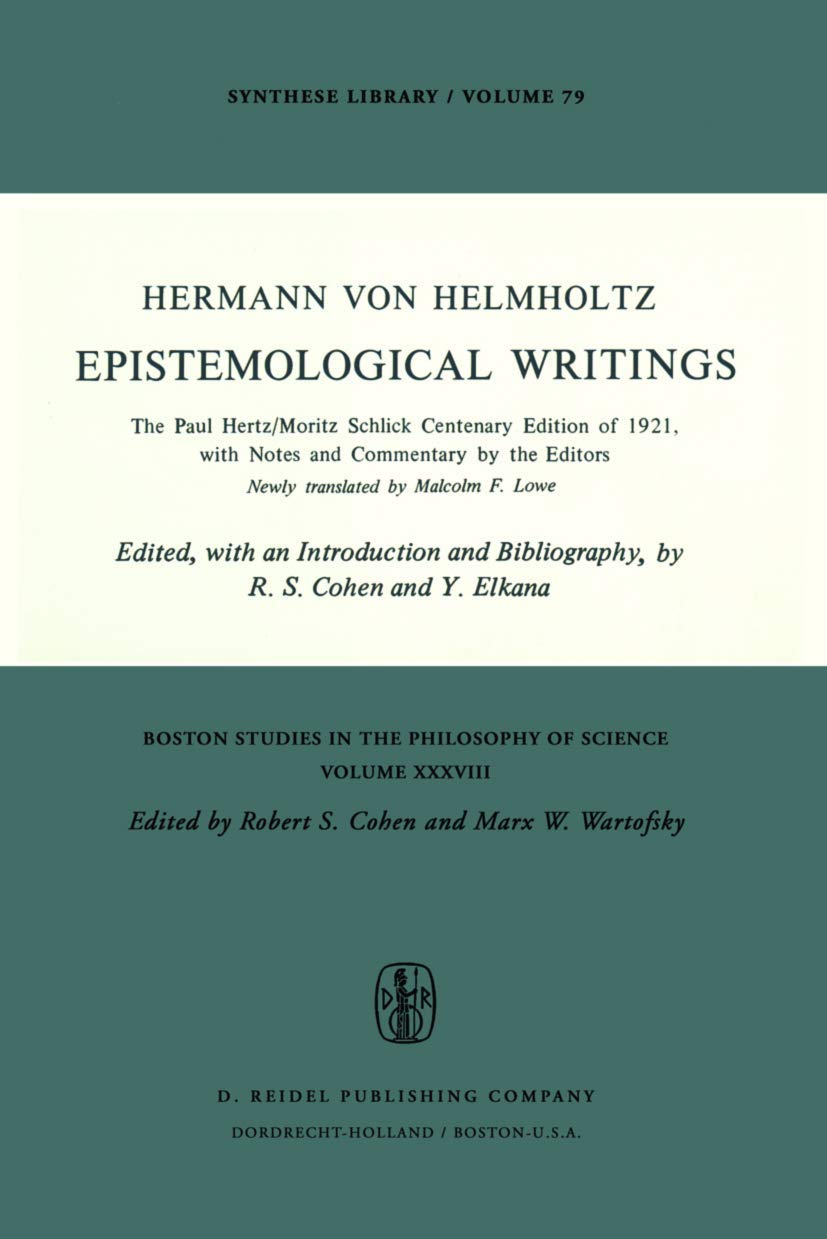
Epistemological Writings: The Paul Hertz/Moritz Schlick Centenary
Epistemological Writings: The Paul Hertz/Moritz Schlick Centenary
Price subject to change. Tap below for current.
Couldn't load pickup availability
In this review of Epistemological Writings: The Paul Hertz/Moritz Schlick centenary edition of 1921, the reviewer finds a carefully edited historical volume aimed at readers interested in the philosophical foundations of science. The single biggest reason to buy is the editors' meticulous annotations, which clarify Hermann von Helmholtz's essays and lectures and situate them within early 20th century debates. This edition, prepared by physicist Paul Hertz and philosopher Moritz Schlick, preserves both respect and critical engagement with Helmholtz, making it a useful resource for scholars and advanced students of the history and theory of science.
Key Features
- Annotated edition: The editors provide scrupulous annotations that illuminate Helmholtz's arguments and historical context for readers unfamiliar with period terminology.
- Historical influence: The 1921 centenary edition is presented as historically significant, comparable to other influential annotated editions in the history of science and mathematics.
- Editorial perspective: Combining respect and criticism, the edition balances faithful reproduction of texts with thoughtful commentary to aid interpretation.
- Selection of texts: Contains a curated selection of Helmholtz's papers and lectures that focus on the philosophical foundations of the sciences rather than his experimental work.
- Scholarly utility: The volume serves as a reference for historians of science, philosophers of science, and interdisciplinary scholars seeking primary sources with expert notes.
Who It's For
This edition is best suited for historians of science, graduate students in philosophy or science studies, and researchers who need a reliable English-language presentation of Helmholtz's epistemological writings together with careful editorial notes. The annotated format helps bridge disciplinary gaps between physics and philosophy, so it is useful for readers working across fields.
Those who should look elsewhere include casual readers seeking a popular biography or an overview of Helmholtz's experimental discoveries; this book focuses on epistemology and historical commentary rather than technical lab reports or introductory narrative.
Pros & Cons
Pros
- Scholarly annotations that clarify historical context and the meaning of Helmholtz's essays.
- Careful editorial balance of respect and critical appraisal that aids interpretation.
- Useful selection of texts emphasizing philosophical foundations, valuable for teaching and research.
Cons
- Focused on epistemology and historical notes, so it is not a general-audience introduction to Helmholtz's full scientific career.
Specifications
| Title | Epistemological Writings: The Paul Hertz/Moritz Schlick centenary edition of 1921 |
| Editors | Paul Hertz and Moritz Schlick |
| Subject | Philosophical foundations of the sciences; epistemology |
| Focus | Selection of Helmholtz papers and lectures with notes and commentary |
| Historical note | Centenary edition originally published 1921 |
| Series | Boston Studies in the Philosophy and History of Science, 37 |
Our Verdict
This annotated centenary edition is a worthwhile acquisition for scholars and advanced students who need a carefully edited, context-rich presentation of Helmholtz's epistemological writings. Its combination of faithful texts and informed commentary makes it good value for research and graduate-level courses, while readers seeking a broad popular biography should consider other introductions.
Frequently Asked Questions
Does this volume include Helmholtz's scientific experiments?
Answer. The book concentrates on Helmholtz's essays and lectures about epistemology and the foundations of science rather than detailed experimental reports.
Who prepared the annotations?
Answer. The edition was edited and annotated by physicist Paul Hertz and philosopher Moritz Schlick, aiming for scholarly clarity and critical context.
Is this suitable for undergraduate study?
Answer. It is most useful for advanced undergraduates or graduate students in history or philosophy of science; casual readers may find the focus and commentary too specialized.
Editor's Take
This annotated centenary edition offers carefully edited Helmholtz texts and expert commentary, making it a valuable resource for scholars and advanced students of the history and philosophy of science.

Recently viewed
Recently viewed products will appear here as customers browse the store.