

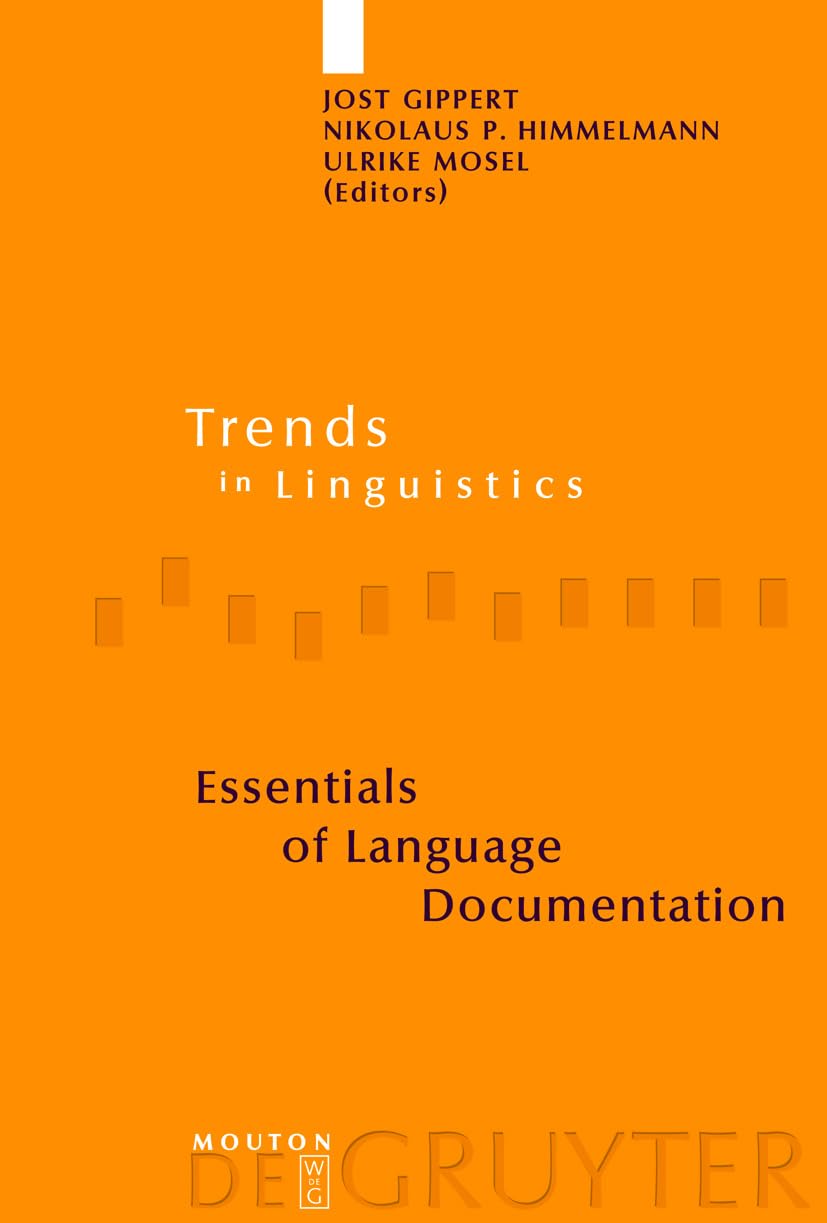
Essentials of Language Documentation - Practical Textbook Introduction
Essentials of Language Documentation - Practical Textbook Introduction
Price subject to change. Tap below for current.
Couldn't load pickup availability
In this review of Essentials of Language Documentation the authors present a clear, practical introduction aimed at linguists and fieldworkers who need a reliable guide to collecting, annotating and archiving language data. The book's single biggest reason to buy is its combination of hands-on guidance and theoretical grounding, which makes it useful both as a classroom textbook and as a field reference for creating lasting, multipurpose records of natural languages.
Key Features
- Comprehensive overview: The volume outlines major aspects of language documentation, giving readers a structured foundation for planning documentation projects.
- Fieldwork ethics: It discusses ethical considerations to help researchers responsibly engage with speech communities and manage consent and data ownership.
- Data processing guidance: Practical sections on processing ensure that raw recordings are organized and prepared for analysis and long-term reuse.
- Annotation basics: The book offers guidelines for basic annotation of digitally stored multimedia corpora so researchers can produce interoperable, searchable datasets.
- Archive management: It explains how to build and maintain a language archive, supporting preservation and access for future research.
- Theory-practice balance: The text balances theoretical discussion with concrete suggestions for common documentation problems.
Who It's For
The book is best for graduate students, early-career linguists and fieldworkers who need a structured introduction to methods and tools for creating durable language records. It also works well for instructors seeking a textbook that covers both ethical and technical aspects of documentation.
Researchers who require exhaustive software tutorials or instrument-level technical manuals may need supplementary resources; this volume focuses on principles, workflows and archival practice rather than step-by-step software training.
Pros & Cons
Pros
- Readable, textbook-style explanations that make language documentation approachable for newcomers.
- Covers both ethical and technical concerns, helping users design responsible projects.
- Useful guidance on annotation and archives that supports long-term data reuse.
Cons
- Not a substitute for detailed software or tool-specific tutorials, so practical users may need follow-up manuals.
Specifications
| Title | Essentials of Language Documentation |
| Series | Trends in Linguistics. Studies and Monographs (TiLSM) 178 |
| Editors/Authors | Jost Gippert, Nikolaus P. Himmelmann, Ulrike Mosel |
| Focus | Methods, tools, ethics, annotation, archiving |
| Use case | Textbook introduction and field reference |
| Approach | Theoretical and practical considerations |
Our Verdict
Essentials of Language Documentation is a solid, practical introduction that delivers clear guidance on ethics, annotation and archives, making it good value for students and field linguists who need a principled framework for documentation projects.
Frequently Asked Questions
Is this book suitable as a classroom textbook?
Yes. The structured chapters and balanced coverage of theory and practice make it appropriate for graduate courses in language documentation.
Does it teach specific software tools?
No. It provides guidelines for data processing and annotation but does not serve as a detailed software tutorial.
Who edited this volume?
The book is edited by Jost Gippert, Nikolaus P. Himmelmann and Ulrike Mosel.
Editor's Take
Essentials of Language Documentation is a practical, theory-informed textbook that provides clear guidance on ethics, annotation and archives, making it a strong choice for students and field linguists needing a principled framework for documentation projects.

Recently viewed
Recently viewed products will appear here as customers browse the store.