

Essentials of Mathematica: With Applications to Mathematics
Essentials of Mathematica: With Applications to Mathematics
Price subject to change. Tap below for current.
Couldn't load pickup availability
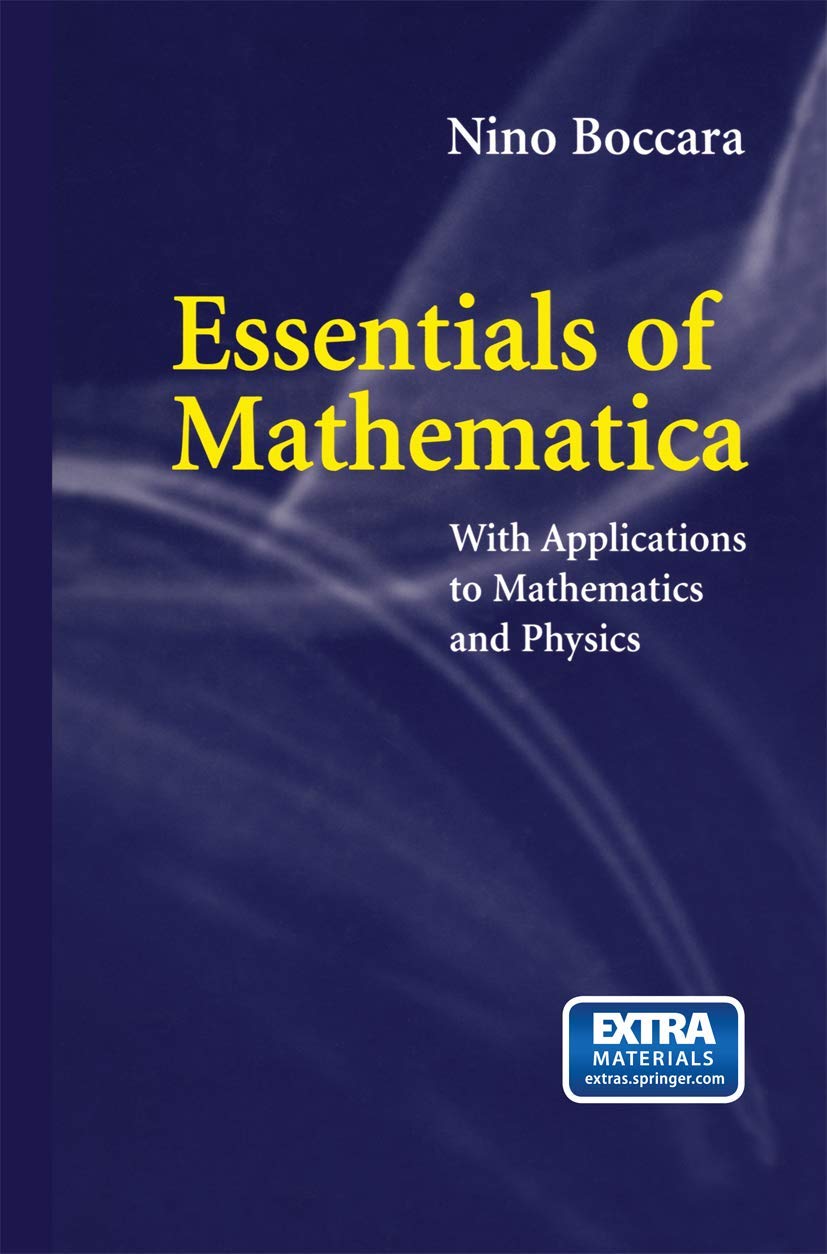
In this review of Essentials of Mathematica: With Applications to Mathematics and Physics the bottom line is clear: this book is for advanced undergraduates and graduate students who want a hands-on, example-driven introduction to Mathematica focused on real problems in mathematics and physics. It teaches the software from the ground up without assuming prior exposure, and the single biggest reason to buy is its step-by-step, meticulously constructed programs that let a student reproduce and adapt solutions rather than just read abstract theory.
Key Features
- Beginner-friendly approach: The text assumes no previous exposure to Mathematica, so a reader new to the software can learn core commands and workflows systematically.
- Example-driven learning: Many detailed examples require construction of step-by-step Mathematica programs, which reinforce practical skills through worked code.
- Course-tested material: Based on lecture notes from a University of Illinois at Chicago course, the content is organized for an academic learning path suited to advanced undergrads and graduate students.
- Wide range of applications: The second part presents attractive applications in mathematics and physics, showing how to apply commands to substantive problems.
- Concise command exposure: The first part focuses on learning a variety of Mathematica commands through examples rather than long theoretical exposition, speeding practical mastery.
Who It's For
Essentials of Mathematica is aimed primarily at advanced undergraduate and graduate students in mathematics, physics, or related fields who need a pragmatic introduction to Mathematica tied to real course problems. It suits readers who prefer learning by doing and who will benefit from lecture-style notes and many worked examples.
Readers who are looking for a reference-heavy manual of every Mathematica function or a lengthy theoretical treatment of symbolic computing may want a complementary reference; this book emphasizes examples and applications rather than exhaustive command lists or long explanations.
Pros & Cons
Pros
- The example-led format makes it easy to follow and reproduce computations with clear, step-by-step programs.
- It does not assume prior Mathematica experience, lowering the barrier for newcomers.
- Applications to mathematics and physics show practical use cases that reinforce learning from the earlier command-focused sections.
Cons
- The book prioritizes examples over long explanations, so readers seeking deep theoretical discussion of algorithms or exhaustive command references may need supplemental material.
Specifications
| Title | Essentials of Mathematica: With Applications to Mathematics and Physics |
| Author | Nino Boccara |
| Audience | Advanced undergraduate and graduate students |
| Approach | Lecture notes with example-driven, step-by-step Mathematica programs |
| Focus | Mathematica commands and applications in mathematics and physics |
| Assumed prior software knowledge | None; no previous Mathematica exposure required |
Our Verdict
Essentials of Mathematica is a practical, course-tested introduction that is good value for students who need to learn Mathematica through worked examples tied to mathematics and physics problems. Its clear, step-by-step programs and application section make it especially useful for those who plan to apply Mathematica in coursework or research, while readers seeking exhaustive reference material should pair it with a function reference.
Frequently Asked Questions
Does this book require prior Mathematica experience?
No, the book explicitly assumes no previous exposure and introduces a variety of Mathematica commands from the ground up.
Is the content suitable for physics applications?
Yes, the second part contains attractive applications in mathematics and physics that demonstrate real problem solving with Mathematica.
Is this a reference manual for every command?
No, the emphasis is on worked examples and learning commands through practice rather than serving as an exhaustive command reference.
Editor's Take
A practical, course-tested introduction that teaches Mathematica through detailed, step-by-step programs and applications in mathematics and physics, ideal for advanced undergrads and graduate students who prefer learning by example.

Recently viewed
Recently viewed products will appear here as customers browse the store.