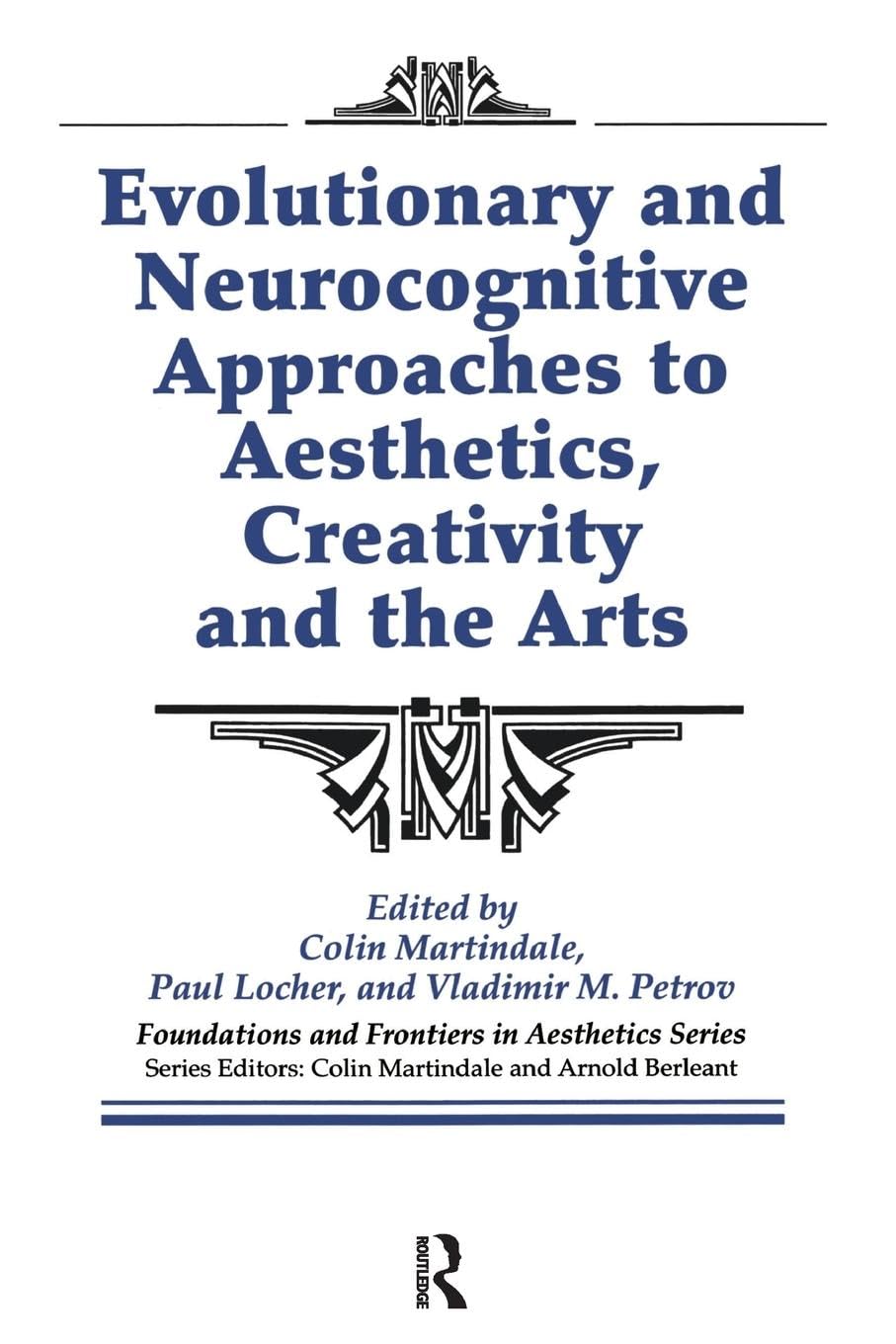
Evolutionary and Neurocognitive Approaches to Aesthetics and Arts
Evolutionary and Neurocognitive Approaches to Aesthetics and Arts
Price subject to change. Tap below for current.
Couldn't load pickup availability
The book Evolutionary and Neurocognitive Approaches to Aesthetics offers a profound exploration into the intersection of aesthetics, creativity, and the arts. Authored by a team of experts including Colin Martindale, Paul Locher, Vladimir Petrov, and Arnold Berleant, this volume delves into the intricate mechanisms that govern our appreciation of beauty and creativity.
In this comprehensive work, the authors present a series of compelling arguments that highlight the importance of neurocognitive processes in shaping our artistic experiences. By integrating insights from evolutionary psychology, the book sheds light on how our brains have evolved to respond to artistic stimuli, making it a must-read for anyone interested in the science behind creativity.
The text is structured to provide a clear understanding of the foundational theories in aesthetics, while also addressing contemporary issues in the field. Each chapter is meticulously crafted to ensure that readers can grasp complex concepts related to creativity and the arts without feeling overwhelmed. The authors employ a range of examples that illustrate their points, making the material accessible to both scholars and general readers alike.
One of the standout features of this book is its interdisciplinary approach. By drawing from various fields such as psychology, philosophy, and art theory, the authors create a rich tapestry of knowledge that enhances our understanding of artistic expression. This holistic perspective is particularly valuable for those looking to explore the connections between different domains of human experience.
Furthermore, the book discusses the implications of these theories for the future of art and creativity. As we navigate an increasingly complex world, understanding the evolutionary roots of aesthetics can provide critical insights into how we create and appreciate art. The authors challenge readers to consider how these insights can inform contemporary artistic practices and the role of art in society.
In conclusion, Evolutionary and Neurocognitive Approaches to Aesthetics is an essential addition to the library of anyone interested in the foundations of aesthetics and creativity. Its rigorous analysis, combined with engaging writing, makes it a valuable resource for students, educators, and practitioners in the arts. This book not only enriches our understanding of the aesthetic experience but also invites us to reflect on the profound impact of art in our lives.
Share