

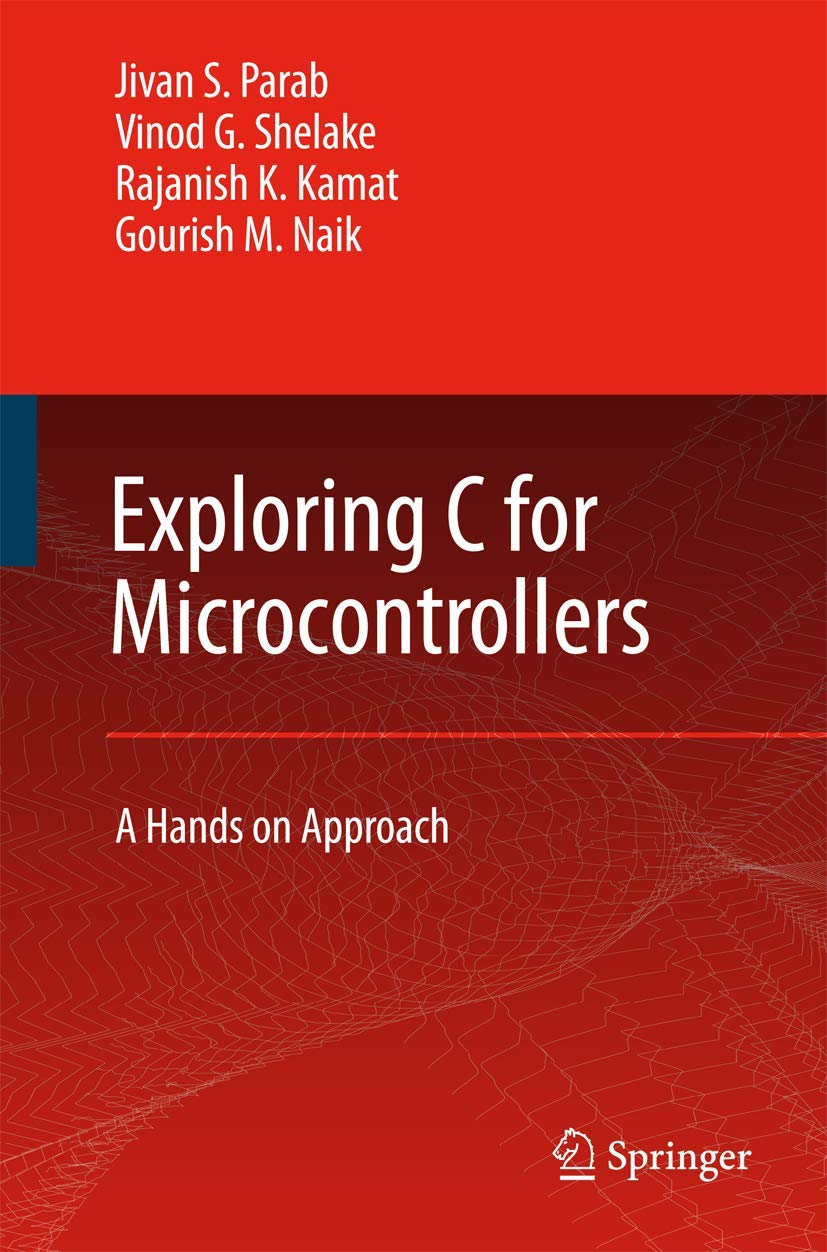
Exploring C for Microcontrollers: A Hands on Approach - Practical 8051
Exploring C for Microcontrollers: A Hands on Approach - Practical 8051
Price subject to change. Tap below for current.
Couldn't load pickup availability
Our review of Exploring C for Microcontrollers: A Hands on Approach finds it most useful for readers who want focused, practical C programming experience on the MCS-51 family rather than broad architectural theory. The book skips routine register-by-register exposition and delivers a learning-through-doing path centered on the Keil IDE and real code examples, so the single biggest reason to buy is the emphasis on hands-on projects that teach how to build working 8051 programs quickly and directly.
Key Features
- Practical case studies: Seventeen live case studies provide real-world examples that show how to implement common microcontroller tasks in C.
- Keil IDE focus: The material uses the Keil development environment so readers learn a standard toolchain for compiling and debugging MCS-51 code.
- Module-centered programs: Programs are organized around on-chip resources like ports, timers, interrupts and serial I/O to teach each building block clearly.
- Learning-through-doing approach: The book emphasizes hands-on exercises rather than lengthy theory, which speeds learning for practicing designers and students.
- Compact reference style: By avoiding extensive data-sheet reproduction, the book stays concise and task-focused for quick lookup while coding.
Who It's For
This book is aimed at electronics students, hobbyists and practicing engineers who need to write C for the 8051/MCS-51 family and want immediate, practical guidance rather than long hardware theory. It is especially helpful for those who will use the Keil IDE and value ready-to-run examples and small projects to learn by doing.
Readers who require in-depth architectural theory, exhaustive hardware data sheets or support for non-8051 families should look elsewhere; this volume assumes the reader wants applied programming examples and concise module-level explanations.
Pros & Cons
Pros
- Clear, task-oriented examples make it faster to get working code on 8051 parts.
- Seventeen case studies give varied applications and practical reference code.
- The Keil-centric workflow teaches a widely used IDE for embedded C development.
Cons
- Limited coverage of deep architectural theory and exhaustive data-sheet detail may disappoint readers seeking full hardware reference.
Specifications
| Title | Exploring C for Microcontrollers: A Hands on Approach |
| Authors | Jivan Parab, Vinod G Shelake, Rajanish K. Kamat, G.M. Naik |
| Target MCU family | MCS-51 (8051) family |
| Primary language | C programming examples |
| Development environment | Keil IDE |
| Learning style | Learning-through-doing with case studies |
Our Verdict
For anyone who needs practical C examples for the 8051 family, this book is a focused, time-saving resource that favors hands-on projects over theoretical depth. It is good value for students and working designers who want to build working microcontroller programs quickly using the Keil IDE.
Frequently Asked Questions
Does this book use a specific IDE?
Yes, the examples and workflow are centered on the Keil IDE.
Which microcontroller family is covered?
The content targets the MCS-51 or 8051 family of microcontrollers.
Is deep hardware theory included?
No, the book deliberately avoids lengthy architectural theory and detailed data-sheet reproduction in favor of practical programs and case studies.
Editor's Take
A focused, practical guide for writing C on the 8051 family that emphasizes hands-on projects and Keil IDE workflows, making it a time-saving resource for students and engineers.

Recently viewed
Recently viewed products will appear here as customers browse the store.