

Exploring Networked Urban Mobilities - Theory and Research
Exploring Networked Urban Mobilities - Theory and Research
Price subject to change. Tap below for current.
Couldn't load pickup availability
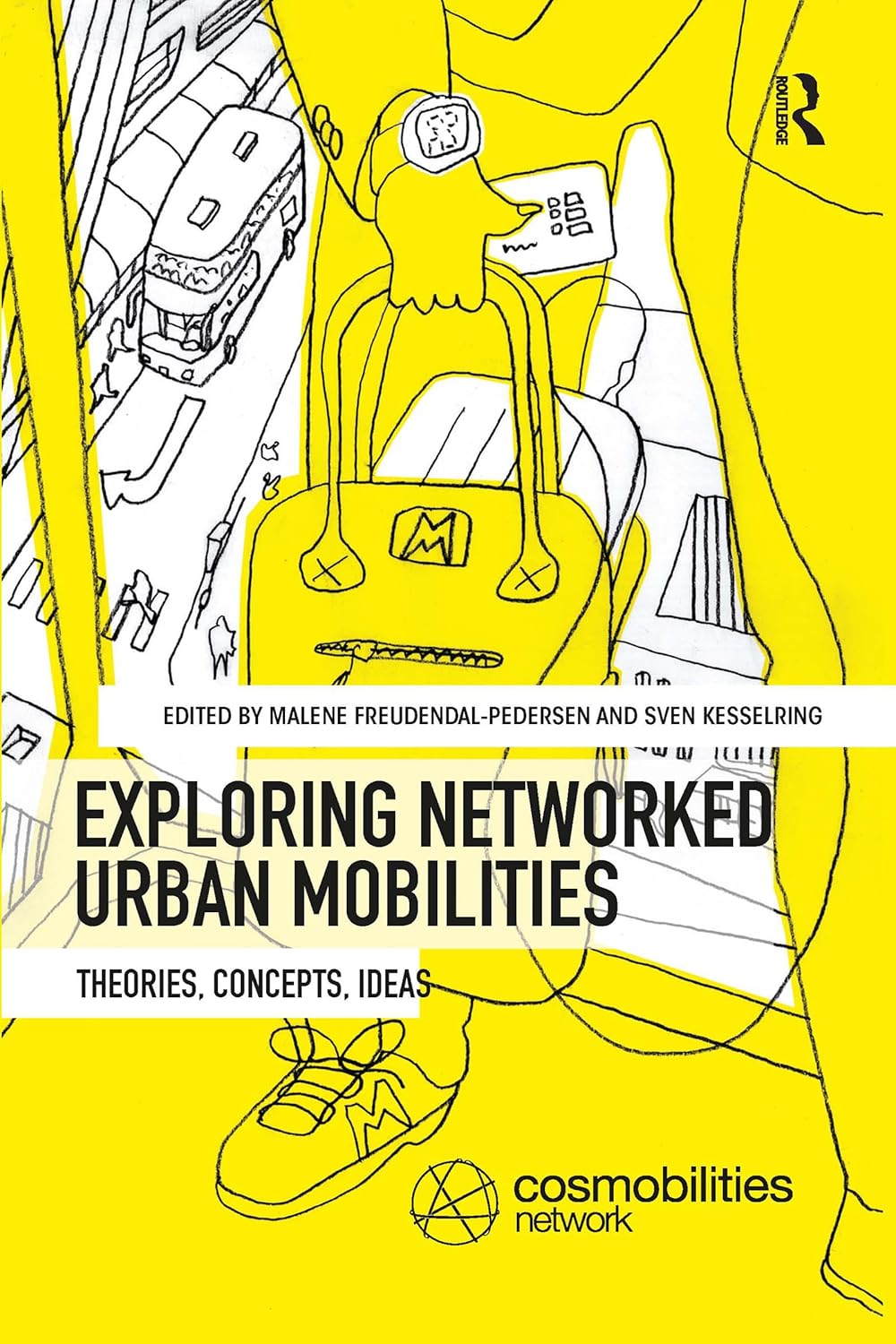
In this review of Exploring Networked Urban Mobilities the book's chief appeal is its focused, theory-driven approach to understanding how mobility shapes cities and societies. Written for readers who want conceptual depth rather than a how-to manual, the collection maps a research agenda that links social practice with infrastructures, technologies, culture, and politics. The essays collectively introduce the term networked urban mobilities and argue that mobility must be read as a heterogeneous phenomenon spanning physical, social, cultural and digital dimensions, making this volume a useful reference for scholars and advanced students.
Key Features
- Conceptual framing: Introduces the networked urban mobilities concept to connect practices, infrastructures and technologies across urban contexts so readers can reframe mobility research.
- Interdisciplinary contributors: Each chapter represents a distinct theoretical approach, offering multiple lenses for analyzing mobility rather than a single disciplinary view.
- Theoretical depth: Provides cutting-edge conceptual reflections that help establish a forward-looking research agenda for mobility studies.
- Range of dimensions: Treats mobility as physical, social, cultural and digital, helping readers see how everyday movement links to broader urban processes.
- Political awareness: Addresses the politics of mobility and how infrastructures and policies shape access, inclusion and urban change.
Who It's For
This volume is best for academics, graduate students and researchers in urban studies, sociology, geography and planning who need a rigorous conceptual foundation and current theoretical debates in mobility studies. The edited essays are suited to seminar reading and as a springboard for thesis topics that bridge technology, infrastructure and social practice.
Practitioners seeking design guidance, quick policy checklists or step-by-step methods may find the book less directly applicable, as the emphasis is on conceptual and theoretical analysis rather than operational tools.
Pros & Cons
Pros
- Provides a clear, original concept in networked urban mobilities that unifies diverse research strands.
- Offers interdisciplinary perspectives that broaden how mobility is understood across contexts.
- Highlights both infrastructural and cultural dimensions, useful for framing complex analyses.
Cons
- Focused on theory and concepts, so readers looking for practical policy templates or empirical toolkits may need supplemental texts.
Specifications
| Title | Exploring Networked Urban Mobilities |
| Series | Networked Urban Mobilities Series |
| Editors / Authors | Malene Freudendal-Pedersen, Sven Kesselring |
| Scope | Theoretical and conceptual reflections on mobility |
| Key themes | Social practices, infrastructures, technologies, politics of mobility |
| Approach | Interdisciplinary essays framing a research agenda |
Our Verdict
Exploring Networked Urban Mobilities is a strong, theory-focused collection that advances the field by offering a coherent concept and multiple analytical perspectives. It is a good value for researchers and graduate students who need rigorous conceptual tools to study how mobility interrelates with urban infrastructures, culture and politics, though those seeking practical toolkits should pair it with applied texts.
Frequently Asked Questions
Is this book suitable for undergraduate courses?
The book is best in advanced undergraduate seminars or graduate courses where students are comfortable with theoretical texts and interdisciplinary analysis.
Does it include empirical case studies?
The emphasis is primarily conceptual and theoretical; while contributors may discuss examples, the volume is not a methods-driven empirical handbook.
Who edited the volume?
The collection is edited by Malene Freudendal-Pedersen and Sven Kesselring and gathers multiple contributors across mobility studies.
Editor's Take
A rigorous, theory-driven collection that introduces the networked urban mobilities concept and offers interdisciplinary perspectives; ideal for researchers and graduate students who need conceptual tools rather than practical toolkits.

Recently viewed
Recently viewed products will appear here as customers browse the store.