

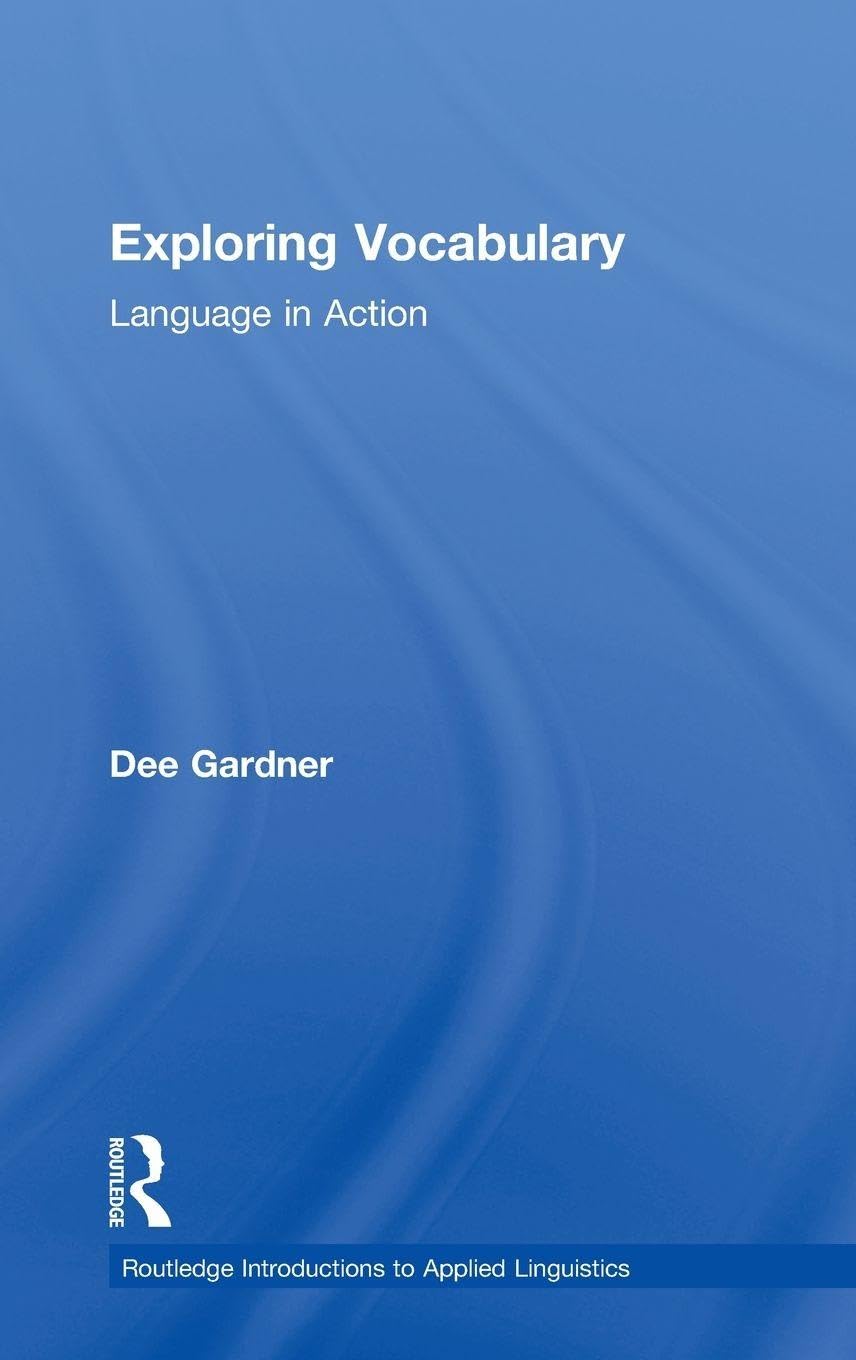
Exploring Vocabulary: Language in Action - Applied Linguistics
Exploring Vocabulary: Language in Action - Applied Linguistics
Price subject to change. Tap below for current.
Couldn't load pickup availability
In this review of Exploring Vocabulary: Language in Action, the reviewer finds a focused introductory textbook that suits early postgraduate students and advanced undergraduates wanting a practical route into vocabulary study. The book's strongest selling point is its practice-to-theory structure, which starts from real classroom and applied problems and leads readers back to theoretical foundations; this makes it immediately useful for those who need to apply vocabulary research to teaching or small-scale interventions rather than only learning abstract models.
Key Features
- Practice-to-theory approach: Presents real-world vocabulary problems first so readers can see immediate classroom and applied relevance before encountering abstract theory.
- Back-to-front structure: Encourages problem-solving skills by asking readers to consider interventions and engagement strategies before theory, which supports applied learning.
- Tasks with commentaries: Includes practical tasks and guided commentaries that help bridge reading to classroom implementation and independent study.
- Glossary of key terms: Provides concise definitions to help students unfamiliar with technical vocabulary quickly access core concepts.
- Annotated further reading: Directs readers to additional sources for deeper study, useful for coursework and small research projects.
Who It's For
Exploring Vocabulary is aimed primarily at those beginning postgraduate studies or taking an introductory MA module in Applied Linguistics, and it is equally suitable for advanced undergraduates seeking a clear, practice-oriented introduction to vocabulary. Language professionals returning to academic study will also find the series structure helpful for refreshing and linking classroom practice to current research.
Those who should look elsewhere include readers seeking an exhaustive or highly technical reference on lexical semantics or corpus-driven quantification; this text emphasizes applied problems, tasks, and accessible theory rather than exhaustive specialist methods or large-scale empirical datasets.
Pros & Cons
Pros
- Clear practice-led organization that makes classroom application straightforward and relevant.
- Useful pedagogic features such as tasks with commentaries that support teaching and self-study.
- Concise glossary and annotated further reading that speed up independent exploration of topics.
Cons
- Not intended as a comprehensive technical reference, so advanced researchers may need more specialised sources.
Specifications
| Title | Exploring Vocabulary: Language in Action |
| Series | Routledge Introductions to Applied Linguistics |
| Author | Dee Gardner |
| Level | Introductory / early postgraduate and advanced undergraduate |
| Approach | Practice-to-theory, back-to-front structure |
| Included features | Tasks with commentaries, glossary, annotated further reading |
Our Verdict
For students and language professionals who want a readable, applied introduction to vocabulary studies, this book delivers good value through its practical orientation and useful pedagogic features. It works best as a course text or practitioner's primer rather than a specialist research volume, and for that purpose it is a concise, well-structured resource that eases the move from classroom problems to relevant theory.
Frequently Asked Questions
Is this book suitable for MA students?
Yes. It is designed for those beginning postgraduate studies or taking an introductory MA course in Applied Linguistics.
Does the book include practical activities?
Yes. It contains tasks with commentaries intended to support classroom use and independent learning.
Will it serve as a technical reference?
Not as a primary technical reference; it prioritises applied problems and accessible theory over exhaustive specialist methods.
Editor's Take
A practical, practice-to-theory introduction to vocabulary studies that suits early postgraduates, MA students and teachers needing applied guidance rather than an exhaustive research reference.

Recently viewed
Recently viewed products will appear here as customers browse the store.