

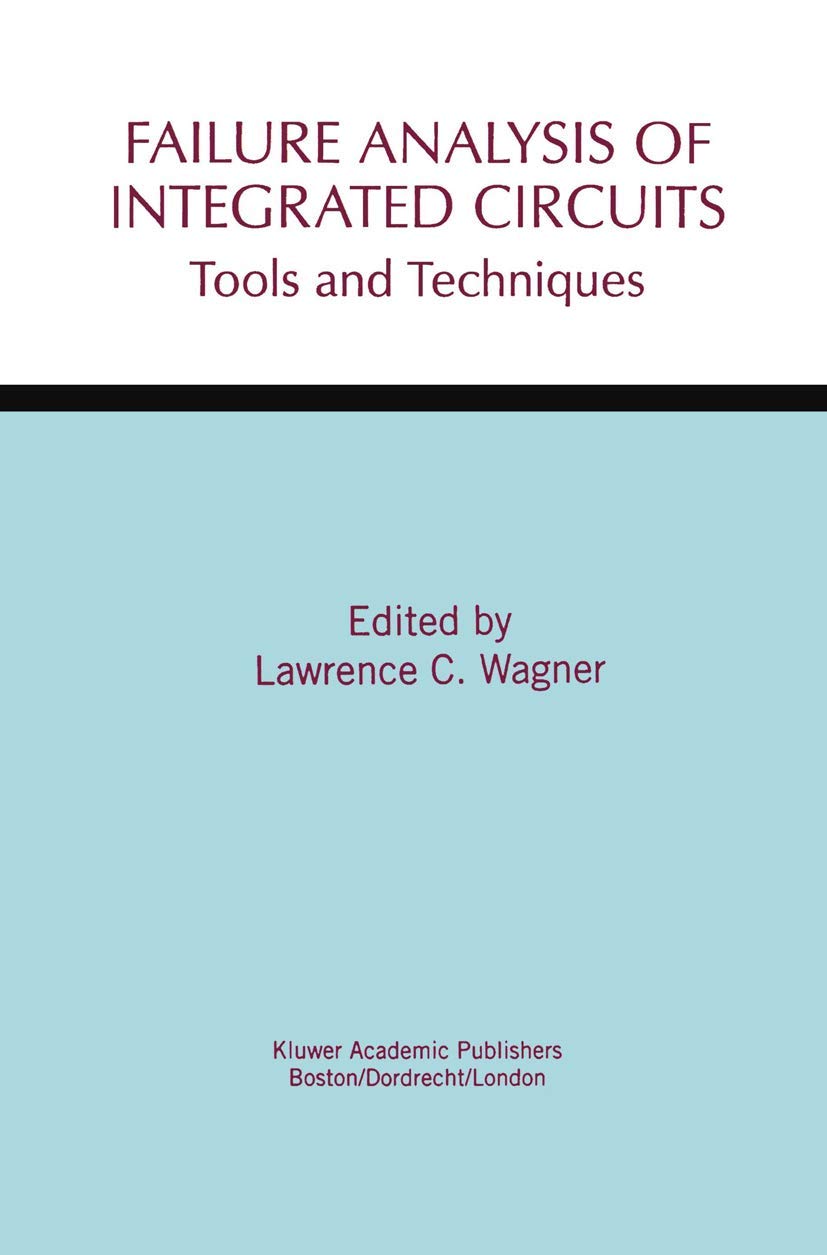
Failure Analysis of Integrated Circuits: Tools and Techniques
Failure Analysis of Integrated Circuits: Tools and Techniques
Price subject to change. Tap below for current.
Couldn't load pickup availability
Our review of Failure Analysis of Integrated Circuits: Tools and Techniques finds it a focused, practical reference for engineers and researchers who need a qualitative, tool-oriented understanding of how to diagnose electrical failures in silicon-based devices. The book's biggest reason to buy is its clear explanation of how common failure analysis steps such as decapsulation, deprocessing, and fail site isolation fit with physical and chemical techniques, giving readers the background to make intelligent tool choices rather than prescribing one-size-fits-all procedures.
Key Features
- Decapsulation and deprocessing: Explains the purpose and expected outcomes of these preparation steps so practitioners can plan reliable examinations.
- Fail site isolation methods: Describes isolation approaches that help focus analysis on the electrical failure origin, reducing wasted time on unrelated areas.
- Physical analysis tools: Covers microscopy and imaging techniques and when each is most effective for revealing structural defects.
- Chemical analysis techniques: Outlines common chemical approaches used to identify contamination and materials-related failure mechanisms.
- Technique limitations: Calls out shortcomings and strengths of each method so readers can weigh tradeoffs when selecting tools.
- Qualitative guidance: Provides practical, nonmathematical guidance suitable for working engineers rather than a purely academic treatment.
Who It's For
This book is well suited to semiconductor professionals, failure analysis engineers, and graduate researchers who need a practical, tool-centric view of how to approach root-cause work on integrated circuits. It is particularly helpful for those who already have some background in electronics and want to understand how physical and chemical methods support electrical troubleshooting.
It is less appropriate for complete beginners seeking step-by-step laboratory protocols or for readers looking for rigorous, quantitative models of failure mechanisms; those audiences should consider more introductory texts or specialized procedural manuals in addition to this reference.
Pros & Cons
Pros
- Clear linkage between standard preparation steps and downstream analysis benefits practical decision making.
- Balanced coverage of both physical and chemical analysis tools makes it a useful cross-discipline reference.
- Discussion of limitations helps avoid misapplication of techniques in real investigations.
Cons
- The qualitative approach means readers seeking detailed protocols or deep analytical models will need supplementary sources.
Specifications
| Title | Failure Analysis of Integrated Circuits: Tools and Techniques |
| Series | The Springer International Series in Engineering and Computer Science |
| Author | Lawrence C. Wagner |
| Focus | Tools and techniques for silicon-based integrated circuit failure analysis |
| Coverage | Decapsulation, deprocessing, fail site isolation, physical and chemical analysis |
| Approach | Qualitative guidance emphasizing tool choice and limitations |
Our Verdict
Failure Analysis of Integrated Circuits: Tools and Techniques delivers practical, qualitative guidance that helps experienced engineers and researchers choose and apply common failure analysis tools effectively. It is good value as a reference because it synthesizes preparation methods with physical and chemical techniques while honestly addressing limitations, though those needing procedural depth should pair it with lab manuals.
Frequently Asked Questions
Does this book teach laboratory procedures?
The book explains the purpose and application of preparation and analysis steps but is qualitative; it does not provide exhaustive step-by-step lab protocols.
Is this suitable for beginners?
It is best for readers with some electronics or semiconductor background; complete novices may need a more introductory textbook first.
What kinds of tools are covered?
Coverage includes decapsulation, deprocessing, fail site isolation, and common physical and chemical analysis tools used in silicon device failure work.
Editor's Take
A practical, qualitative reference that helps engineers and researchers choose and apply common failure analysis tools effectively; pair with lab manuals for procedural detail.

Recently viewed
Recently viewed products will appear here as customers browse the store.