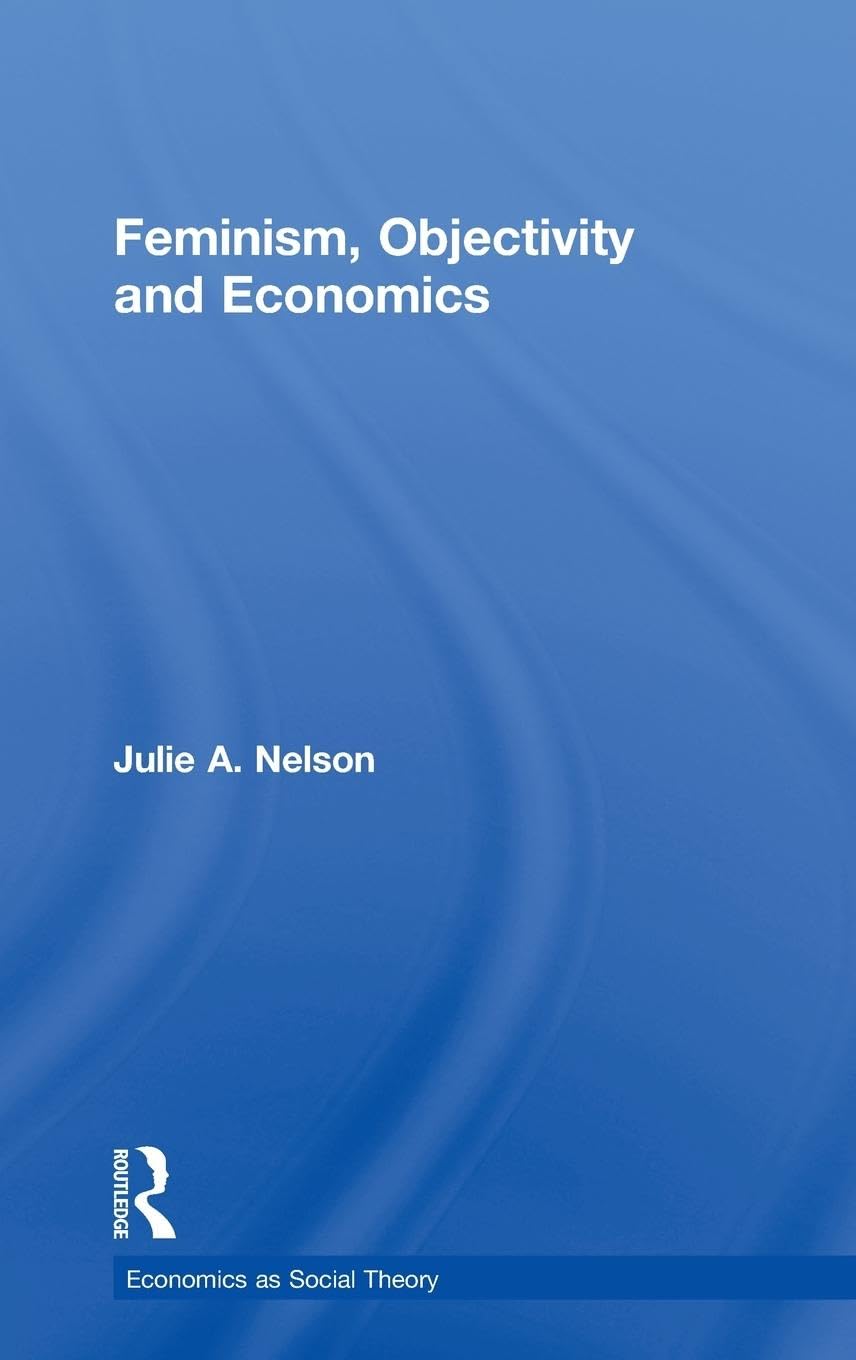
Feminism, Objectivity and Economics: A Deep Dive into Theory
Feminism, Objectivity and Economics: A Deep Dive into Theory
Price subject to change. Tap below for current.
Couldn't load pickup availability
In the realm of economics, Feminism, Objectivity and Economics by Julie A. Nelson presents a groundbreaking perspective that challenges traditional views. This book delves into the intersection of feminism and economic theory, offering readers a fresh lens through which to understand social dynamics and economic practices.
Nelson's work is not just an academic exercise; it is a call to re-evaluate the objectivity in economics. By integrating feminist theory, the author critiques the prevailing notions of neutrality in economic analysis, arguing that these concepts often overlook the experiences and contributions of women. This book is essential for anyone interested in the evolution of economic thought.
The text is structured to guide readers through complex ideas with clarity. Each chapter builds upon the last, making it accessible for both seasoned economists and newcomers alike. The author employs a variety of case studies to illustrate how feminist perspectives can enrich our understanding of economic phenomena.
One of the standout features of this book is its emphasis on the importance of social context in economic theory. Nelson argues that economic models often fail to account for the realities faced by marginalized groups. By incorporating a feminist lens, the book highlights the necessity of inclusive approaches to economic analysis.
Moreover, the discussions within the book extend beyond theory into practical implications. Readers will find that the insights provided can influence policy-making and economic practices, advocating for a more equitable approach to economics. The integration of gender analysis into economic discussions is a pivotal theme that resonates throughout the text.
Nelson's writing is both engaging and thought-provoking, making complex theories digestible. The book is filled with rich examples that illustrate the impact of gender biases in economic decision-making. This not only enhances the reader's understanding but also encourages critical thinking about the structures that govern our economies.
In conclusion, Feminism, Objectivity and Economics is a vital contribution to the field of economics. It challenges readers to reconsider their assumptions and to embrace a more nuanced understanding of economic theory. Whether you are a student, educator, or practitioner, this book will undoubtedly enrich your perspective on the interplay between gender and economics.
Share