

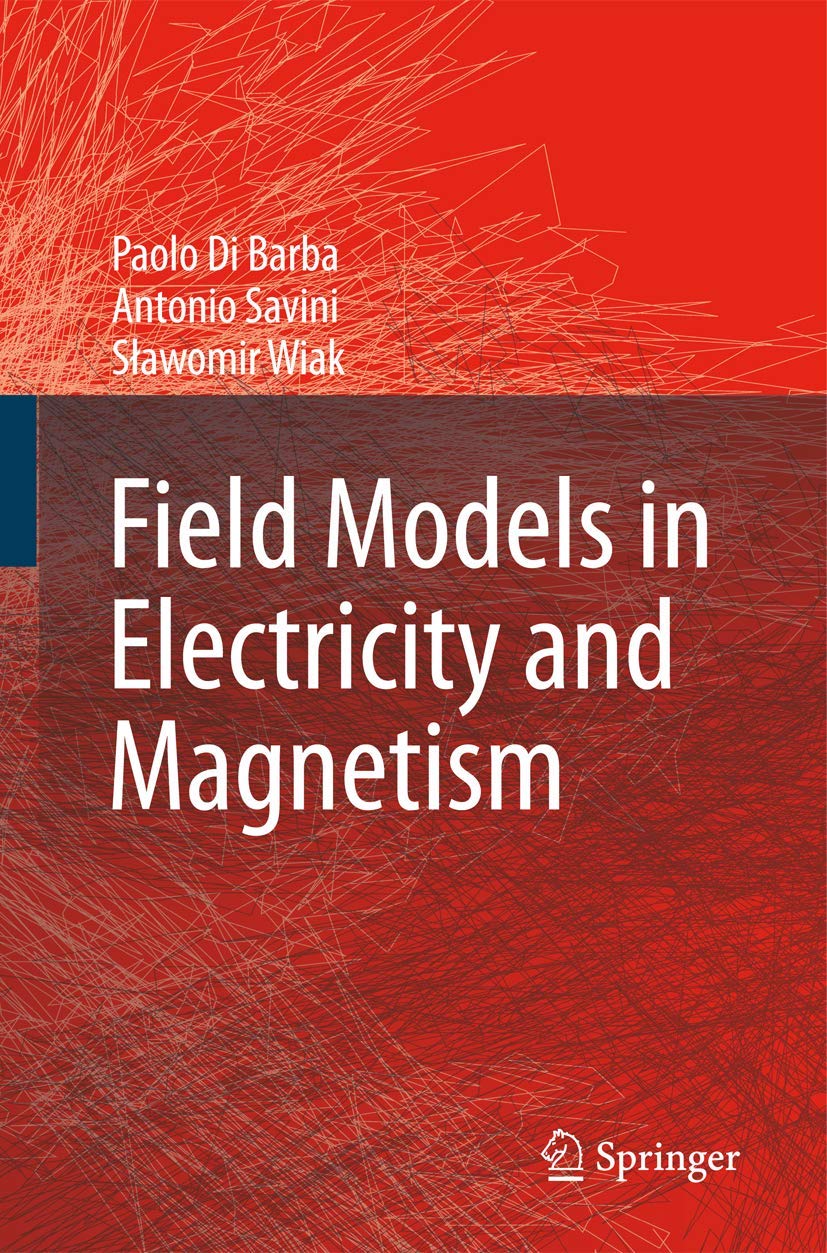
Field Models in Electricity and Magnetism - Practical Textbook
Field Models in Electricity and Magnetism - Practical Textbook
Price subject to change. Tap below for current.
Couldn't load pickup availability
In this review of Field Models in Electricity and Magnetism the bottom line is clear: this is a focused, academically minded textbook best suited for electrical engineering students and practicing engineers who need a rigorous bridge between circuit theory and field-based modeling. The authors present material that reflects decades of computational development in electromagnetism, and the single biggest reason to consider the book is its emphasis on numerical methods and practical field models that are increasingly relevant in device design and applications where circuits alone are insufficient.
Key Features
- Computational focus: Explains how numerical methods have reshaped electromagnetic analysis, giving readers practical routes to compute fields rather than only relying on analytical solutions.
- Curriculum-ready structure: Presents topics in a way that can be incorporated into electrical engineering courses, helping instructors add field modeling alongside circuits and systems.
- Quasi-static treatment: Covers quasi-static cases to show where circuit models break down and field approaches become necessary for accurate device behavior.
- Applications oriented: Links field theory to areas like semiconductor device design and bioengineering, so readers see concrete reasons to learn field modeling.
- Authoritative perspective: Draws on the combined experience of the authors to give a balanced account of both theory and computation for practical engineering use.
Who It's For
Field Models in Electricity and Magnetism is aimed primarily at upper-level undergraduates, graduate students, and practicing electrical engineers who need a deeper understanding of how fields are modeled numerically. It is especially useful for those working with magnetic or electric devices, semiconductor problems, or multidisciplinary applications such as bioengineering where field interactions matter.
It is less suitable for beginners seeking a light introduction to electromagnetism or for readers who only need basic circuit theory, since the book assumes interest in numerical methods and a willingness to engage with field concepts beyond simple circuit models.
Pros & Cons
Pros
- Focuses on numerical computation, making it practical for modern engineering work.
- Bridges the gap between circuits and field theory, which is useful for device design.
- Includes applications that demonstrate relevance to semiconductor and bioengineering fields.
Cons
- Not designed as a casual primer; students unfamiliar with basic field concepts may find it demanding.
Specifications
| Title | Field Models in Electricity and Magnetism |
| Authors | Paolo Di Barba, Antonio Savini, Slawomir Wiak |
| Focus | Numerical methods and field modeling in electromagnetism |
| Intended audience | Electrical engineering students and practicing engineers |
| Coverage | Quasi-static cases, device applications, computational approaches |
Our Verdict
Field Models in Electricity and Magnetism is a solid, application-minded textbook for readers ready to move beyond circuit models into computational field analysis. Those studying device design or working in energy and bioengineering will find strong value in its practical emphasis and curriculum-friendly layout, making it a worthwhile addition to an engineering bookshelf.
Frequently Asked Questions
Is this book suitable for undergraduate courses?
Yes; the book is designed to be integrated into undergraduate electrical engineering curricula that can allocate time to field modeling alongside circuits.
Does it cover numerical methods?
Yes; a central theme is the development and use of numerical techniques for computing electromagnetic fields.
Is prior circuit knowledge required?
Some familiarity with circuits and basic electromagnetism helps, as the book builds toward field models used in device contexts.
Editor's Take
Field Models in Electricity and Magnetism is a practical, computation-focused textbook that helps engineers and students move beyond circuits to numerical field analysis; it is best for those studying device design or applied electromagnetics.

Recently viewed
Recently viewed products will appear here as customers browse the store.