

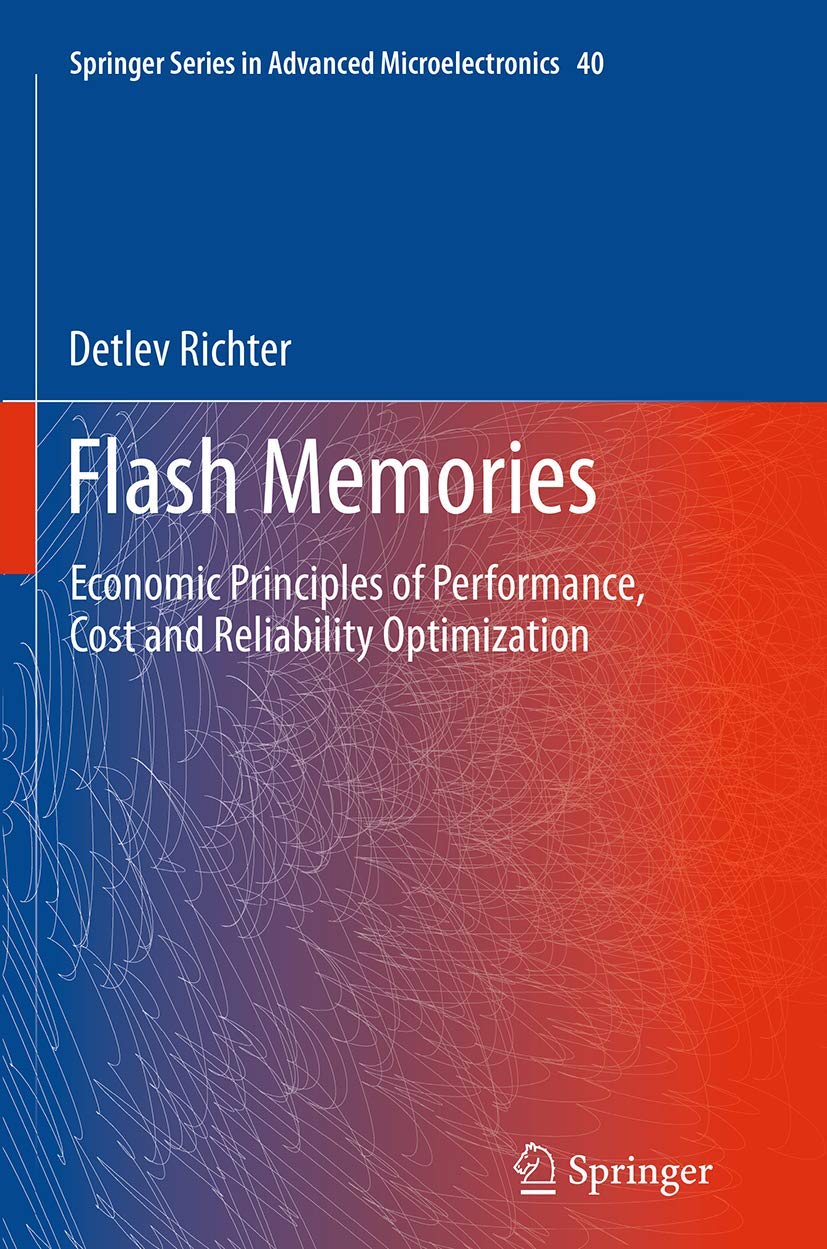
Flash Memories: Economic Principles of Performance, Cost
Flash Memories: Economic Principles of Performance, Cost
Price subject to change. Tap below for current.
Couldn't load pickup availability
In this review of Flash Memories: Economic Principles of Performance, Cost and Reliability Optimization, the author presents a model-driven approach aimed at engineers and technical managers tackling non-volatile memory tradeoffs. The book's single biggest reason to buy is its practical, industrially grounded methodology for quantifying performance, cost and reliability tradeoffs using flash memory as a worked example. Readers looking for a method to compare architectures, assess 3D integration impacts and derive performance indicators will find a focused, quantitative treatment rather than a high-level survey.
Key Features
- Model-based methodology: Provides a structured, quantitative framework to derive performance indicators that let teams compare architectures and optimizations with measurable metrics.
- Flash memory case study: Uses the complex example of 2-bit to 4-bit per cell flash development to demonstrate how the methodology applies to real product decisions.
- Performance and array modeling: Develops a performance and array memory model to connect cell- and array-level characteristics to system-level outcomes.
- Cost and reliability focus: Treats cost and durability alongside performance, enabling balanced tradeoff analysis rather than optimization of a single metric.
- 3D integration discussion: For the first time in this series, design and cost aspects of 3D integration of flash memory are addressed, offering guidance on stacking and architectural choices.
Who It's For
The primary audience is engineering professionals, technical leads and researchers in memory design who need a quantitative toolset to evaluate tradeoffs in flash memory architecture, especially those involved with multi-level cell development or considering 3D integration. It is also useful for cost analysts who must translate device-level changes into economic impact.
Practitioners seeking hands-on experimental procedures, introductory tutorials on semiconductor physics, or a casual overview of flash history should look elsewhere, since the book focuses on model development and applied analysis rather than beginner-level explanations or lab step-by-step guides.
Pros & Cons
Pros
- Provides a rigorous quantitative performance indicator methodology that makes tradeoffs explicit and comparable.
- Applies theory to a substantive industrial example, showing how a 2-bit to 4-bit per cell project informs design choices.
- Includes discussion of 3D integration design and cost aspects, a practical area often omitted in similar texts.
- Presents combined views of performance, cost and durability for balanced decision making.
Cons
- Not a tutorial for beginners; it assumes familiarity with memory concepts and design language.
- Readers wanting extensive experimental data or user-level implementation recipes may find the emphasis on modeling less hands-on than expected.
Specifications
| Title | Flash Memories: Economic Principles of Performance, Cost and Reliability Optimization |
| Series | Springer Series in Advanced Microelectronics, 40 |
| Author | Detlev Richter |
| Scope | Model-based performance, cost and reliability optimization for non-volatile memories |
| Case study | Industrial 2-bit to 4-bit per cell flash development project |
| Special topics | Design and cost aspects of 3D integration of flash memory |
Our Verdict
For engineers and technical decision makers needing a systematic way to weigh performance, cost and durability, this book offers practical value through its model-driven approach and an industrial flash case study. It is especially worth buying if your work involves multi-level cell design or assessing 3D integration costs, though novices should pair it with a more introductory text.
Frequently Asked Questions
Does the book explain 3D integration effects?
Yes. It treats design and cost aspects of 3D integration for flash memory and discusses how stacking affects architecture and economics.
Is the content theoretical or practical?
The book is model-based and practical in orientation, applying developed models to an industrial flash development project rather than providing only abstract theory.
Who benefits most from the methodology?
Memory designers, technical managers and cost analysts who need to quantify tradeoffs in architecture and reliability will benefit most.
Editor's Take
A model-driven, practical guide for engineers and technical managers, offering a quantitative methodology to evaluate flash memory performance, cost and reliability tradeoffs, especially useful for multi-level cell and 3D integration decisions.

Recently viewed
Recently viewed products will appear here as customers browse the store.