

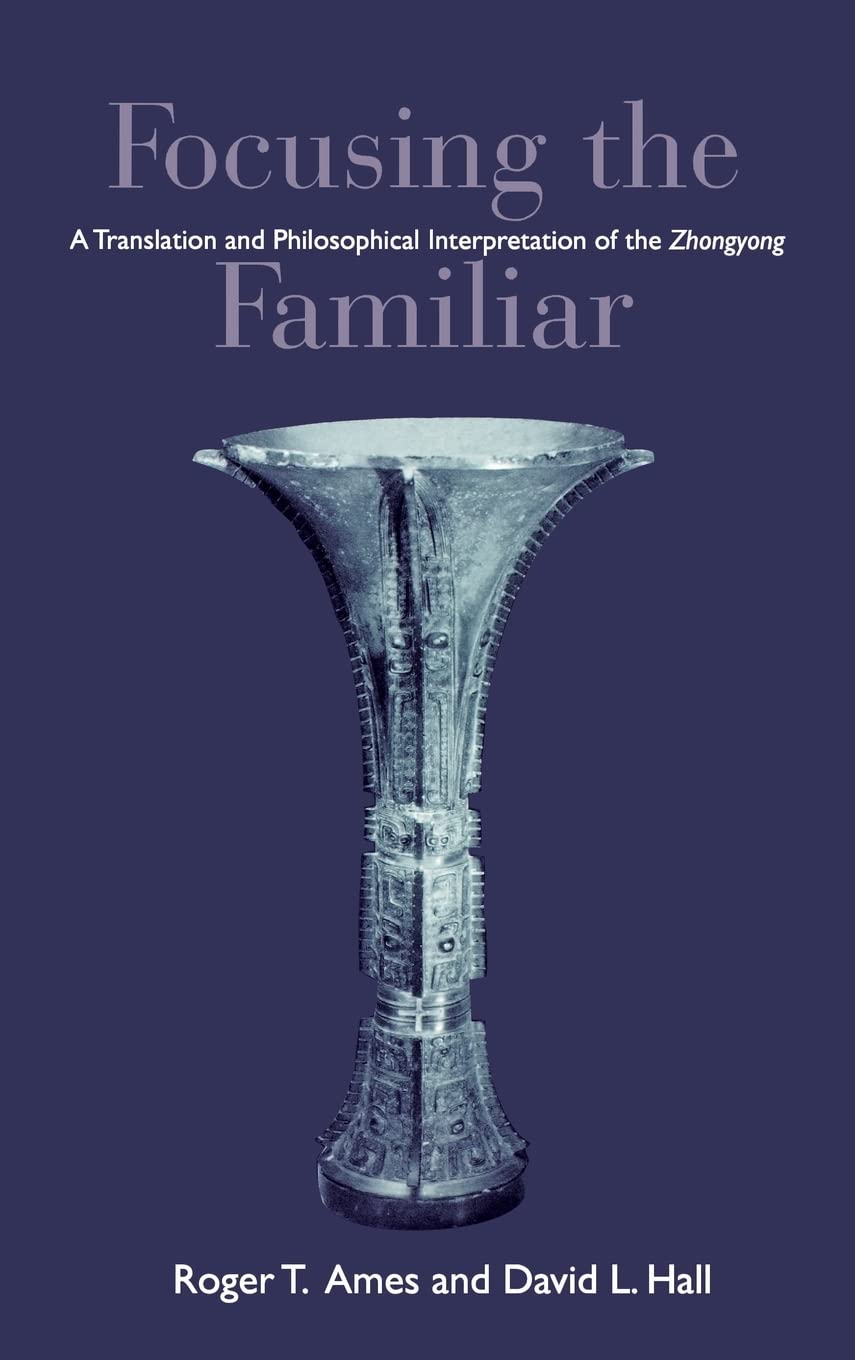
Focusing the Familiar: A Translation and Philosophical Interpretation
Focusing the Familiar: A Translation and Philosophical Interpretation
Price subject to change. Tap below for current.
Couldn't load pickup availability
In this review of Focusing the Familiar, the translator Roger T. Ames (with David Hall) presents a careful philosophical reading of the Zhongyong, aimed at readers who want more than a literal rendering. The bottom line: this edition is for students and general readers seeking a translation that foregrounds conceptual nuance and interpretation rather than a terse, wordforword gloss. It earns recommendation because the translators pair clear English with sustained attention to the text's ethical and metaphysical concerns, making the Zhongyong accessible to readers interested in comparative philosophy and classical Confucian thought.
Key Features
- Philosophical interpretation: The translation emphasizes conceptual nuance to illuminate the Zhongyong's ethical terms and arguments for readers of contemporary philosophy.
- Careful translation: Language choices are attentive to semantic subtleties, which helps preserve the original text's layered meanings in English.
- Canonical focus: The book situates the Zhongyong as one of the Four Books, explaining its historical and cultural weight in East Asian intellectual history.
- Readable exposition: Despite its philosophical bent, the text remains approachable for non-specialists who want a thoughtful guide through the work.
- Scholarly framing: Commentary and interpretation provide context on Zhu Xi's role in shaping the text's reception, aiding readers who seek historical perspective.
Who It's For
This translation is best for undergraduate and graduate students in philosophy, religious studies, or East Asian studies and for thoughtful general readers who appreciate interpretive notes that clarify philosophical themes. The emphasis on conceptual nuance makes it especially useful for comparative work where precise renderings of key terms matter.
Readers looking for a purely literal, linebyline philological edition or a short pocket introduction with minimal commentary should look elsewhere; this volume is designed to engage the Zhongyong as a piece of sustained philosophical writing rather than a bare text for textual critics.
Pros & Cons
Pros
- Interpretive translation highlights important philosophical distinctions that a casual translation might miss.
- Contextual framing explains the Zhongyong's canonical status and historical influence across East Asia.
- Readable prose makes complex ideas accessible to nonspecialists without oversimplifying key concepts.
Cons
- Readers seeking a literal wordforword philological rendering may find the interpretive approach less suitable.
Specifications
| Title | Focusing the Familiar: A Translation and Philosophical Interpretation of the Zhongyong |
| Primary Translator | Roger T. Ames (with David Hall) |
| Text Focus | Zhongyong (Confucian classic, one of the Four Books) |
| Approach | Philosophical interpretation with attention to semantic nuance |
| Audience | Students and readers of philosophy and East Asian thought |
| Contextual Content | Discussion of Zhu Xi's compilation and canonical influence |
Our Verdict
Focusing the Familiar is a carefully interpreted translation that rewards readers who want to engage the Zhongyong as philosophical literature. Its strength is balancing readable English with attention to conceptual detail, making it good value for students and thoughtful general readers who need a clear interpretive guide rather than a cold literal edition.
Frequently Asked Questions
Is this a literal translation?
Answer. No, the translation is interpretive and philosophical in aim, prioritizing conceptual clarity over strict wordforword fidelity.
Who edited or compiled the Zhongyong historically?
Answer. The review notes Zhu Xi's role in compiling and annotating the Four Books, which established the Zhongyong's canonical status.
Is this suitable for beginners?
Answer. Yes for beginners with interest in philosophy or Confucian thought, though readers wanting only a brief introduction might prefer a shorter survey.
Editor's Take
A carefully interpreted translation that balances readable English with conceptual nuance, ideal for students and readers who want a philosophical guide to the Zhongyong.

Recently viewed
Recently viewed products will appear here as customers browse the store.