

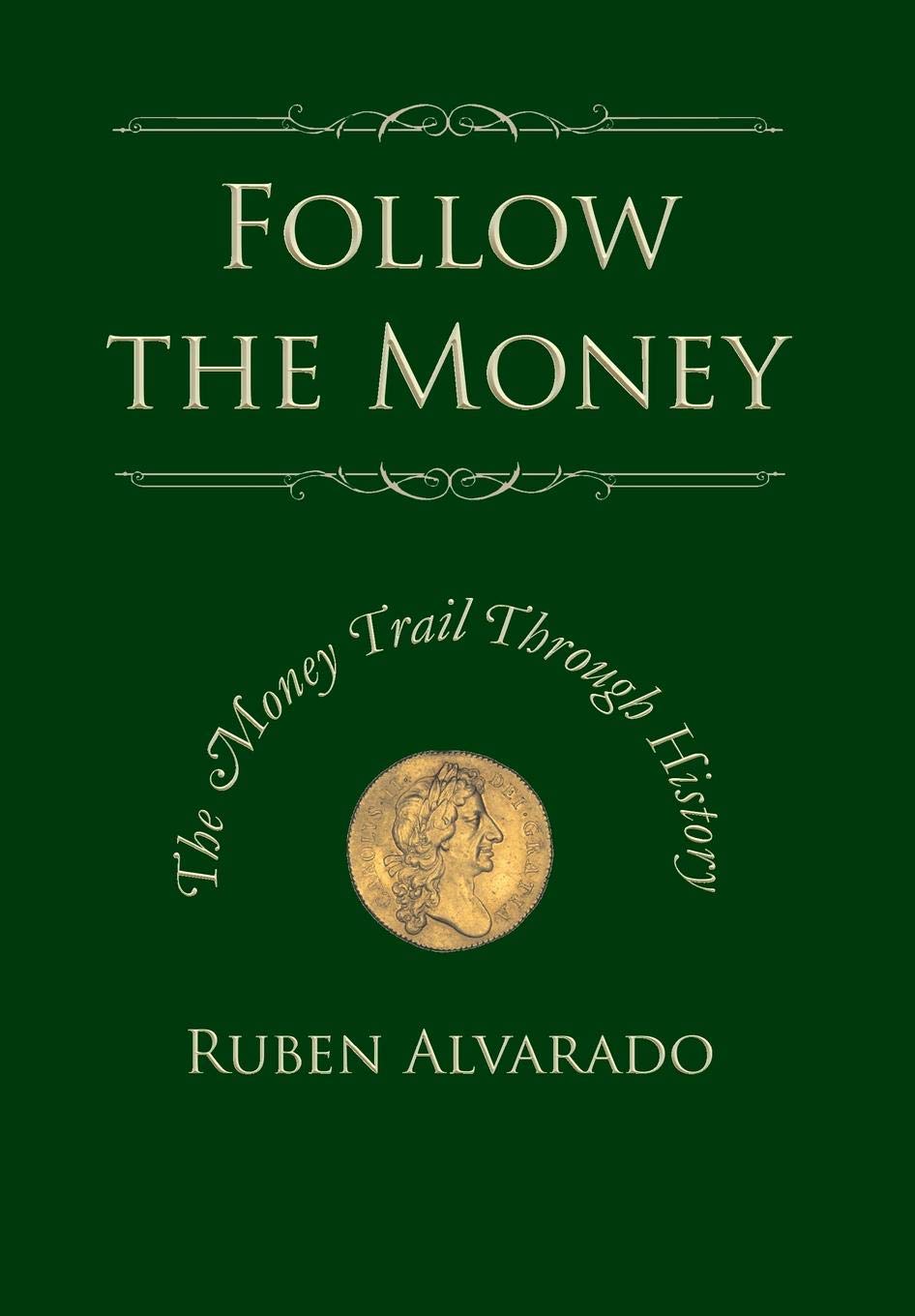
Follow the Money: The Money Trail Through History - Clear Historical
Follow the Money: The Money Trail Through History - Clear Historical
Price subject to change. Tap below for current.
Couldn't load pickup availability
In this review of Follow the Money: The Money Trail Through History the bottom line is simple: this book is for readers who want a big-picture explanation of how forms of money shape societies. Ruben Alvarado presents a clear, sustained thesis that there are three distinct forms of money and that the chosen form influences cultural, political, and economic outcomes. The book reads like a guided tour through civilizations, so historians, economists, and thoughtful general readers will find its argument provocative and steady rather than anecdotal. This review focuses on how well the narrative supports the central claim and how accessible the treatment is.
Key Features
- Unified thesis: The book presents a single, coherent argument that different forms of money produce different kinds of societies, giving readers a consistent lens for historical interpretation.
- Chronological sweep: The narrative moves from ancient Meso-potamia through Phoenicia, Greece, and Rome to medieval and early-modern Europe, helping readers trace long-term developments.
- Cultural reach: Alvarado links monetary change to broader cultural and political consequences, making the economics relevant to readers interested in art, law, and social organization.
- Comparative scope: The text places Europe in interaction with Near and Far East communities, offering comparative context rather than a single-region focus.
- Readable voice: The prose conveys a practiced historian's verve, keeping complex ideas accessible to non-specialists without oversimplifying the thesis.
Who It's For
Follow the Money is aimed at readers who enjoy intellectual history and economic history, including students, independent scholars, and curious general readers who want a framework for connecting monetary institutions to cultural outcomes. The book rewards readers who prefer idea-driven narratives over technical econometrics.
Readers seeking a heavily footnoted academic monograph or a textbook full of statistical tables should look elsewhere; this work emphasizes interpretation and synthesis over exhaustive empirical appendices. It is not a practical guide to modern finance policy, but it illuminates why money matters beyond prices.
Pros & Cons
Pros
- Offers a clear, memorable central thesis that helps frame historical episodes across eras.
- Travels widely through time and place, connecting ancient Meso-potamia to modern international communities for broad perspective.
- Writes with engaging clarity, making complex cultural and economic links accessible to general readers.
Cons
- The book prioritizes interpretive synthesis, so readers wanting dense empirical tables or specialist citations may find it light on technical detail.
Specifications
| Title | Follow the Money: The Money Trail Through History |
| Author | Ruben Alvarado |
| Primary focus | Forms of money and their societal effects |
| Historical scope | Ancient Meso-potamia to modern international community |
| Geographic scope | Phoenicia, Greece, Rome, Europe, Near and Far East |
| Approach | Interpretive economic and cultural history |
Our Verdict
Follow the Money is a thoughtful, well-argued book that repays readers who want an interpretive framework linking money to societal form. It is especially good value for general readers and students seeking a readable synthesis that spans civilizations; specialist researchers seeking exhaustive empirical apparatus may find it more useful as a conceptual companion than as a primary data source.
Frequently Asked Questions
Does the book cover modern monetary systems?
The narrative extends to the modern-day community of nations and discusses how historical forms of money influence contemporary systems.
Is this a technical economics book?
No. The emphasis is interpretive history rather than technical modeling or dense empirical tables.
Who wrote the book?
Ruben Alvarado is the author, and he presents the thesis with a historian's narrative approach.
Editor's Take
Follow the Money is a thoughtful, readable synthesis that traces how three forms of money shape societies; ideal for students and general readers seeking a conceptual framework rather than technical data.

Recently viewed
Recently viewed products will appear here as customers browse the store.