

Formal Models of Communicating Systems - Languages, Automata
Formal Models of Communicating Systems - Languages, Automata
Price subject to change. Tap below for current.
Couldn't load pickup availability
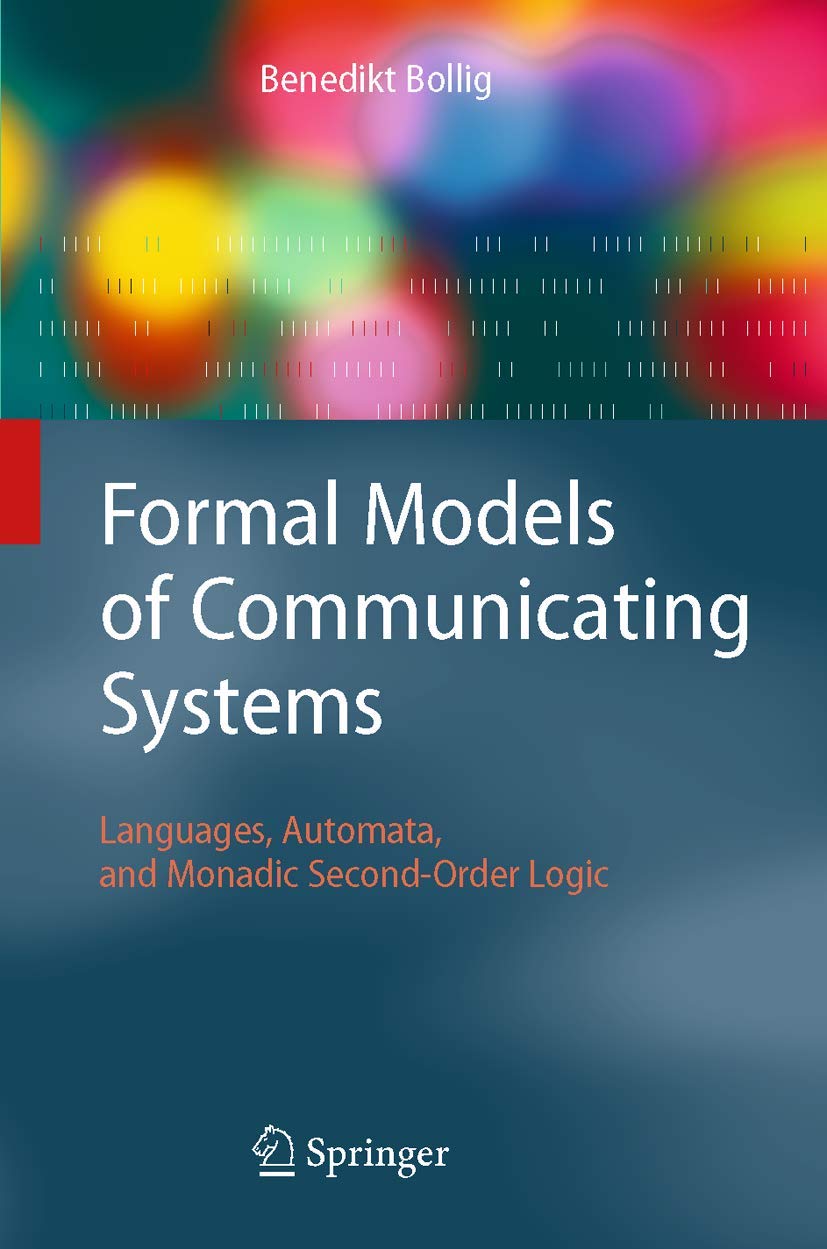
In this review of Formal Models of Communicating Systems: Languages, Automata, and Monadic Second-Order Logic, the bottom line is straightforward: this is a rigorous, theory-first treatment for researchers and advanced students who need a unified account of automata and logic for distributed computation. The book's single biggest reason to buy is its focused bridge between automata models that describe concurrent behavior and the logical characterizations that make formal verification and theoretical classification possible. Readers should expect dense, formal exposition rather than introductory tutorials.
Key Features
- Unified theory: Presents a cohesive framework that links communicating automata classes and their logical properties, making it easier to compare models across the literature.
- Automata and logic focus: Emphasizes the relationship between various automata and monadic second-order logic, which benefits those studying expressiveness and decidability.
- Hanf and Thomas foundations: Builds on Hanf's Theorem and Thomas's graph acceptors to derive general characterization results, supporting deeper theoretical insights.
- Existential MSO characterization: Develops methods that characterize many models of distributed computation in terms of the existential fragment of monadic second-order logic, useful for complexity and specification analysis.
- Concurrent systems emphasis: Centers on automata that describe concurrent and distributed behavior, providing direct relevance to distributed systems theory and verification research.
Who It's For
This book is intended for graduate students, academics, and practitioners in theoretical computer science who already have familiarity with automata theory and logic and who want a concentrated, research-oriented treatment of communicating systems. It is best for those working on formal verification, distributed computation models, or the expressiveness of logical systems.
It is less suitable for beginners seeking an introductory textbook or practitioners looking for implementation-focused tutorials; readers without prior exposure to monadic second-order logic or automata formalism will find the material dense and assume prior knowledge.
Pros & Cons
Pros
- Provides a clear, unified theoretical framework linking automata classes and logical characterizations.
- Uses classic theorems (Hanf, Thomas) to derive broadly applicable results, strengthening the theoretical foundation.
- Focus on the existential fragment of MSO gives concrete tools for characterizing popular distributed models.
Cons
- Dense, formal presentation makes it a poor choice for readers who need introductory or applied guidance.
Specifications
| Title | Formal Models of Communicating Systems: Languages, Automata, and Monadic Second-Order Logic |
| Author / Brand | Benedikt Bollig |
| Main topics | Automata theory, monadic second-order logic, communicating systems |
| Theoretical foundations | Hanf's Theorem and Thomas's graph acceptors |
| Focus | Existential fragment of monadic second-order logic for distributed models |
| Target audience | Graduate students and researchers in theoretical computer science |
Our Verdict
Formal Models of Communicating Systems is a compact, rigorous resource for researchers and advanced students who need a principled account of automata and logical characterizations for distributed computation. It delivers strong theoretical value and unifying results, but its dense style means it is best bought by readers with a solid background in automata and logic.
Frequently Asked Questions
Does this book cover practical implementations of communicating automata?
The book focuses on theory and logical characterization rather than implementation or engineering aspects.
Is prior knowledge required?
Yes; familiarity with automata theory and monadic second-order logic is recommended to follow the material.
What models of computation does it address?
It addresses classes of automata that describe concurrent and distributed behavior and characterizes many such models via existential MSO.
Editor's Take
A rigorous, theory-focused resource that unifies automata models and monadic second-order logic for distributed computation; ideal for graduate students and researchers with prior background.

Recently viewed
Recently viewed products will appear here as customers browse the store.