

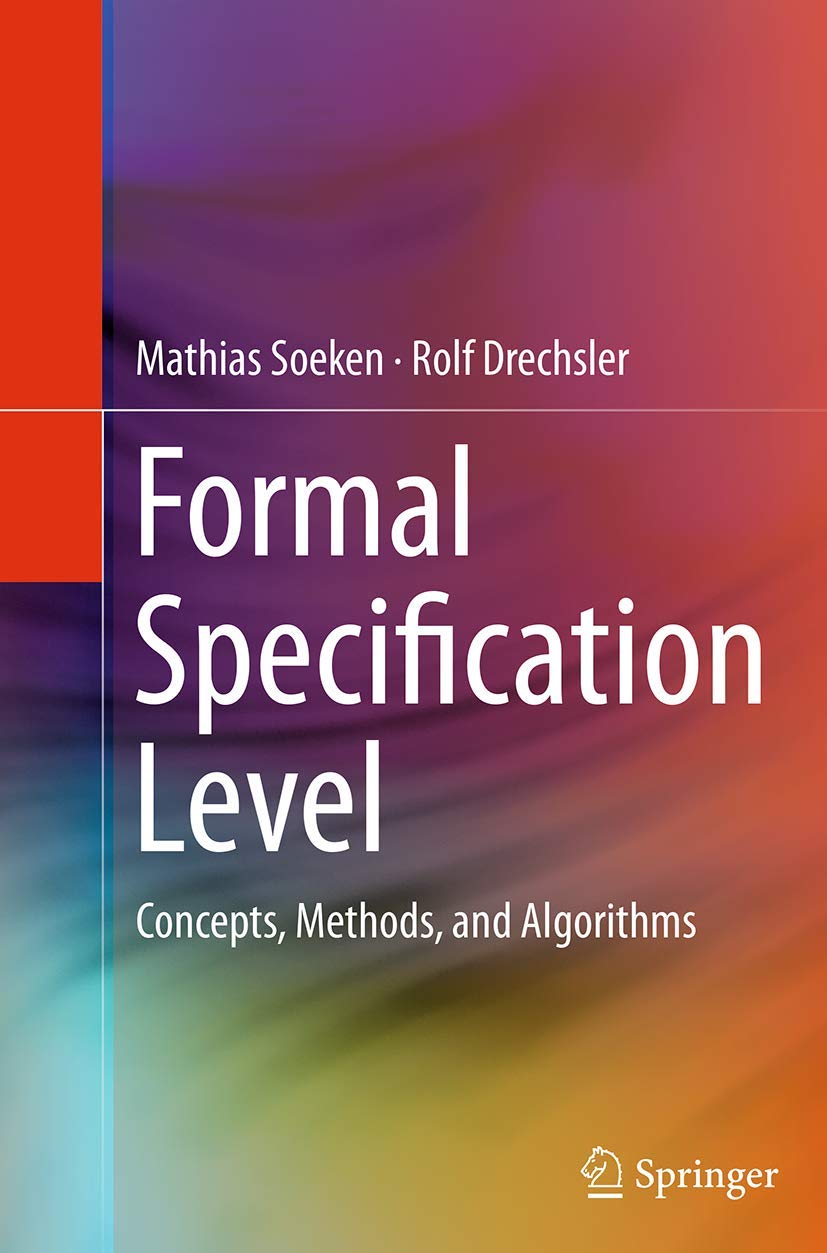
Formal Specification Level: Concepts, Methods, and Algorithms
Formal Specification Level: Concepts, Methods, and Algorithms
Price subject to change. Tap below for current.
Couldn't load pickup availability
In this review of Formal Specification Level: Concepts, Methods, and Algorithms the bottom line is clear: this is a focused, technical book for engineers and researchers who need a rigorous bridge between textual requirements and executable models. The authors present the Formal Specification Level (FSL) as a tangible, intermediate abstraction that helps catch conceptual conflicts and verify dynamic behavior early in design flows. Readers looking for practical methods to extract models semi-automatically and apply meaningful verification tasks will find the book immediately useful.
Key Features
- Formal Specification Level explained: Introduces a new abstraction that closes the gap between textual specification and Electronic System Level models, helping teams reason about design intent before implementation.
- Semi-automatic model extraction: Describes techniques to extract executable FSL models from textual specifications in an interactive manner, reducing manual translation effort.
- Verification at early stages: Shows how significant verification tasks can be applied on FSL models to detect conflicting requirements and verify conceptual properties early.
- Dynamic behavior analysis: Explains how to use execution traces of FSL models to validate expected runtime behavior and find subtle design flaws.
- Method and algorithm focus: Provides concrete approaches and algorithms that let readers adopt the FSL in a real ESL design flow rather than only presenting theory.
Who It's For
The book targets system architects, verification engineers, and advanced students working on embedded systems who need to tighten the link between requirements and executable models; it is especially useful for teams moving toward Electronic System Level design who want early verification leverage. Practitioners who must demonstrate that textual requirements are consistent and implementable will appreciate the book's procedural focus.
Readers seeking a gentle introduction to programming or high-level product management overviews should look elsewhere; the book assumes familiarity with system design concepts and benefits readers who expect rigorous, methodical exposition rather than broad survey material.
Pros & Cons
Pros
- Clear presentation of the Formal Specification Level concept that directly targets the gap between text and executable ESL models.
- Practical discussion of semi-automatic extraction methods that reduce manual modeling work and support interactive workflows.
- Concrete verification examples showing how to detect conflicts and validate dynamic traces early in the design flow.
Cons
- The treatment is technical and assumes background in system design, so it is less accessible to general readers or beginners.
Specifications
| Title | Formal Specification Level: Concepts, Methods, and Algorithms |
| Authors | Mathias Soeken, Rolf Drechsler |
| Focus | Formal Specification Level for ESL and verification |
| Key capability | Semi-automatic extraction of executable models from textual specifications |
| Main use | Early verification of conceptual properties and dynamic behavior |
| Intended audience | System architects, verification engineers, advanced students |
Our Verdict
For engineers and researchers who need a dependable method to move from textual requirements to executable ESL models, this book offers a practical and well-argued pathway. Its value lies in actionable methods for semi-automatic extraction and early verification, making it a sound investment for teams that must reduce specification ambiguity and verify behavior before implementation.
Frequently Asked Questions
Does this book teach practical extraction methods?
Yes; it explains semi-automatic techniques and interactive workflows to derive executable FSL models from textual specifications.
Is the material suitable for beginners?
The book assumes prior knowledge of system design and verification, so beginners may find it technically dense.
Will it help with requirement conflicts?
Yes; a core focus is using verification tasks on FSL models to detect conflicting requirements and check conceptual consistency.
Editor's Take
A practical, technical guide for engineers and researchers to bridge textual requirements and ESL models; valuable for its semi-automatic extraction methods and early verification workflows.

Recently viewed
Recently viewed products will appear here as customers browse the store.