

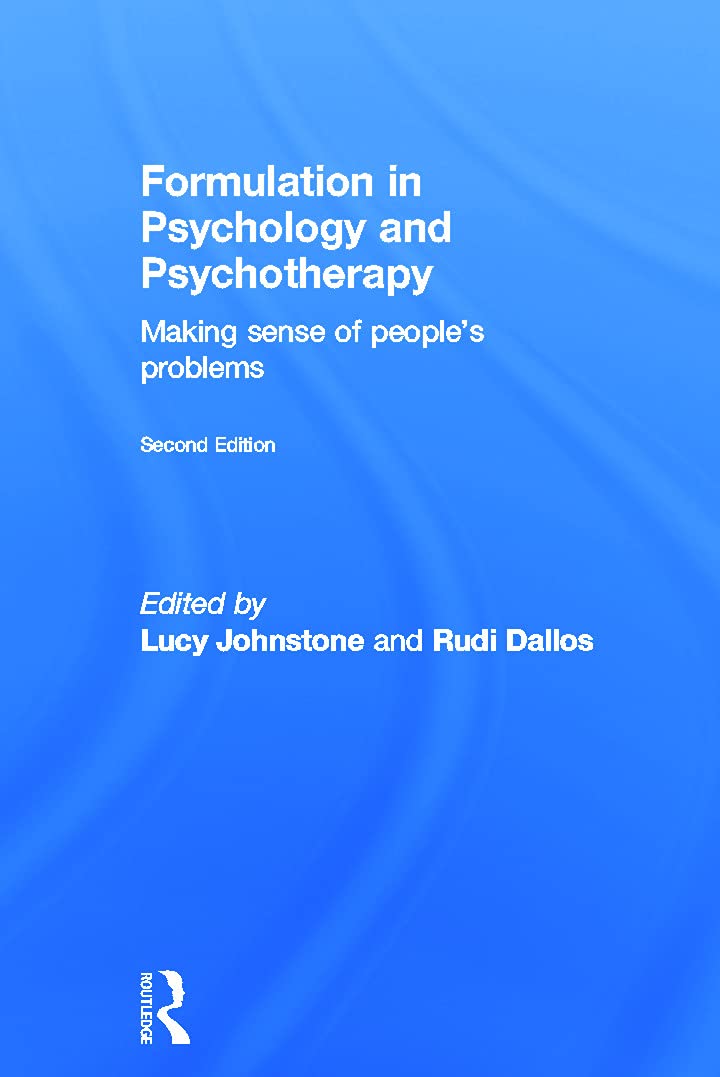
Formulation in Psychology and Psychotherapy - Clinical Practice
Formulation in Psychology and Psychotherapy - Clinical Practice
Price subject to change. Tap below for current.
Couldn't load pickup availability
In this review of Formulation in Psychology and Psychotherapy the bottom line is clear: this revised edition is a practical, conceptually rich guide for clinicians and trainees who want to use formulation as a collaborative, meaning-making process. The book's chief strength is its integration of recent practice and debate with concrete case material, so readers see how formulation works across different theoretical positions. It reads as a thoughtful, clinically grounded text rather than a quick how-to, making it best for professionals seeking depth in assessment and formulation.
Key Features
- Updated content: Revises the first edition to summarise recent practice and research so readers get current perspectives on formulation.
- New chapters: Adds focused chapters on personal construct formulation, health settings, and team-based formulation to broaden clinical application.
- Theoretical breadth: Presents two case studies from six different theoretical positions, helping clinicians compare approaches in practice.
- Collaborative stance: Emphasises formulation as a dynamic, collaborative process that explores personal meaning and relational context.
- Practical illustrations: Uses an adult and a child case study to demonstrate formulation across age groups and clinical scenarios.
Who It's For
This book is aimed at practicing psychologists, psychotherapists, clinical trainees and multidisciplinary teams who already have some grounding in clinical work and want to deepen how they conceptualise cases. It is particularly useful for clinicians who value a reflective, relational approach and who intend to use formulation in individual and team contexts.
Those looking for a brief primer, a step-by-step workbook or a purely theoretical treatise may prefer other titles; this edition sits between research summary and clinical handbook and expects readers to engage with examples and differing theoretical perspectives.
Pros & Cons
Pros
- Comprehensively updated content brings recent research and debates into a clinically useful format.
- Expanded chapters on health settings and team use increase the book's practical relevance across services.
- Case studies from multiple theoretical positions provide concrete comparison and learning opportunities.
Cons
- The reflective, comparative approach may feel dense for readers seeking short, stepwise instructions.
Specifications
| Title | Formulation in Psychology and Psychotherapy |
| Authors | Rudi Dallos, Lucy Johnstone |
| Edition | Revised and updated edition |
| Content focus | Formulation practice, research, and debates with case studies |
| New material | Chapters on personal construct formulation, health settings, and team formulation |
| Case studies | Two cases: one adult and one child, with six theoretical perspectives |
Our Verdict
Formulation in Psychology and Psychotherapy is a strong, well updated text for clinicians and trainees who want a thoughtful, practice-oriented account of formulation. Its inclusion of new chapters and cross-theoretical case material gives good value to teams and experienced practitioners who will apply formulation collaboratively in assessment and treatment planning.
Frequently Asked Questions
Does this edition include new chapters?
Yes. It adds chapters on personal construct formulation, formulation in health settings, and using formulation in teams.
Are there case examples to follow?
Yes. Two case studies, one adult and one child, are presented from six different theoretical positions to illustrate application.
Who benefits most from this book?
Practicing clinicians, trainees and multidisciplinary teams who want a reflective, relational approach to formulation will benefit most.
Editor's Take
A well updated, practice-oriented text that offers clinicians and teams useful case studies and new chapters on personal construct, health settings and team formulation; recommended for practitioners seeking a reflective, collaborative approach.

Recently viewed
Recently viewed products will appear here as customers browse the store.