

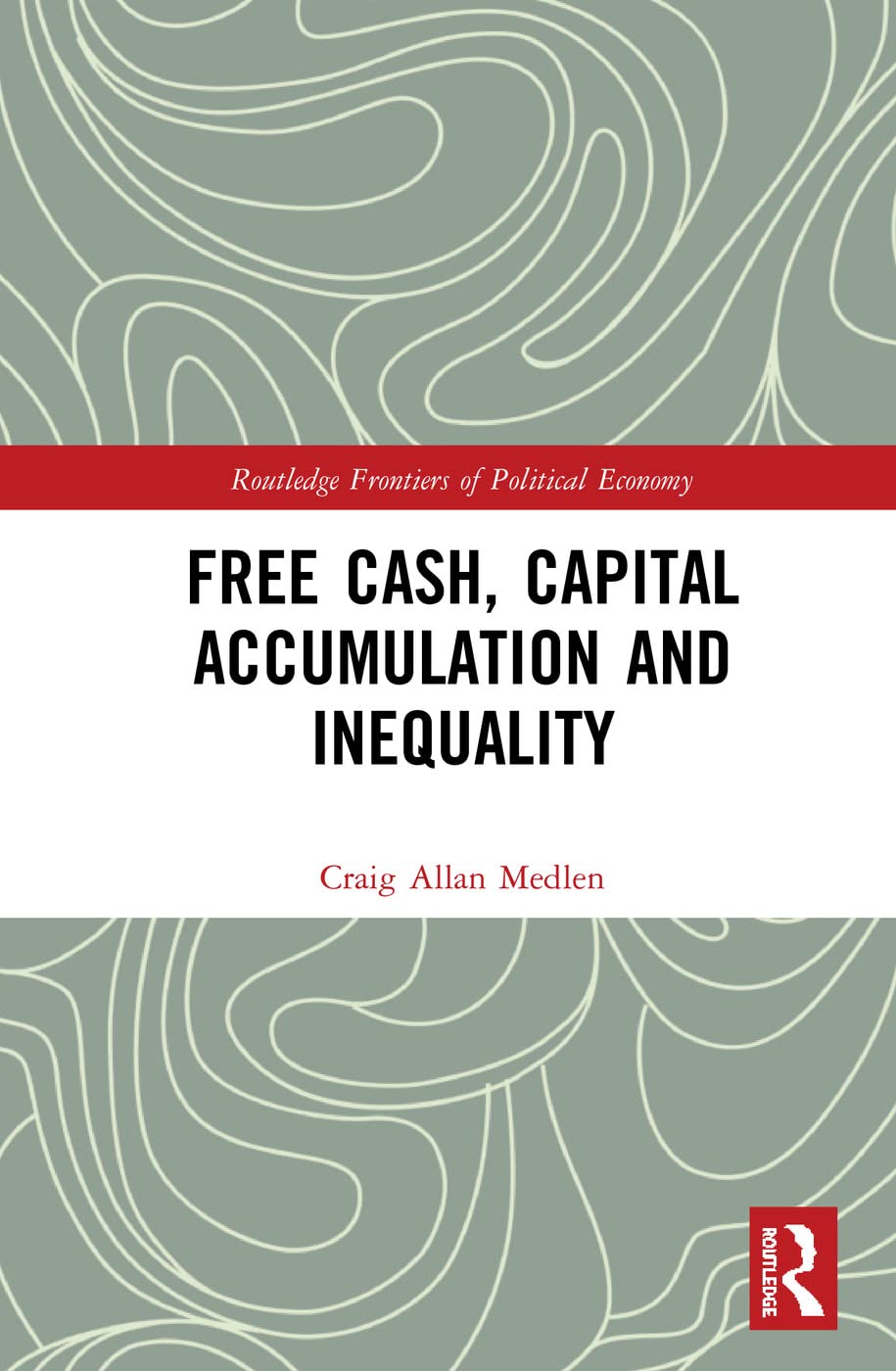
Free Cash, Capital Accumulation and Inequality - In-depth
Free Cash, Capital Accumulation and Inequality - In-depth
Price subject to change. Tap below for current.
Couldn't load pickup availability
In this review of Free Cash, Capital Accumulation and Inequality, Craig Allan Medlen offers a focused examination of how concentrated private wealth shapes investment and economic outcomes. The book is best for readers who want a rigorous, historically informed analysis of capital accumulation rather than a light primer; its single biggest selling point is the link it draws between wealth concentration and macroeconomic investment dynamics, making it valuable for specialists seeking a theoretical and historical perspective on inequality and policy.
Key Features
- Historical scope: Traces capital accumulation across varied historical contexts to show persistent patterns linking wealth concentration to investment decisions.
- Theoretical grounding: Builds on Michal Kalecki's framework to relate government deficits, external trade, and free cash to macroeconomic outcomes.
- Focus on power and agency: Emphasizes how a wealthy elite's expectations drive investment levels, clarifying the political economy behind economic growth.
- Policy relevance: Connects theoretical insights to contemporary concerns about rising private economic power and its social implications.
- Synthesis of ideas: Brings together history, theory, and welfare considerations to argue that wealth concentration affects more than equity, influencing overall social welfare.
Who It's For
Free Cash, Capital Accumulation and Inequality is aimed at economists, economic historians, policy analysts, and advanced students who want a compact but substantive treatment of how capital accumulation and concentrated wealth interact with investment behavior. The book assumes familiarity with macroeconomic concepts and historical analysis, so readers seeking an introductory survey may find it dense.
Those looking for applied investment advice, or a purely empirical handbook with large-scale datasets and econometric tables, should look elsewhere; this volume is primarily conceptual and historical in orientation, prioritizing theoretical connections over step-by-step empirical replication.
Pros & Cons
Pros
- Provides a clear linkage between private wealth concentration and investment expectations, useful for scholars of political economy.
- Revisits Kalecki's formal relationships to show how government deficits and trade accounts relate to free cash and accumulation.
- Historically grounded analysis gives context to modern debates about inequality and policy.
Cons
- Not a beginner's guide; readers without background in macro theory or economic history may struggle with the concepts.
Specifications
| Title | Free Cash, Capital Accumulation and Inequality |
| Author | Craig Allan Medlen |
| Series | Routledge Frontiers of Political Economy |
| Primary focus | Capital accumulation, wealth concentration, investment |
| Approach | Theoretical and historical analysis drawing on Kalecki |
| Intended audience | Economists, historians, policy analysts |
Our Verdict
For readers with an interest in the political economy of growth, this book is a concise and insightful exploration of how concentrated private economic power shapes investment and social welfare. It is good value as a targeted academic treatment that connects theory and history to contemporary inequality debates, though it is best suited to readers who already grasp macroeconomic fundamentals.
Frequently Asked Questions
Does the book include empirical data or econometric analysis?
The text emphasizes theoretical and historical explanation rather than extensive new econometric datasets.
Is prior knowledge required to follow the arguments?
A background in macroeconomic concepts and familiarity with political economy will help readers get the most from the discussion.
Will this help with policy design questions?
Yes, it clarifies how wealth concentration influences investment choices and public deficits, offering conceptual tools relevant to policy debate.
Editor's Take
A concise, historically informed exploration showing how concentrated private wealth shapes investment and social welfare; best for economists and policy scholars who want a theoretical political economy perspective.

Recently viewed
Recently viewed products will appear here as customers browse the store.