

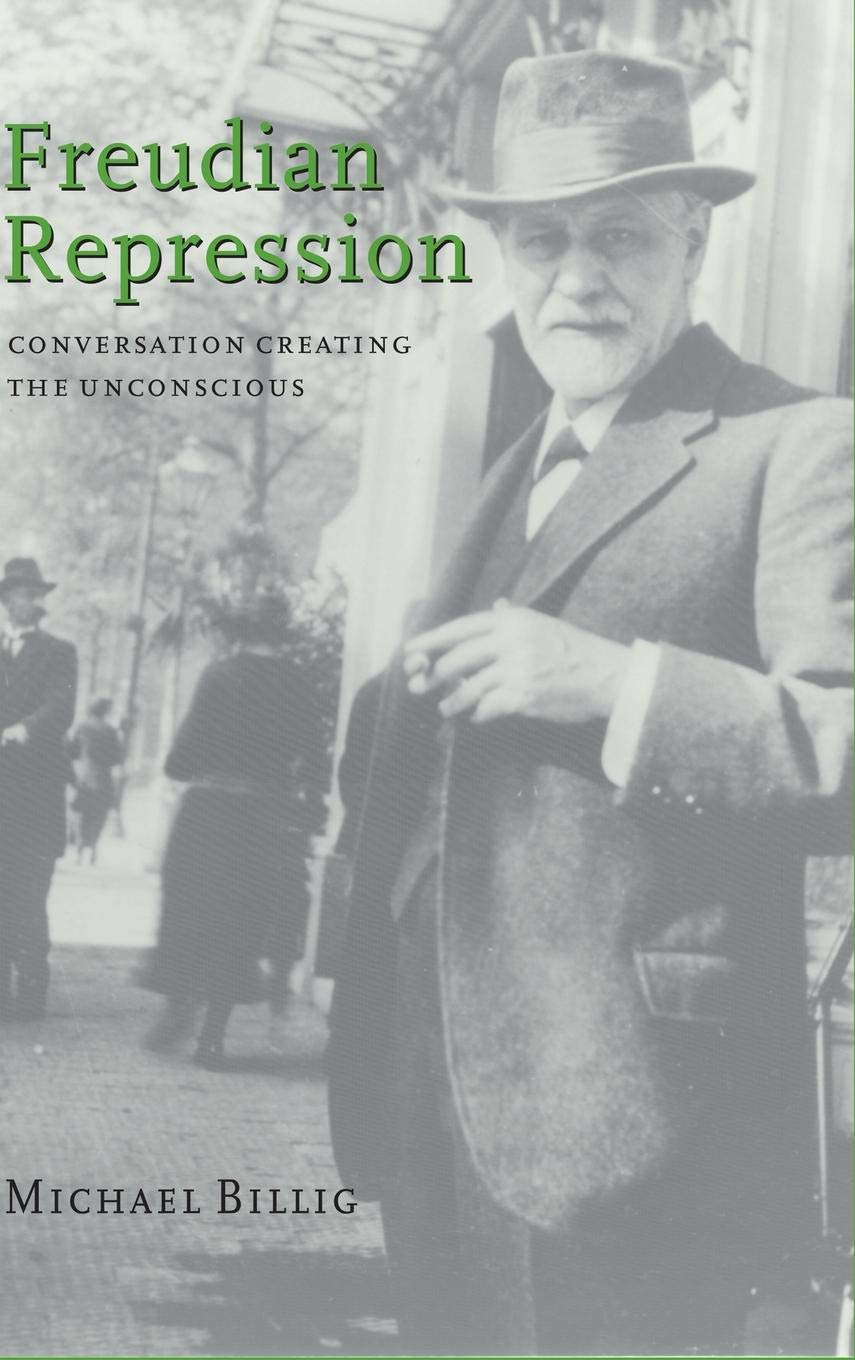
Freudian Repression: Conversation Creating the Unconscious
Freudian Repression: Conversation Creating the Unconscious
Price subject to change. Tap below for current.
Couldn't load pickup availability
In this review of Freudian Repression: Conversation Creating the Unconscious, the reviewer finds a careful, scholarly reappraisal of Freud's theory that is most valuable to students and researchers of psychoanalysis and language. Michael Billig reframes repression as a social and linguistic phenomenon, arguing that language both reveals and conceals shameful thoughts; this book's single biggest virtue is its readable, evidence-based challenge to conventional readings of the unconscious. Readers seeking a focused, critical analysis of Freud and repression will find this work consistently thought-provoking.
Key Features
- Original reformulation: The book offers a clear alternative reading of Freud that reframes repression as an interactional and linguistic process rather than solely an intrapsychic mechanism.
- Case history analysis: Billig revisits several of Freud's classic case histories to demonstrate how repression can be identified through conversational detail and omission.
- Authorial self-examination: The text uses Freud's own life and writings to show that even theorists can be seen to be repressing, offering a reflective angle on psychoanalytic authority.
- Contemporary relevance: There is an informed discussion of the debate on recovered memories, which connects the historical material to present-day clinical and cultural concerns.
- Interdisciplinary appeal: The book speaks to readers in psychology, history, and language studies by combining theoretical argument with textual examples.
Who It's For
This book is best for graduate students, scholars, and clinicians interested in the conceptual foundations of psychoanalysis and the role of language in mental life. Its careful readings of texts and cases reward readers who are comfortable with close argument and historical detail.
Readers looking for a practical self-help guide, a textbook introduction to clinical technique, or a breezy popular history should look elsewhere, as the emphasis here is conceptual critique and theoretical nuance rather than therapy instruction or broad popularizing summaries.
Pros & Cons
Pros
- Provides a novel reformulation of repression that highlights the role of language and conversation.
- Uses Freud's case histories and biography to make empirically grounded arguments rather than abstract assertions.
- Connects historical theory to modern debates about recovered memories, enhancing contemporary relevance.
Cons
- The book is primarily theoretical and may feel dense for readers seeking practical clinical guidance.
Specifications
| Title | Freudian Repression: Conversation Creating the Unconscious |
| Author | Michael Billig |
| Subject | Reformulation of Freud's concept of repression |
| Approach | Language and conversational analysis of repression |
| Includes | Analyses of Freud's case histories and his life |
| Relevance | Debate on recovered memories and psychoanalytic ideology |
Our Verdict
Freudian Repression is a compact, intellectually rigorous reassessment that will reward readers who want to rethink Freud through the lens of language and social interaction. It is good value for scholars seeking a targeted critique linking classic case material to contemporary debates about memory and ideology.
Frequently Asked Questions
Does this book require prior knowledge of Freud?
Basic familiarity with Freud helps, but the book explains case material and frames its critique in ways accessible to readers with some background in psychology or literary analysis.
Is this text practical for clinicians?
The book is primarily theoretical; clinicians may find its ideas stimulating but should not expect step-by-step clinical guidance.
Does the book address recovered memory controversies?
Yes, Billig offers new insights on the debate about recovered memories and situates those concerns within the ideological background of psychoanalysis.
Editor's Take
A concise, rigorous reassessment that reframes repression as a language-based, interactional process; best for students and scholars who want a thoughtful critique linking Freud to contemporary debates.

Recently viewed
Recently viewed products will appear here as customers browse the store.