

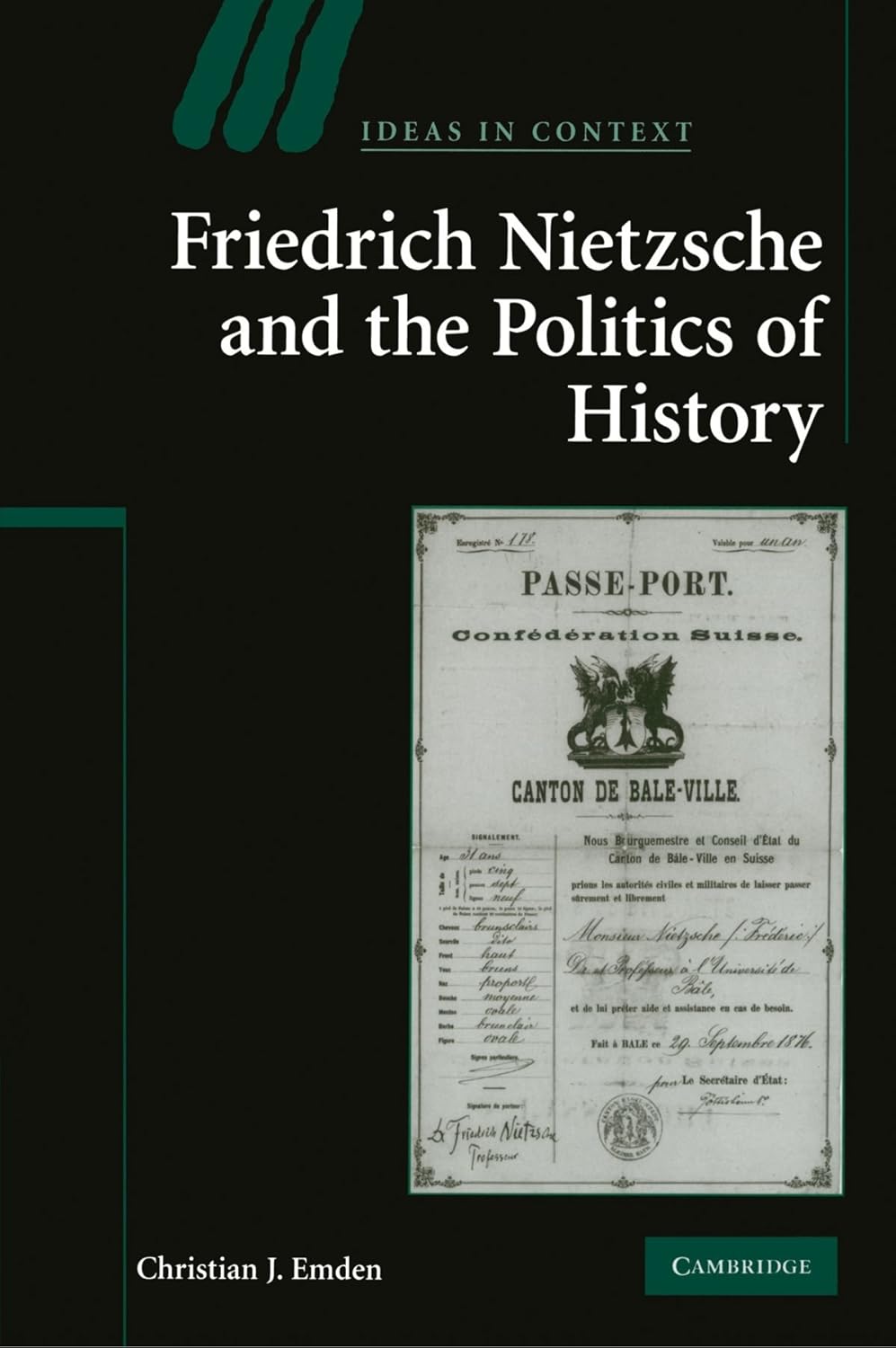
Friedrich Nietzsche and the Politics of History - Contextual
Friedrich Nietzsche and the Politics of History - Contextual
Price subject to change. Tap below for current.
Couldn't load pickup availability
In this review readers get a clear assessment of who will benefit from Friedrich Nietzsche and the Politics of History. Christian J. Emden traces Nietzsche's political thought from student essays in Bonn and Leipzig through the genealogical project of the 1880s, offering a historically grounded interpretation. The bottom line: this book is for scholars and serious students who want a contextualized, historically informed account of Nietzsche's relationship to modern political culture, and it succeeds by connecting intellectual biography with broader shifts in German political life.
Key Features
- Comprehensive career survey: Emden follows Nietzsche from his 1860s student years to his mature genealogical writings, helping readers see development across phases.
- Historical context: The book places Nietzsche within changes to German intellectual and political culture as Enlightenment ideals gave way to modern nation-state demands.
- Political focus: A sustained consideration of Nietzsche's understanding of modern political culture clarifies his stance in the history of political thought.
- Series placement: As part of the Ideas in Context series, the book emphasizes interpretive context and scholarly conversation relevant to historians and theorists.
- Reassessment of stature: Emden offers a major reassessment that frames Nietzsche as a central post-enlightenment European thinker with lasting political relevance.
Who It's For
The book is aimed at graduate students, academics, and informed readers interested in political theory, intellectual history, and Nietzsche's work in relation to modernity. It is particularly useful for those who want a historically informed argument rather than a purely philosophical or literary reading.
Readers seeking an introductory or pocket guide to Nietzsche's aphorisms, or a lightweight overview for casual reading, should look elsewhere; this volume assumes some familiarity with nineteenth-century German intellectual history and engages in scholarly reassessment rather than popular exposition.
Pros & Cons
Pros
- Provides a clear, historically informed narrative of Nietzsche's intellectual development and political thinking.
- Situates Nietzsche within broader German political and intellectual shifts, aiding contextual understanding.
- Serves as a serious reassessment that will interest scholars in political thought and history.
Cons
- The treatment is scholarly and dense, so it may not suit casual readers seeking a light introduction.
Specifications
| Title | Friedrich Nietzsche and the Politics of History |
| Series | Ideas in Context, Series Number 88 |
| Author | Christian J. Emden |
| Focus | Nietzsche's political thought and history of modern political culture |
| Chronological scope | From 1860s student years to the 1880s genealogical project |
| Intended audience | Scholars, graduate students, and serious readers of intellectual history |
Our Verdict
Emden's study is a valuable, historically grounded reassessment that clarifies Nietzsche's position in modern political thought and the intellectual culture of Germany. Serious students and scholars will find it good value for its rigorous contextual analysis and careful tracing of Nietzsche's development across decades.
Frequently Asked Questions
Does this book cover Nietzsche's early writings?
Yes; Emden surveys Nietzsche's student years in Bonn and Leipzig during the 1860s as part of the broader career account.
Is this suitable for casual readers?
The volume is scholarly and best suited to readers with some background in intellectual history rather than those seeking a brief introduction.
What is the book's main contribution?
It offers a historically informed reassessment that situates Nietzsche in debates about modern political culture and the rise of the nation-state in Germany.
Editor's Take
Emden's book is a historically grounded reassessment that clarifies Nietzsche's role in modern political thought, making it a strong choice for scholars and advanced students interested in intellectual history.

Recently viewed
Recently viewed products will appear here as customers browse the store.