

From Children's Services to Children's Spaces - Policy
From Children's Services to Children's Spaces - Policy
Price subject to change. Tap below for current.
Couldn't load pickup availability
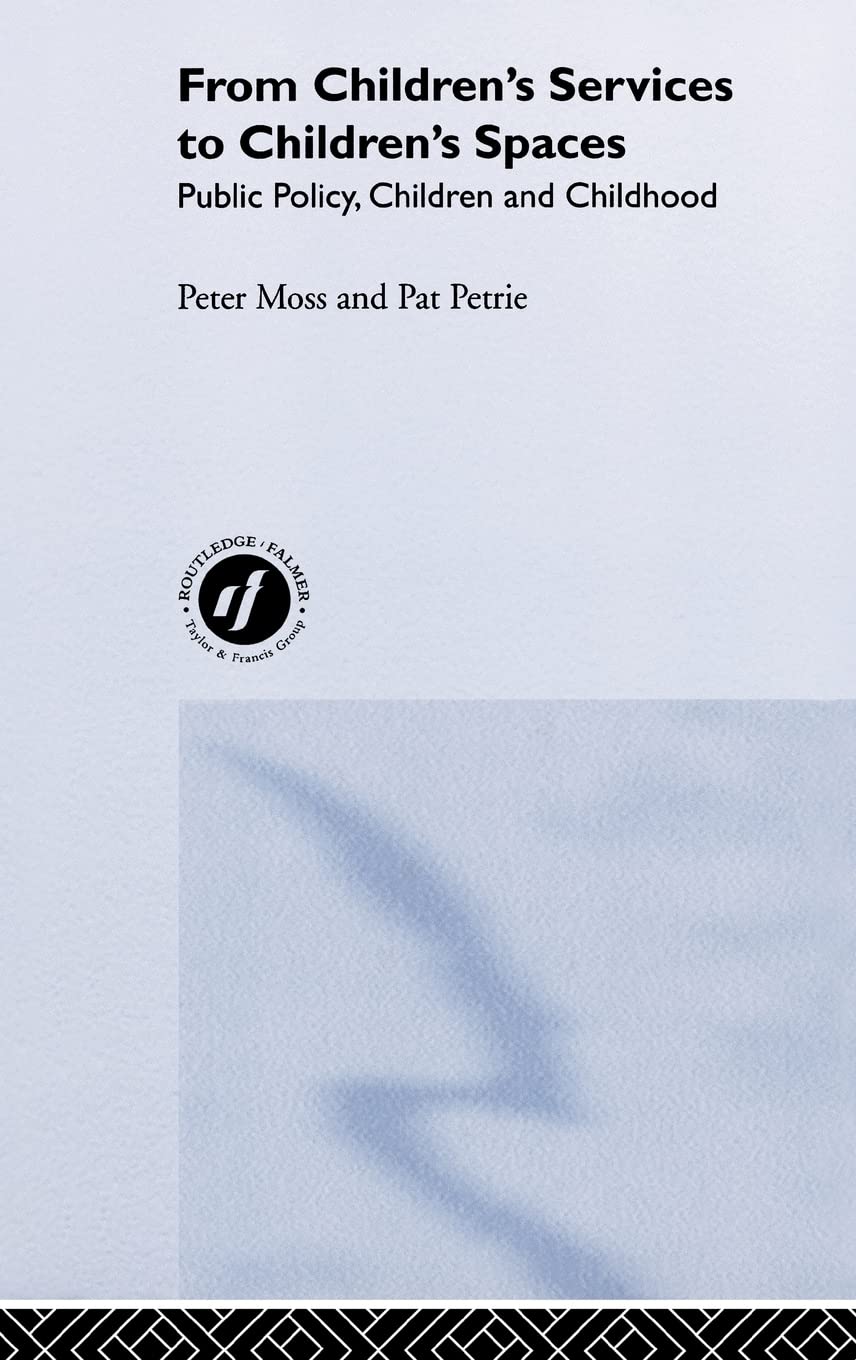
In this review of From Children's Services to Children's Spaces, the authors Peter Moss and Pat Petrie take a thoughtful, critical look at how public policy frames childhood and the institutions that serve children. The bottom line: this is an incisive, research-grounded book for policy makers, practitioners and graduate students who need a nuanced account of competing models of provision and the political choices behind them. Its principal value is showing how differing ideas about children produce very different public responses, making it essential reading for anyone shaping or evaluating child-focused services.
Key Features
- Comparative case studies: The book uses case studies from multiple countries to illustrate how policy and practice vary in ways that shape children's everyday lives and institutional responses.
- Theoretical framing: Authors carefully contrast the dominant model of 'children's services' with their proposed 'children's spaces' approach, clarifying the underlying political and ethical choices.
- Focus on practice: The analysis links high-level policy arguments with practical implications for schools, social services and community provision.
- Critical perspective: It foregrounds tensions between recognising children as social actors and the rise of surveillance and control in public policy.
- Policy relevance: The book is positioned to inform debates about public provision, helping readers translate ideas into alternative approaches to service delivery.
Who It's For
This book is best suited to policymakers, academics and postgraduate students working in social policy, education and social services who need a rigorous, research-informed account of how policy constructs childhood. Practitioners interested in rethinking institutional culture will find the proposed 'children's spaces' concept useful for reorienting practice.
Readers looking for a quick practical manual or step-by-step implementation guide should look elsewhere, because the book is analytical and comparative rather than a toolkit of interventions. Those seeking light reading or narrative case histories may also find the style formal and conceptually dense.
Pros & Cons
Pros
- Provides comparative evidence that clarifies how different policy frameworks produce distinct childhoods.
- Clearly articulates an alternative concept, 'children's spaces', that reframes public provision in ethical and political terms.
- Connects theory with practice, offering useful implications for schools and social services.
Cons
- The book's analytical tone and academic framing may feel dense for readers seeking quick practical steps.
Specifications
| Title | From Children's Services to Children's Spaces: Public Policy, Children and Childhood |
| Authors | Peter Moss, Pat Petrie |
| Focus | Public policy, children, childhood and provision |
| Approach | Comparative case studies and policy analysis |
| Key concepts | Children's services; children's spaces |
| Intended readers | Policy makers, academics, practitioners |
Our Verdict
For professionals and scholars who need a careful, evidence-based critique of how policy frames children, this book offers clear value by linking ideas to practice and proposing a coherent alternative. Its strength is depth of analysis rather than quick fixes, making it a worthwhile investment for those shaping or evaluating child-centred public provision.
Frequently Asked Questions
Does the book offer international examples?
Yes, it draws on case studies and comparative analysis from a number of countries to illustrate how policy and practice differ.
Is this a practical handbook for practitioners?
Not primarily; the book is analytical and intended to inform practice through conceptual reframing rather than step-by-step instructions.
Who proposed the 'children's spaces' idea?
The authors Peter Moss and Pat Petrie introduce and develop the 'children's spaces' concept as an alternative to established models of provision.
Editor's Take
This analytical, research-based book is recommended for policymakers, academics and practitioners who want a rigorous critique of child policy and a coherent alternative in the form of 'children's spaces'.

Recently viewed
Recently viewed products will appear here as customers browse the store.