

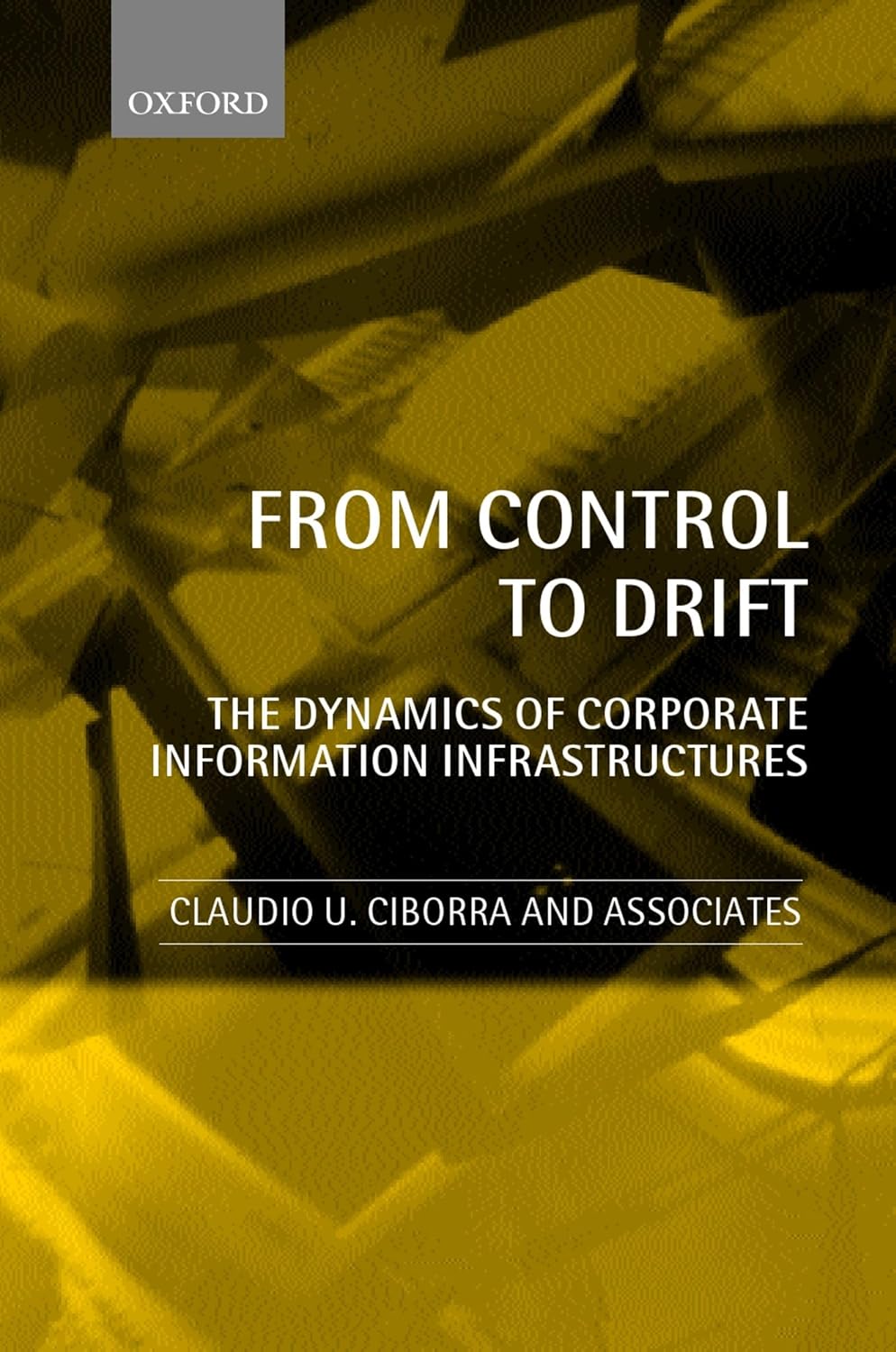
From Control to Drift: The Dynamics of Corporate Information
From Control to Drift: The Dynamics of Corporate Information
Price subject to change. Tap below for current.
Couldn't load pickup availability
In this review of From Control to Drift: The Dynamics of Corporate Information Infrastructures, the reviewer finds a focused academic resource for readers who want detailed, case-based insight into large-scale IT implementation. The book's bottom line is that its six in-depth case studies provide a useful bridge between theory and practice, making it a valuable read for researchers, IT managers and advanced students seeking concrete examples of how information infrastructures evolve and are managed in large corporations. The narrative is analytical rather than prescriptive, so those seeking step-by-step how-to guidance should temper expectations.
Key Features
- Six in-depth case studies: Each case offers rich, practical examples that illuminate the main issues encountered during information infrastructure implementation in large corporations.
- Theoretical interpretation: The authors provide frameworks and interpretations that help readers connect observed events in the cases to broader information infrastructure theories.
- Practitioner relevance: The book frames lessons that are applicable for IT managers responsible for strategy, governance and long-term infrastructure decisions.
- Research utility: Scholars will find the empirical material useful for comparative work and for developing hypotheses about infrastructure dynamics.
- Collaborative authorship: Multiple contributors bring diverse perspectives, improving the depth of analysis across different corporate contexts.
Who It's For
From Control to Drift is best suited for academic readers, postgraduate students and industry professionals who need empirical examples to support research or to inform strategic thinking about information infrastructure. It appeals to those interested in management, organizational studies and information management rather than hands-on technical configuration.
Readers seeking a short, practical handbook, quick checklists, or step-by-step implementation guides should look elsewhere, because the book emphasizes interpretation and theory drawn from corporate cases rather than operational playbooks.
Pros & Cons
Pros
- Provides deep, well-documented case material that supports research and comparative analysis.
- Connects practical corporate experience to broader theoretical frameworks, aiding understanding of infrastructure dynamics.
- Useful for IT managers and leaders who need to grasp long-term organizational implications of infrastructure choices.
Cons
- Not a how-to manual; readers expecting practical implementation checklists may find its focus too academic.
Specifications
| Title | From Control to Drift: The Dynamics of Corporate Information Infrastructures |
| Authors | Claudio U. Ciborra; Kristin Braa; Antonio Cordella; Bo Dahlbom; Angelo Failla; Ole Hanseth; Vidar Heps; Jan Ljungberg; Eric Monteiro; Kai A. Simon |
| Content focus | Six corporate case studies on information infrastructure implementation and management |
| Audience | Researchers, IT managers, postgraduate students |
| Approach | Empirical cases with theoretical interpretation applicable to practice |
| Category | Books; Business & Money; Management & Leadership; Information Management |
Our Verdict
For readers who need a rigorous, case-driven examination of how information infrastructures emerge and are governed in large companies, this book delivers substantial analytic value and real-world examples. It is good value for academics and senior IT professionals who want interpretive frameworks rather than tactical instructions, and it fills a niche between empirical research and managerial reflection.
Frequently Asked Questions
How many case studies are included?
The book presents six in-depth corporate case studies focused on information infrastructure implementation and management.
Who are the intended readers?
The primary audience is researchers, IT managers and postgraduate students interested in information management and organizational studies.
Does the book provide practical implementation checklists?
No, it emphasizes theoretical interpretation and empirical analysis over step-by-step operational guidance.
Editor's Take
This case-driven book is a strong resource for researchers and senior IT professionals seeking interpretive frameworks and empirical examples of information infrastructure implementation; it is less suited to readers wanting step-by-step operational guidance.

Recently viewed
Recently viewed products will appear here as customers browse the store.