

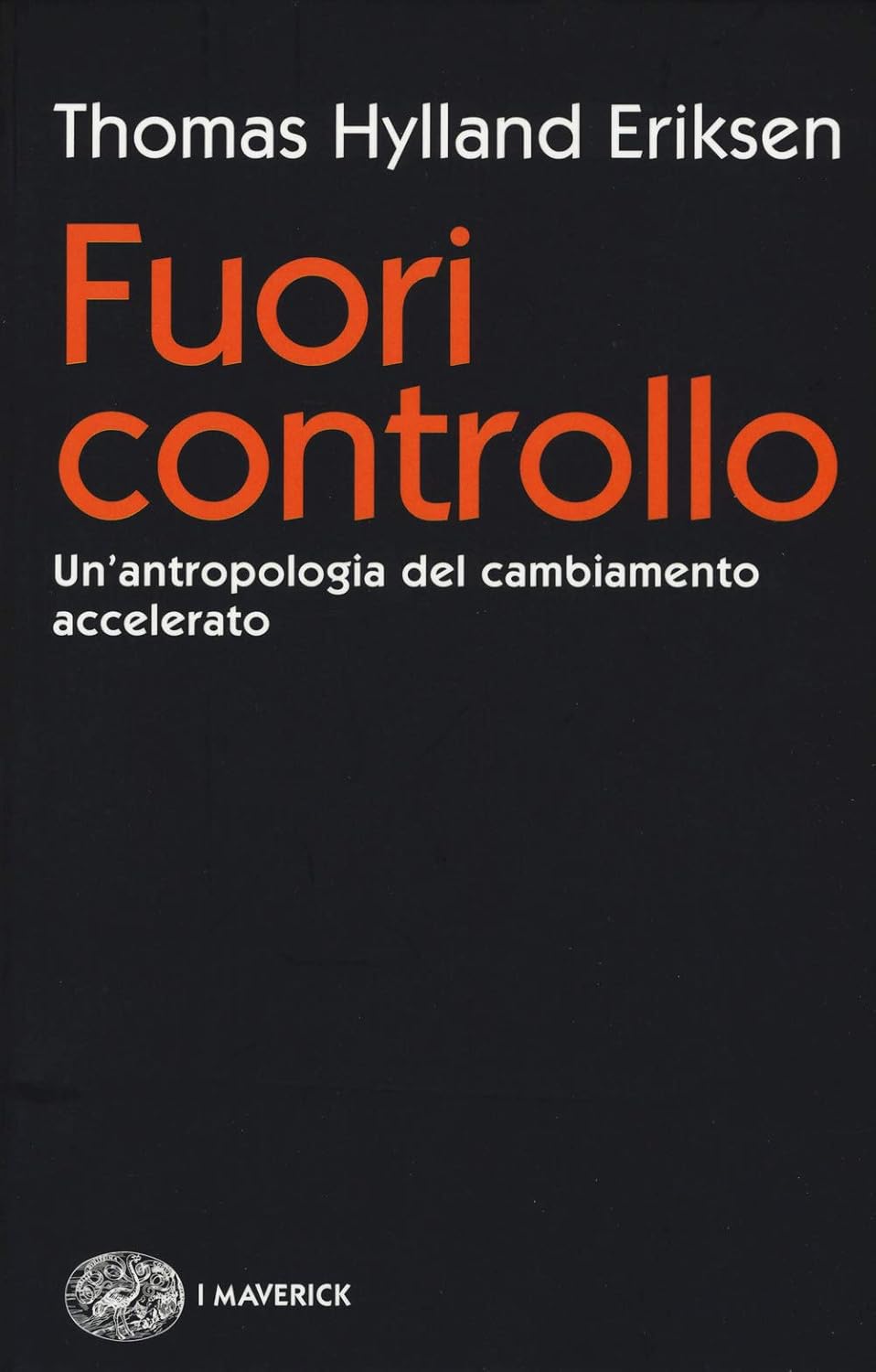
Fuori controllo. Un'antropologia del cambiamento accelerato
Fuori controllo. Un'antropologia del cambiamento accelerato
Price subject to change. Tap below for current.
Couldn't load pickup availability
Our review of Fuori controllo. Un'antropologia del cambiamento accelerato finds it best suited to readers who want a dense, anthropological framing of contemporary crises. Thomas Hylland Eriksen offers a rapid, incisive exploration of the Anthropocene and globalization that privileges local experience in the face of sweeping global forces; this review recommends the book primarily to students, researchers and thoughtful general readers who prefer rigorous analysis over popular simplification. The book's strength is its clear-eyed diagnosis of three interwoven crises and its insistence that global processes are felt locally.
Key Features
- Anthropological perspective: The author applies an anthropological lens to the modern world, helping readers see how global trends translate into local tensions and everyday experience.
- Focus on three crises: Eriksen connects environmental, economic and identity crises so readers can understand their interaction rather than treating each problem in isolation.
- Concise, intense prose: The writing is densa e veloce, useful for readers who prefer compact, argument-driven chapters rather than long historical narratives.
- Contemporary relevance: The book centers the Anthropocene as a defining context, making it timely for discussions about human impact and planetary limits.
- Critical view of globalization: It reframes globalization not as a single process but as contested and uneven, which helps readers grasp inequalities produced by global capitalism.
Who It's For
Fuori controllo is aimed at readers with some prior interest in social theory, anthropology or political economy: graduate students, academics, policy analysts and engaged citizens who want a compact, theoretically informed account of how environmental, economic and identity dynamics intertwine. It rewards careful reading and benefits those who appreciate a discipline-specific approach rather than popular science or step-by-step policy manuals.
Readers seeking light, broadly accessible introductions or a how-to guide for political action may prefer a different title: this book assumes comfort with analytical prose and focuses on diagnosis more than prescriptive solutions.
Pros & Cons
Pros
- It provides a coherent framework to understand the Anthropocene alongside economic and identity crises, which clarifies complex connections.
- The anthropological approach foregrounds local variation, helping readers see how global forces are lived differently across contexts.
- Compact, urgent writing keeps the argument moving and respects readers who want concentrated analysis.
- Thought-provoking reframing of globalization highlights inequalities and social stratification.
Cons
- The dense, fast pace can challenge readers unfamiliar with anthropological concepts or those expecting lighter exposition.
- It emphasizes diagnosis over concrete policy prescriptions, which may disappoint readers looking for actionable recommendations.
Specifications
| Title | Fuori controllo. Un'antropologia del cambiamento accelerato |
| Author | Thomas Hylland Eriksen |
| Focus | Anthropology of globalization and the Anthropocene |
| Main themes | Environmental, economic and identity crises |
| Tone | Dense, fast, analytical |
| Recommended audience | Students, researchers, engaged readers |
Our Verdict
Fuori controllo is a valuable, compact intervention for readers who want an anthropological diagnosis of accelerated change; it is good value for anyone seeking a rigorous, interconnected analysis of the Anthropocene, globalization and social inequality, though those seeking gentle introductions or policy blueprints should look elsewhere.
Frequently Asked Questions
Is this book suitable for newcomers to anthropology?
Answer. It is readable for motivated newcomers but presumes some comfort with analytical writing and social theory rather than offering a basic primer.
Does the author propose solutions to the crises discussed?
Answer. The book focuses mainly on diagnosis and framing of the crises; it offers perspectives for thinking about opposition but not detailed policy roadmaps.
Will this book be useful in academic courses?
Answer. Yes; it works well as a compact, theory-driven text in courses on globalization, environmental studies and anthropological approaches to contemporary issues.
Editor's Take
Fuori controllo offers a compact, anthropological diagnosis of the Anthropocene and intertwined environmental, economic and identity crises; ideal for students and readers seeking rigorous analysis rather than policy prescriptions.

Recently viewed
Recently viewed products will appear here as customers browse the store.