

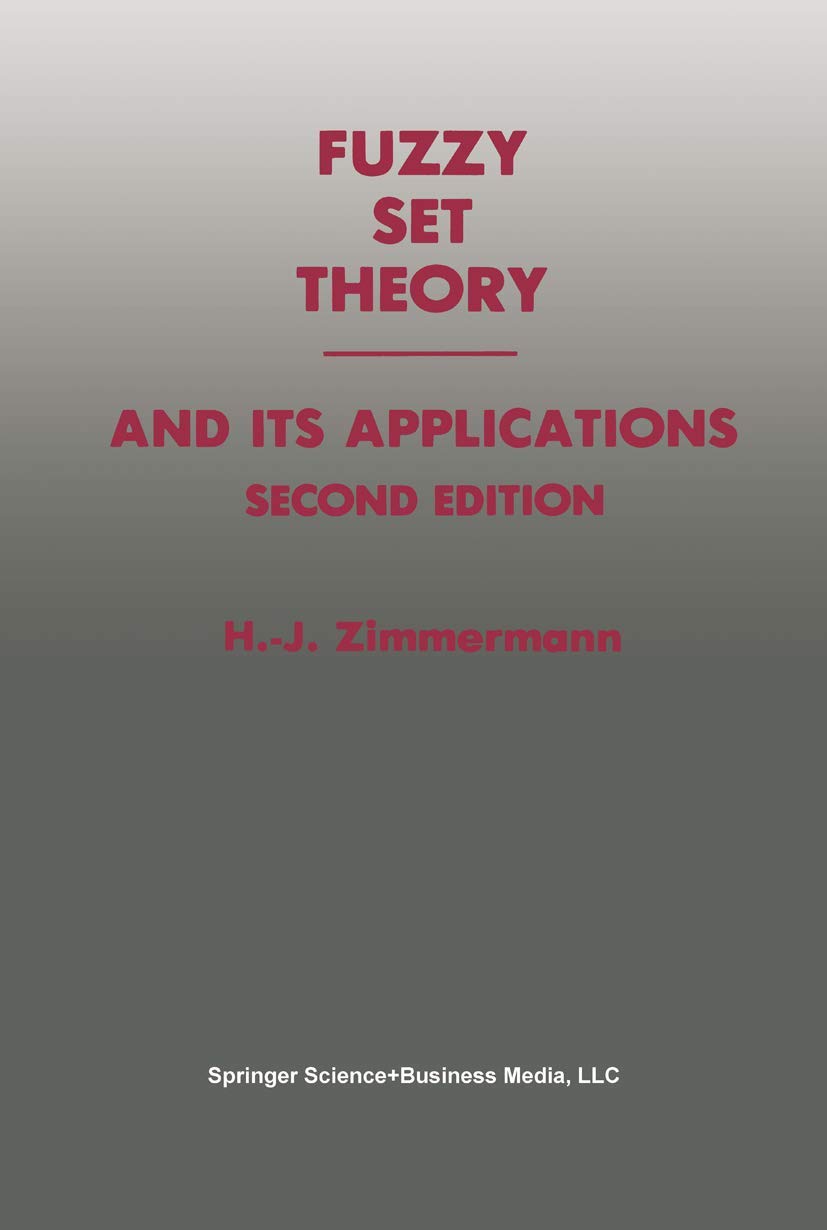
Fuzzy Set Theory and Its Applications - Clear Intro to Theory
Fuzzy Set Theory and Its Applications - Clear Intro to Theory
Price subject to change. Tap below for current.
Couldn't load pickup availability
In this review of Fuzzy Set Theory and Its Applications the reviewer finds it best suited for graduate students and practitioners who need a serious introduction that bridges formal developments and practical uses. The book's primary strength is its intent to close the gap between advanced theoretical topics and the elementary methods commonly used in applications, so readers will gain both conceptual grounding and pointers to applied domains. This review highlights the book's scope, its updated material on possibility theory and fuzzy logic, and why it remains a useful textbook and reference.
Key Features
- Balanced exposition: The text provides a mix of theory and application so learners can move from fundamental definitions to real-world uses in a structured way.
- Updated research agenda: Revised chapters summarize more recent developments so instructors and researchers see where the field has progressed.
- Wide range of applications: Examples and discussions connect fuzzy sets to areas like control engineering, decision theory, and pattern recognition for practical context.
- Textbook focus: Material is organized to serve as a course textbook, with an introductory tone that helps newcomers follow advanced topics.
- Interdisciplinary reach: The book stresses links to artificial intelligence, robotics, and operations research to show how fuzzy methods apply across disciplines.
Who It's For
This book is aimed at graduate students, instructors preparing a course on fuzzy set theory, and researchers in adjacent fields such as AI, control engineering, and pattern recognition who need a coherent introduction to the subject. It is especially useful for readers who want a bridge between elementary applied methods and more advanced theoretical work.
Readers who need hands-on tutorials, step-by-step code examples, or a lab-oriented manual may prefer a more application-driven volume; likewise, those seeking a short pamphlet overview rather than a textbook-style treatment should look elsewhere.
Pros & Cons
Pros
- Comprehensive bridge between theory and application that helps readers see practical relevance.
- Revised chapters provide an updated view of possibility theory and related topics.
- Suitable as a textbook for courses with focused coverage across multiple disciplines.
Cons
- Not intended as a hands-on programming guide, so practical code examples are limited.
Specifications
| Title | Fuzzy Set Theory and Its Applications |
| Author | Hans-Jurgen Zimmermann |
| Scope | Theory and applications bridging advanced topics and elementary use |
| Updated material | Chapters on possibility theory and fuzzy logic revised |
| Intended audience | Graduate students, instructors, researchers |
| Application areas | AI, control engineering, decision theory, pattern recognition, robotics |
Our Verdict
Fuzzy Set Theory and Its Applications is a thoughtful, course-ready introduction that successfully narrows the gap between formal developments and applied practice. Those seeking a rigorous textbook that orients readers to both research directions and interdisciplinary uses will find it good value; readers who need code-focused tutorials should supplement it with practical resources.
Frequently Asked Questions
Is this book suitable for beginners?
Yes, it is designed as an introduction while also addressing advanced topics, making it suitable for motivated beginners and graduate students.
Does the book include practical examples in engineering and AI?
Yes, it discusses applications across control engineering, pattern recognition, AI, and related areas, though it is not a code manual.
Will this work as a textbook for a course?
Yes, the organization and coverage are intended for use as a textbook in courses on fuzzy set theory.
Editor's Take
Fuzzy Set Theory and Its Applications is a course-ready introduction that bridges formal theory and practical uses, making it a strong choice for graduate students and researchers who need conceptual depth rather than code-focused tutorials.

Recently viewed
Recently viewed products will appear here as customers browse the store.