

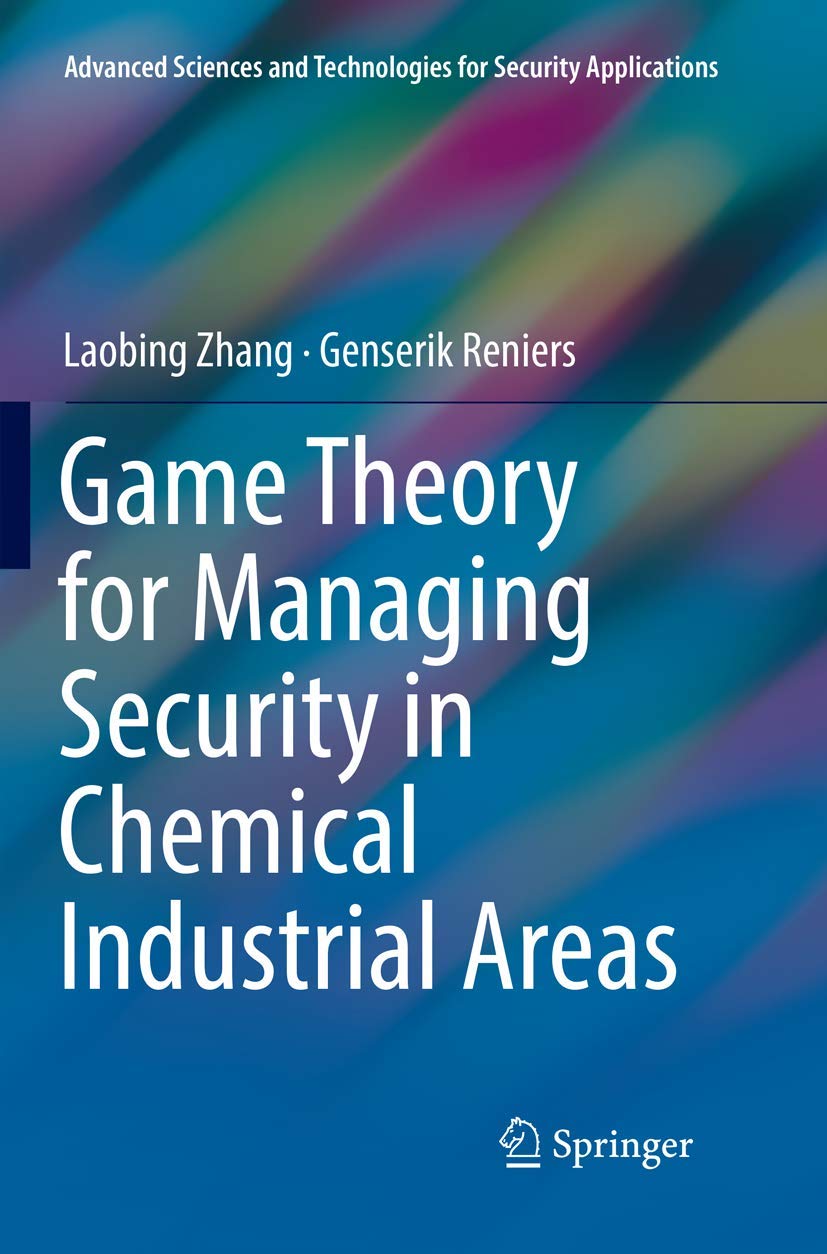
Game Theory for Managing Security in Chemical Industrial Areas
Game Theory for Managing Security in Chemical Industrial Areas
Price subject to change. Tap below for current.
Couldn't load pickup availability
In this review of Game Theory for Managing Security in Chemical Industrial Areas the author team presents a focused, technical study for professionals looking to apply strategic models to chemical plant and cluster protection. The single biggest reason to pick up this book is its clear translation of abstract game theoretic models into practical frameworks that security managers can use when facing intelligent, strategic adversaries. It reads like a specialist reference rather than an introductory textbook, and it aims to fill a gap in chemical security practice.
Key Features
- Game theoretic modeling: Presents models that capture interactions between security managers and potential adversaries so defenses can be planned with strategic intent.
- Plant and cluster focus: Covers both single chemical plant protection and the more complex dynamics of chemical industrial clusters, helping readers scale approaches.
- Equilibrium concepts explained: Explores different equilibrium ideas and gives user-friendly guidance on reflecting them in realistic scenarios.
- Applied security perspective: Orients theoretical tools toward chemical industrial security needs rather than abstract mathematics alone.
- Analytical properties: Examines efficient analysis of security properties so managers can understand trade offs and decision drivers.
Who It's For
This book is best suited for security managers, risk analysts, policy makers and researchers who already have some familiarity with security problems or quantitative methods and want targeted game theoretic approaches for chemical facilities. It is particularly useful for those responsible for designing defenses across multiple sites or in cluster settings.
Readers seeking a beginner introduction to game theory or a general textbook on chemical engineering design should look elsewhere; the treatment assumes interest in security applications and is not a general plant design manual.
Pros & Cons
Pros
- Provides practical translations of theory into security decision frameworks relevant to chemical plants.
- Addresses both individual plant and cluster scales, which is rare in security literature.
- Clear explanations of equilibrium concepts make advanced ideas accessible to practitioners.
Cons
- Not intended as an introductory game theory textbook, so newcomers may need supplemental background.
Specifications
| Title | Game Theory for Managing Security in Chemical Industrial Areas |
| Series | Advanced Sciences and Technologies for Security Applications |
| Authors | Laobing Zhang, Genserik Reniers |
| Subject focus | Game theoretic models for chemical plant and cluster security |
| Approach | Equilibrium concepts and applied analysis for security managers |
| Intended audience | Security managers, analysts, researchers |
Our Verdict
Game Theory for Managing Security in Chemical Industrial Areas is a focused, practical reference for professionals who need to incorporate strategic thinking into chemical facility protection. Its value lies in converting theoretical models into applicable security frameworks for plants and clusters, making it a worthwhile purchase for security practitioners and analysts who seek targeted, applied methods.
Frequently Asked Questions
Is this book suitable for beginners in game theory?
The book is aimed at practitioners and assumes some familiarity with quantitative or security concepts, so beginners may need introductory materials first.
Does it cover both single plants and clusters?
Yes, the text proposes game theoretic models for protecting individual chemical plants as well as multi-site clusters.
Will it help operational security planning?
Yes, the emphasis on translating equilibrium concepts into realistic cases supports operational decision making for managers.
Editor's Take
A focused, practical reference that converts game theoretic models into applied security frameworks for chemical plants and clusters; best for security practitioners and analysts.

Recently viewed
Recently viewed products will appear here as customers browse the store.