

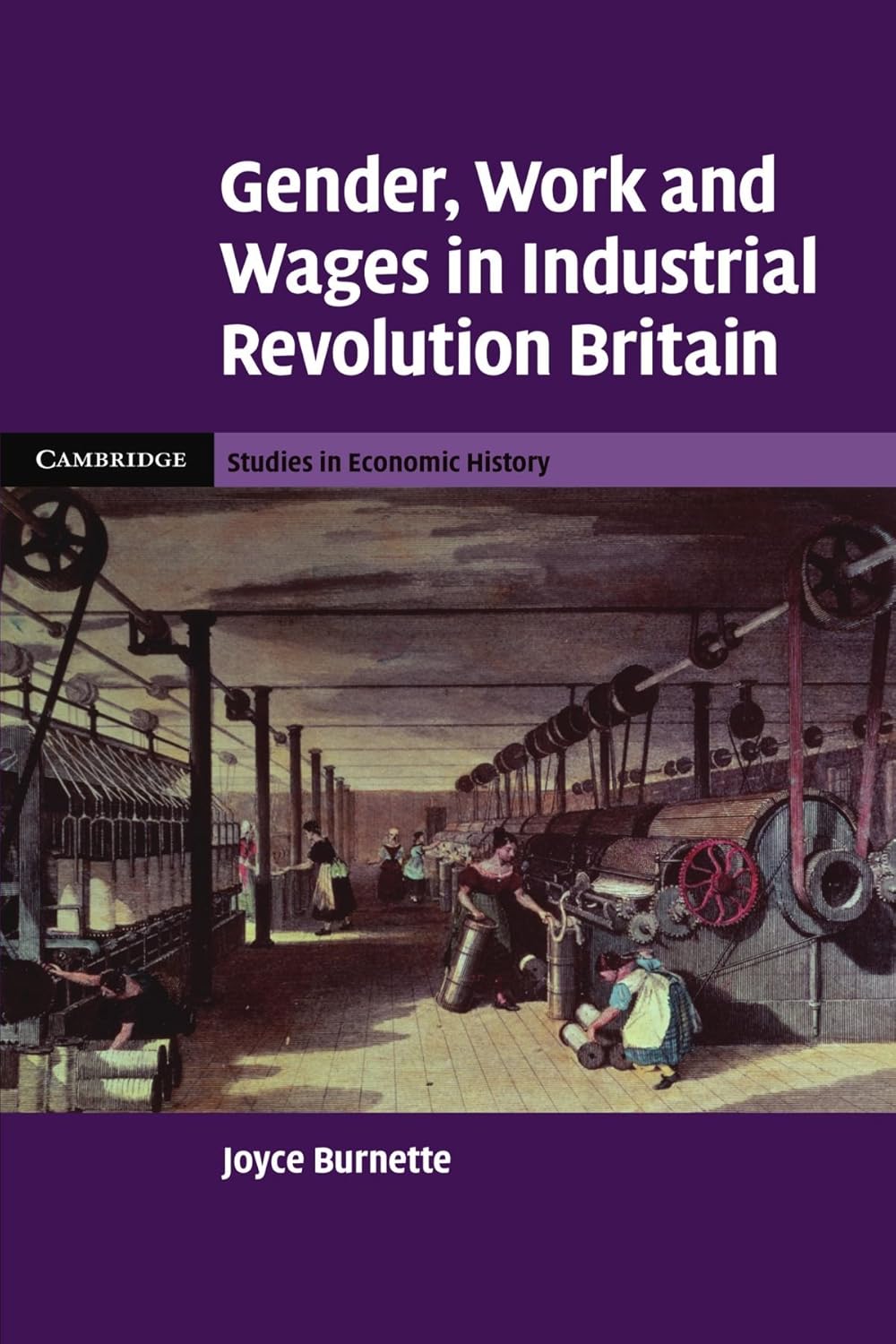
Gender, Work and Wages in Industrial Revolution Britain - Economic
Gender, Work and Wages in Industrial Revolution Britain - Economic
Price subject to change. Tap below for current.
Couldn't load pickup availability
In this review of Gender, Work and Wages in Industrial Revolution Britain the bottom line is straightforward: this is a focused academic study for readers who want a market-based explanation for historical gender differences in labour and pay. Joyce Burnette challenges customary explanations and shows, in accessible scholarly prose, how competition and occupational sorting shaped women's work and narrowed wage gaps. The review finds the book especially valuable for students and researchers of economic history who want a clear argument rooted in labour markets rather than social custom.
Key Features
- Market-driven analysis: The book presents evidence that competition and market forces, not only custom, drove occupational segregation and wages, giving readers a distinct analytical lens on Industrial Revolution labour markets.
- Gender focus: Burnette concentrates on the differing roles of men and women, helping readers understand why women were sorted into less strength-intensive occupations and how that affected earnings.
- Historical depth: The study draws on historical data and examples from Industrial Revolution Britain to support its claims, providing context for long-term labour trends.
- Clear argumentation: The narrative systematically shows how male workers' attempts to restrict female employment were undermined by market competition, which is explained in a readable scholarly style.
- Policy-relevant insight: By reframing the cause of gender wage differences as market-driven, the book offers implications for interpreting labour market outcomes and for comparative research.
Who It's For
This book is best for graduate students, historians, and economists interested in labour history and gendered labour markets, as it provides a rigorous market-oriented interpretation of why men and women worked in different occupations and earned different wages. It will also suit instructors seeking a focused case study on occupational segregation during the Industrial Revolution.
Readers looking for a broad social history full of biographies or a general-interest narrative may prefer a more popular treatment; this work is scholarly and tightly argued rather than a wide-ranging social survey.
Pros & Cons
Pros
- Offers a persuasive market-based explanation for gendered occupational differences that reshapes common assumptions.
- Focuses on clear mechanisms such as competition and strength requirements, making the argument easy to follow for specialists.
- Useful for research and teaching because it links historical evidence to economic concepts about labour markets and wage formation.
Cons
- The book is academic in tone and scope, so casual readers seeking narrative history may find it too specialized.
Specifications
| Title | Gender, Work and Wages in Industrial Revolution Britain |
| Series | Cambridge Studies in Economic History - Second Series |
| Author | Joyce Burnette |
| Subject | Economic history; gender and labour markets |
| Geographic focus | Britain |
| Historical period | Industrial Revolution |
Our Verdict
Burnette's study is a valuable academic contribution that reframes gender wage and occupational differences as outcomes of market forces rather than mere custom. Scholars and students who need a concise, concept-driven analysis of labour markets in Industrial Revolution Britain will find strong value here; those wanting popular narrative history should look elsewhere.
Frequently Asked Questions
Does this book focus on primary historical data?
Yes. The study draws on historical evidence and labour market data from Industrial Revolution Britain to support its market-based conclusions.
Is the book suitable for undergraduate courses?
It can be used in upper-level undergraduate or graduate courses, especially those covering economic history or gender and labour, though instructors should note its scholarly tone.
Does Burnette argue that competition helped women?
Yes. A key claim is that competition reduced the ability of male workers to restrict female employment and helped narrow the gender wage gap by occupational sorting.
Editor's Take
Burnette offers a concise, market-focused reinterpretation of gendered labour in Industrial Revolution Britain, arguing competition and occupational sorting explain wage and occupational differences; ideal for scholars and students.

Recently viewed
Recently viewed products will appear here as customers browse the store.