

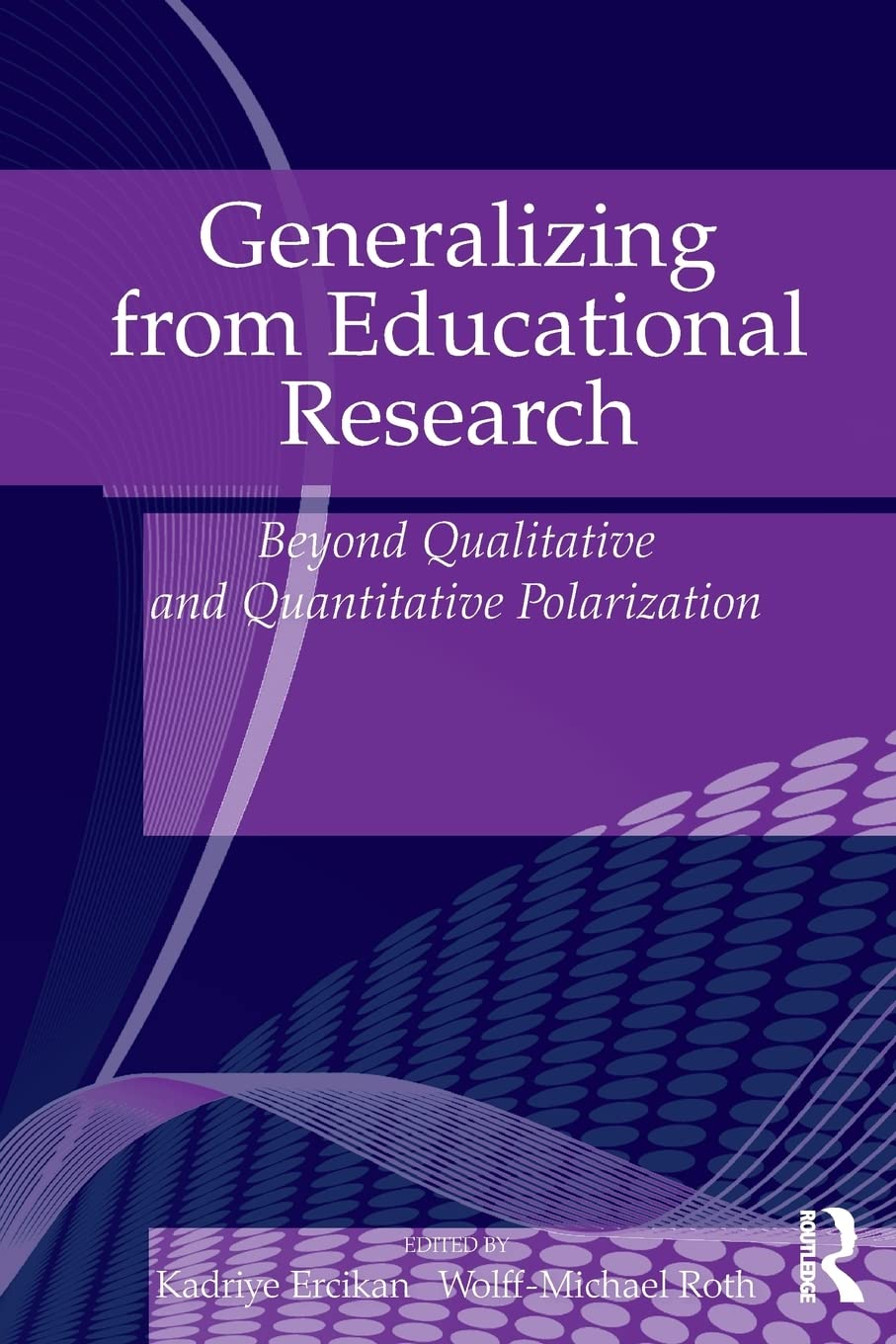
Generalizing from Educational Research - Practical Methods
Generalizing from Educational Research - Practical Methods
Price subject to change. Tap below for current.
Couldn't load pickup availability
In this review of Generalizing from Educational Research the reviewer finds a focused, method-driven book aimed at researchers and advanced students who want to move beyond a simple qualitative-versus-quantitative debate. The bottom line: this is best for readers seeking a thoughtful, conceptually integrated approach to generalizability in educational inquiry, because it reframes generalization as a continuum tied to research questions rather than a binary choice of methods. The tone is academic, constructive and repeatedly returns to the central problem of linking method to value and meaningfulness.
Key Features
- Integrated perspective: Presents an approach that treats generalizability as a continuum, helping readers evaluate studies beyond categorical method labels.
- Research question focus: Emphasizes how types of questions should determine modes of inquiry, which clarifies design choices.
- Theoretical framing: Frames the primary challenge in educational research as enriching and enlarging inquiry, useful for methodological reflection.
- Audience-oriented writing: Written to engage researchers and graduate students who need a deeper conceptual toolkit for interpreting findings.
- Field contribution: Positioned as a signature contribution that prompts reconsideration of long-standing divides in research practice.
Who It's For
This book is best for graduate students, doctoral researchers and faculty in education who want a substantive discussion of how to move past method polarities toward coherent design logic. It will be valuable to those teaching research methods who need a text that connects questions, values and claims about generalization.
Practitioners or readers looking for step-by-step statistical techniques, hands-on software instruction, or introductory primers on basic methods should look elsewhere; the focus here is conceptual and most helpful to readers already familiar with core qualitative and quantitative traditions.
Pros & Cons
Pros
- Clear argument for viewing generalizability as a continuum, which helps integrate mixed approaches.
- Strong emphasis on aligning research questions with inquiry modes, improving design decisions.
- Scholarly framing that challenges simplistic method divides and encourages richer inquiry.
Cons
- Not a how-to manual; readers seeking practical stepwise techniques will find the treatment conceptual rather than procedural.
Specifications
| Title | Generalizing from Educational Research |
| Authors | Kadriye Ercikan, Wolff-Michael Roth |
| Subject focus | Educational research methods and generalizability |
| Primary contribution | Integrated approach to generalizability as a continuum |
| Intended audience | Researchers, graduate students, method instructors |
| Tone | Scholarly and reflective |
Our Verdict
Generalizing from Educational Research is a valuable, conceptually rigorous work for readers committed to improving research design and interpretation. It is good value for methodologically literate students and faculty because it redirects attention from method wars to how questions shape claims, making it a productive resource for deepening research practice.
Frequently Asked Questions
Is this book practical for learning statistical techniques?
Answer. No, the book is conceptual and focused on frameworks for generalization rather than step-by-step statistical instruction.
Who wrote the book and what is their perspective?
Answer. Authors Kadriye Ercikan and Wolff-Michael Roth bring scholarly perspectives that emphasize integrating qualitative and quantitative concerns around research questions and generalizability.
Will this help teaching a research methods course?
Answer. Yes, it offers conceptual material useful for advanced methods courses that want to move students beyond binary method debates.
Editor's Take
A conceptually rigorous resource that reframes generalizability as a continuum and helps researchers and advanced students align research questions with appropriate modes of inquiry.

Recently viewed
Recently viewed products will appear here as customers browse the store.