

Getting Started in Electronics - Beginner's HandsOn Course
Getting Started in Electronics - Beginner's HandsOn Course
Price subject to change. Tap below for current.
Couldn't load pickup availability
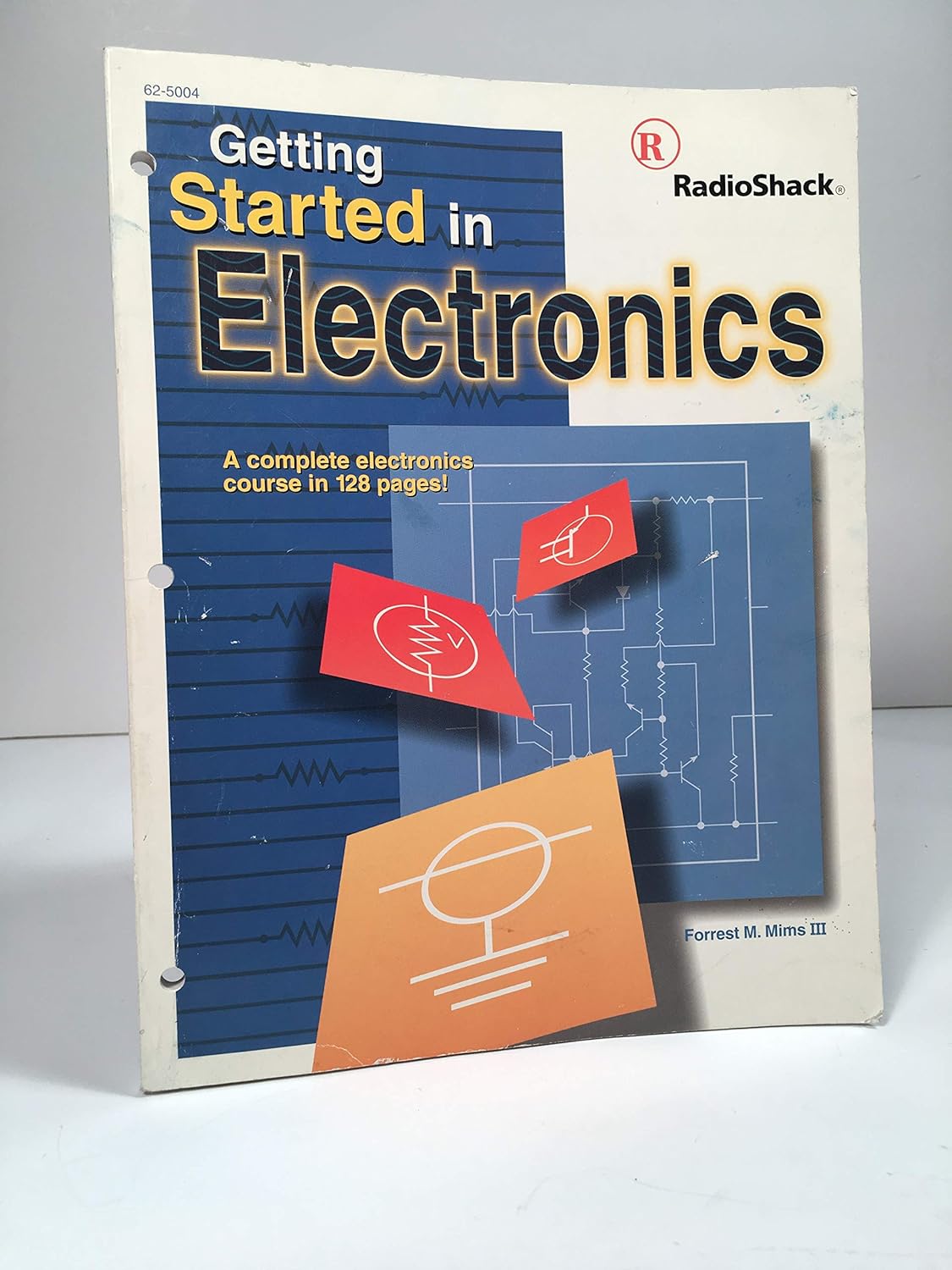
Our review of Getting Started in Electronics finds it to be an unusually clear and practical introduction for newcomers. Forrest M. Mims III presents a 128page spiral bound course that reads like carefully annotated lecture notes, making it ideal for hobbyists, students, and anyone who prefers handson learning. The single biggest reason to buy is the combination of concise explanations and handdrawn diagrams that let a beginner understand components and build real circuits without being overwhelmed by jargon.
Key Features
- Complete course: A 128page spiral bound book that covers both analog and digital basics so readers can progress from simple concepts to practical circuits.
- Clear explanations: The author explains how components work in plain language, which helps readers grasp fundamentals quickly.
- Handdrawn illustrations: Exceptional diagrams and handwriting-style notes make circuit layouts and principles easier to follow than dense technical text.
- Circuit variety: Includes 100 electronic circuits and projects, giving readers many practical experiments to build and test.
- Assembly tips: Circuit assembly guidance helps reduce trialanderror when building the projects for the first time.
Who It's For
This book is best for beginners and hobbyists who want a compact, practical introduction to electronics without wading through heavy theory. It suits students, makers, and tinkerers who appreciate visual learning and stepbystep project work.
It is less suited for readers seeking advanced theory or comprehensive textbook coverage of electrical engineering; those wanting rigorous mathematical treatment or collegelevel depth should look for a formal textbook. For basic experimentation and learning circuit design, this book is a strong starting point.
Pros & Cons
Pros
- Readable, lecturenote style that makes complex ideas approachable for beginners.
- Handdrawn illustrations and diagrams that clarify circuit connections and component function.
- A large set of 100 projects that encourage handson experimentation and reinforce learning.
- Practical assembly tips reduce common mistakes when building circuits.
Cons
- The concise, informal style is not a substitute for an advanced textbook if you need deep theoretical coverage.
Specifications
| Title | Getting Started in Electronics |
| Author | Forrest M. Mims III |
| Format | Spiral bound, 128 pages |
| Edition | New 2020 spiral bound edition |
| Content | Analog and digital components, circuit assembly tips, 100 circuits |
| Audience | Beginners, hobbyists, students |
Our Verdict
Getting Started in Electronics is a compact, practical course that offers excellent value for beginners who want to learn by doing. Its readable style, clear handdrawn diagrams, and 100 projects make it a useful companion for early experimentation, while readers needing indepth theory should supplement it with a technical textbook.
Frequently Asked Questions
Is this book suitable for someone with no prior electronics experience?
Yes. The book is written for beginners and explains components and circuits in plain language with helpful diagrams.
Does it include projects I can build at home?
Yes. The book contains 100 circuits and projects along with assembly tips to guide practical experimentation.
Will this replace a college textbook?
No. It is an introductory, handson course best used with supplemental textbooks for advanced theory.
Editor's Take
A compact, handson 128page course ideal for beginners; clear explanations, handdrawn diagrams, and 100 projects make it excellent value for learning practical electronics, though it lacks advanced theoretical depth.

Recently viewed
Recently viewed products will appear here as customers browse the store.